POPULAR COURSES
Master Programs

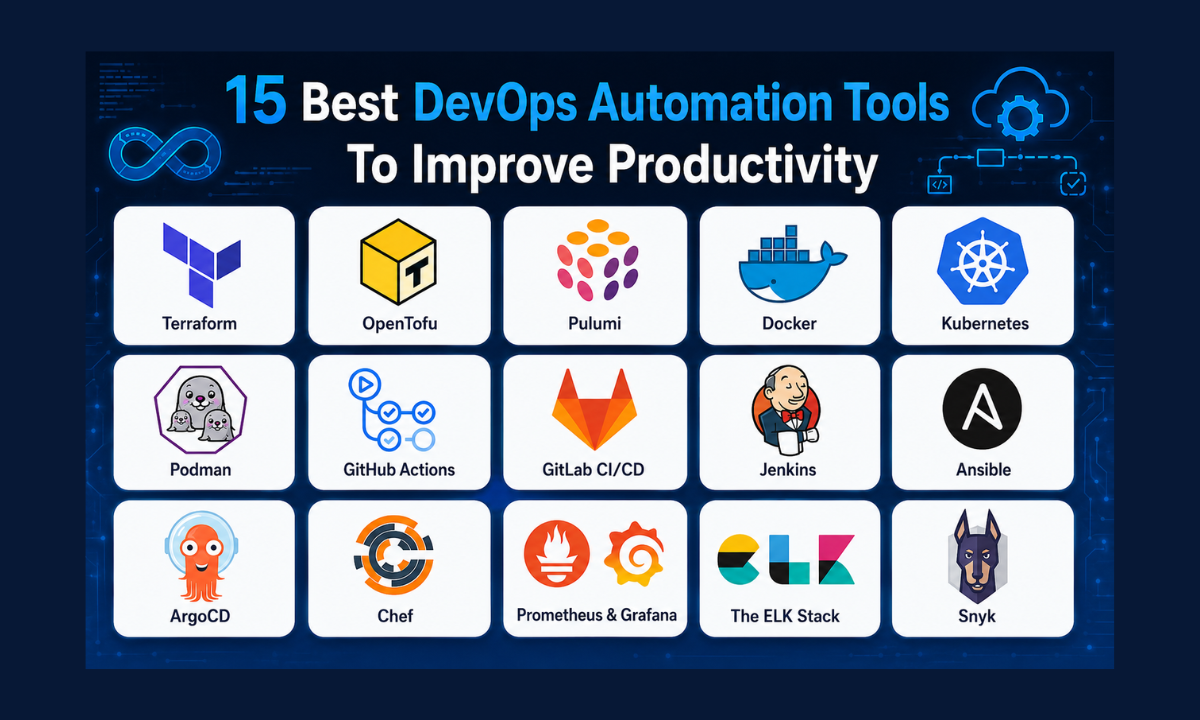
Table of contents:
|
1. The Infrastructure as Code (IaC) Trio
|
|
2. The Containerization & Orchestration Giants: Isolating and Scaling Workloads
|
|
3. The CI/CD Engine Powerhouses
|
|
4. Configuration Management & GitOps Automators: Maintaining and Synchronizing System State
|
|
5. Observability, Security, and DevSecOps Systems: Keeping Production Healthy and Secure
|
|
6. Why Choose Apponix? |
|
7. Conclusion |
In modern software engineering, speed without stability is a recipe for disaster. Relying on manual deployments, hand-configured servers, and reactive bug hunting holds back engineering teams from achieving the true velocity promised by agile development.
To stay competitive in 2026, organizations rely heavily on modern DevOps automation tools to handle the repetitive, high-stakes mechanics of building, testing, and shipping software. If you are aiming to break into this high-paying infrastructure sector, enrolling in a comprehensive DevOps course in Bangalore at Apponix is the most direct path to mastering these complex, automated workflows on live enterprise systems.
Automation isn’t just about replacing manual typing with scripts; it is about creating a predictable, repeatable pipeline where code moves from a developer's laptop to production with zero human friction.
When you eliminate manual handoffs, you eliminate human error, drastically lowering software downtime and boosting overall engineering productivity.
In this definitive 2026 guide, we are diving straight into the top 15 automation tools defining the industry today.
To help you make sense of this massive landscape, we have broken it down into functional categories so you can understand exactly where each tool fits within a modern deployment pipeline. Let's look at the core engines driving software delivery today.
The Infrastructure as Code (IaC) Trio
Before the rise of automation, spinning up a new development environment was a sluggish process. A developer had to file a support ticket, and a system administrator would spend hours manually clicking through a cloud console, setting up virtual machines, configuring security groups, and wiring up networks. If they missed a single checkbox, the entire environment would break.
Today, we treat physical networks and cloud architecture exactly like software files. This philosophy is known as Infrastructure as Code (IaC). By writing your data center's design into configuration files, you can spin up, replicate, or destroy an entire enterprise cloud ecosystem in minutes with absolute consistency.
Here are the three foundational tools dominating the cloud provisioning space in 2026:
1. Terraform: The Industry Vanguard
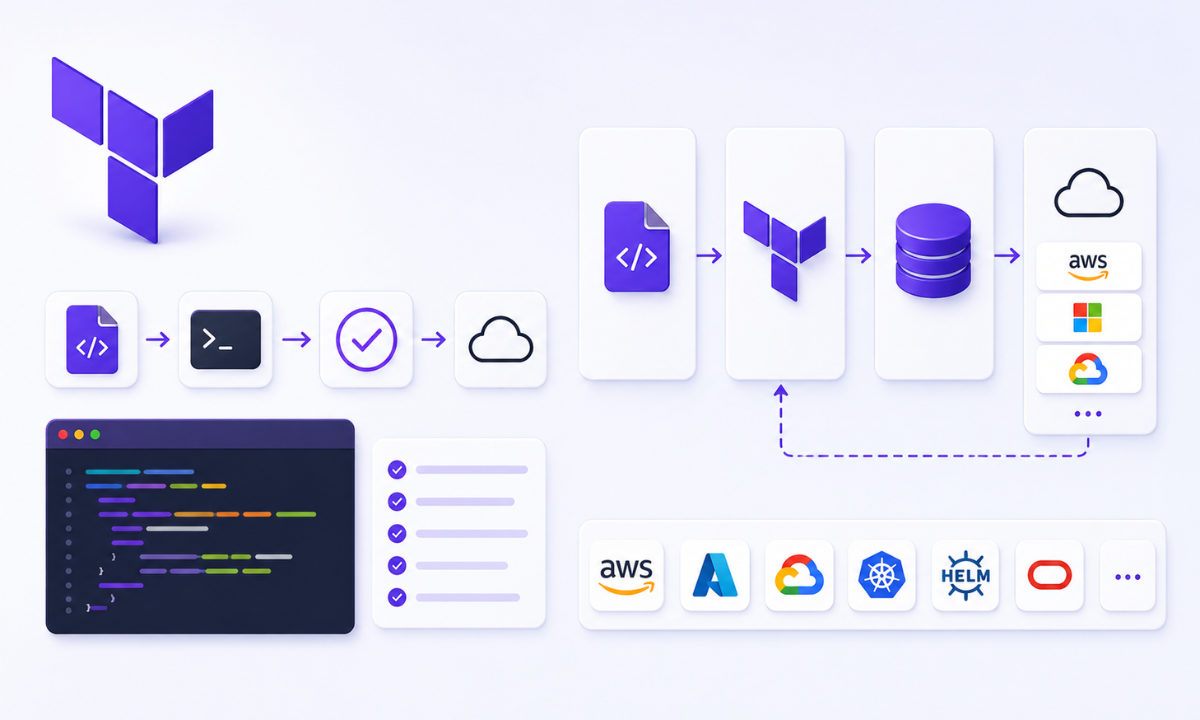
For nearly a decade, Terraform has been the undisputed heavyweight champion of cloud provisioning. It relies on a unique, highly readable language called HCL (HashiCorp Configuration Language).
Instead of telling the cloud how to build a server step-by-step, you simply describe the final state you want, and Terraform automatically calculates the execution blueprint to make it happen.
Its ecosystem is absolutely massive, boasting over 4,000 native providers. Whether you are orchestrating AWS, setting up Datadog monitoring, or configuring Cloudflare DNS, Terraform has a pre-built module ready to go. While its shift to a Business Source License (BSL) caused ripples in the tech sector, it remains a rock-solid core layer for thousands of established corporate environments.
2. OpenTofu: The Community-Driven Drop-In
When Terraform altered its licensing model, the open-source community didn't slow down; they formed a highly collaborative branch under the stewardship of the Linux Foundation called OpenTofu. It is a completely open, 100% backwards-compatible drop-in replacement for Terraform, meaning you can swap out the core software engine in your environment without changing your existing HCL codebase.
OpenTofu is no longer just a fast follow; it is actively shipping community-first features. It natively includes client-side state file encryption out-of-the-box (a critical security measure the community requested for years) and offers a vastly improved provider mocking framework for unit testing. It gives teams enterprise-grade automation with zero vendor lock-in anxiety.
3. Pulumi: The Software Engineer's Choice
While Terraform and OpenTofu force you to learn a domain-specific configuration language, Pulumi breaks that mold completely by letting you write your infrastructure using real programming languages like Python, TypeScript, Go, or Java.
If your team is software-heavy, Pulumi feels like a natural extension of your daily application codebase. As you are using standard programming languages, you can build complex, dynamic multi-cloud logic using native loops, conditional statements, and robust object-oriented patterns.
Furthermore, you can plug your infrastructure design directly into your standard continuous integration test pipelines to run automated unit tests before anything touches production.
The Containerization & Orchestration Giants: Isolating and Scaling Workloads
If Infrastructure as Code is the blueprint of your datacenter, then Containerization is how you package the goods safely inside it. Historically, a software application would run directly on a virtual machine, bundled together with the host operating system's specific libraries. If a developer updated a package on their local computer, the app would work perfectly for them but break completely the moment it landed on a production server with slightly different software versions.
Isolating an application alongside its exact runtime dependencies into a single, lightweight package ensures it runs identically on any hardware. In 2026, managing these isolated environments at scale requires a clear division of labor between individual application containers and the massive networks that coordinate them.
Here are the three heavyweights ruling the application isolation and management layer today:
4. Docker: The Modern Standard

Docker remains the most recognizable name in application packaging, commanding a massive footprint across developer environments globally. It operates using a central system service (the Docker Daemon) that handles the creation, distribution, and execution of images.
Its real-world power comes from its seamless developer experience. Tools like Docker Compose allow an engineer to spin up a multi-container local stack (such as a web application, a database, and a caching server) using a single command. It remains the golden baseline for onboarding new developers quickly due to its expansive documentation and universal community support.
5. Kubernetes (K8s): The Enterprise Conductor
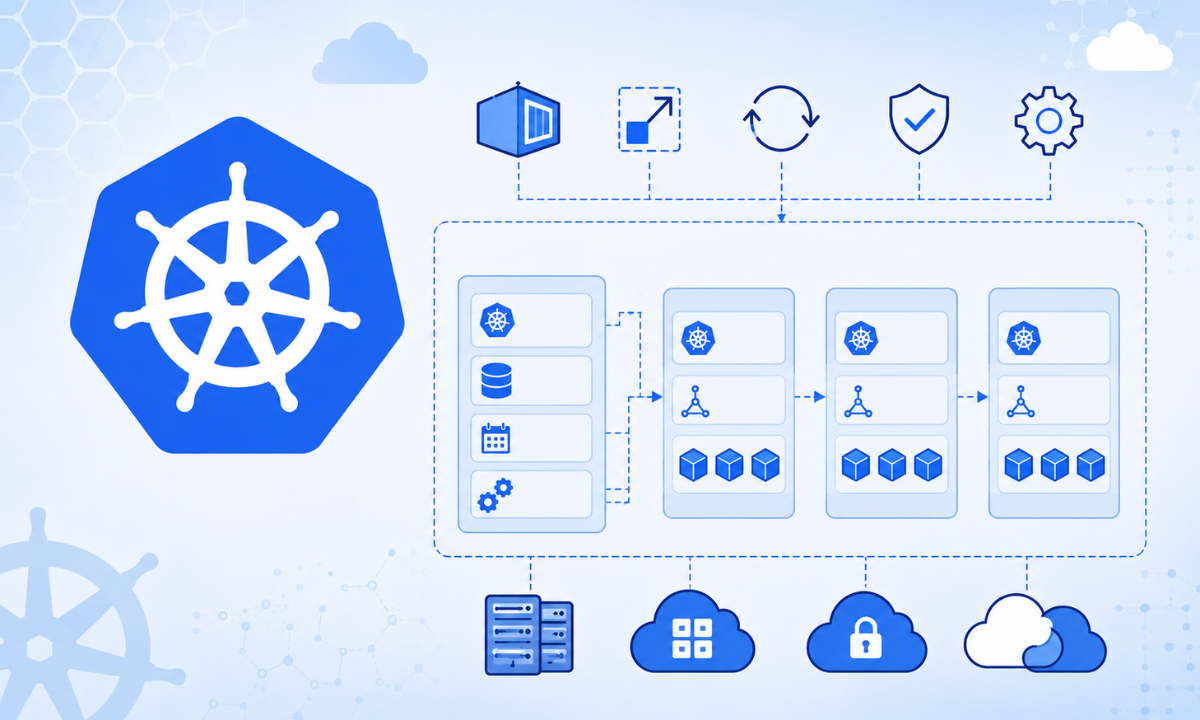
While Docker excels at running containers on a single machine, it cannot handle thousands of containers spread across a global cloud network. That is where Kubernetes steps in. Moving forward through its 2026 release cycles, Kubernetes has cemented itself as the operating system of the modern cloud.
Kubernetes doesn’t just run applications; it orchestrates them. If an application container crashes under heavy web traffic, Kubernetes instantly detects the failure, kills the broken instance, and spins up a healthy replacement automatically (Self-Healing).
It handles complex tasks like load balancing, automated horizontal scaling, and seamless zero-downtime application updates across massive server clusters.
6. Podman: The Security-First Alternative
For organizations operating in strictly regulated industries like finance or healthcare, running a central, all-powerful system service like the Docker Daemon presents a security risk. Enter Podman, a completely open-source, daemonless container engine that acts as a direct drop-in replacement for the Docker interface.
Podman is built to be "rootless" by design. This means a developer or pipeline runner can build and execute a container without requiring administrative root privileges on the underlying machine. If a malicious actor manages to break out of a container managed by Podman, they find themselves trapped as a standard, powerless user on the host system, drastically reducing the blast radius of an infrastructure breach.
Understanding the Engine Architecture
To see how these three engines interact in a production workflow, consider this architectural hierarchy:
-
Local Prototyping: A developer packages a microservice into an OCI-compliant image using Docker or Podman on their local laptop.
-
Pipeline Verification: The automated testing pipeline runs Podman to build and verify the image securely without root access.
The verified image is handed over to a managed Kubernetes cluster, which scales the container across hundreds of cloud nodes to handle real-world traffic.
The CI/CD Engine Powerhouses
If infrastructure is your stage and containerization is your package, then a CI/CD pipeline is the assembly line that pulls everything together.
Continuous Integration (CI) and Continuous Delivery (CD) remove the manual chore of building, testing, and shipping applications. Every time a developer pushes code, the pipeline automatically spins up isolated test environments, checks for security vulnerabilities, packages the software, and updates the live cloud infrastructure with minimal human intervention.
In 2026, pipelines are no longer treated as mere glue scripts; they serve as enforceable delivery contracts ensuring that no unverified or insecure code can ever slip through to production. Managing this automation efficiently requires choosing an orchestrator that fits your team's specific version control setup and operational philosophy.
Here are the three dominant engines driving continuous delivery today:
7. GitHub Actions
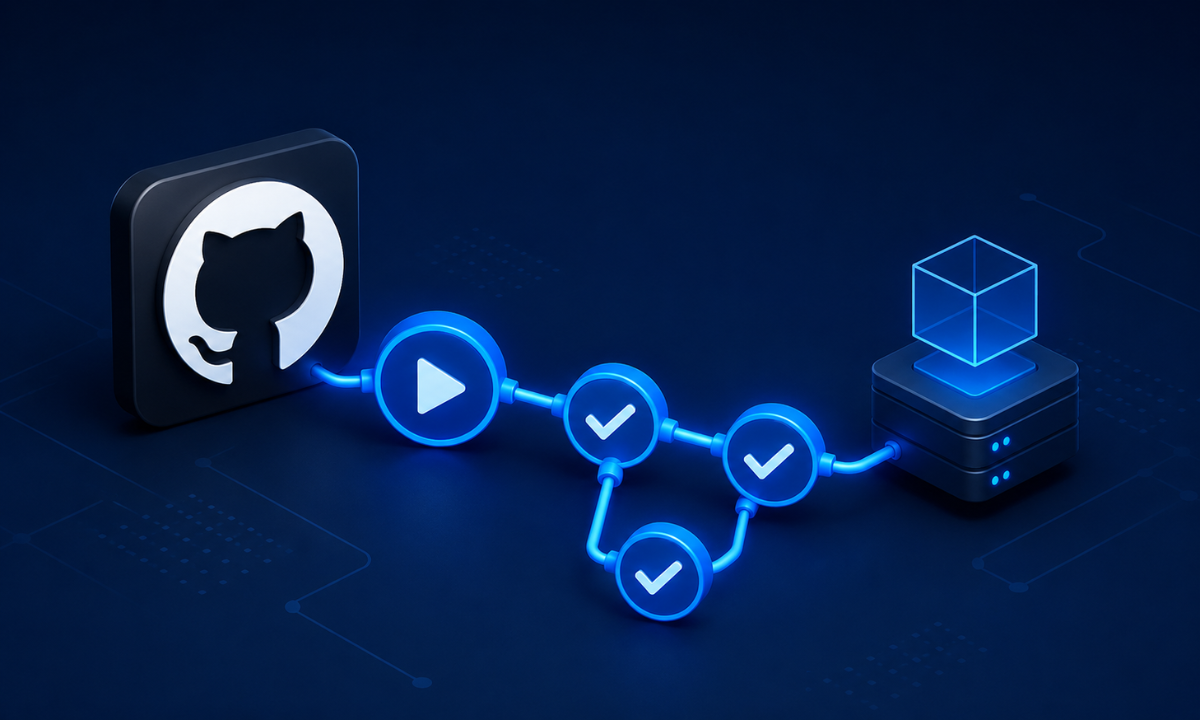
GitHub Actions has captured a massive share of the developer market. As of a single physical reality, it lives right where the source code lives. It operates on an event-driven model, meaning you can trigger a pipeline on almost any GitHub event, whether it’s a standard branch push, a new pull request, or even an external webhook.
There is no external server or API connection to configure. You simply drop a standard YAML file into your repository under .github/workflows/, and GitHub provides serverless runner computation automatically.
Utilizing a Marketplace featuring over 20,000 reusable community actions, setting up a build stack or integrating cloud authentication becomes a quick, three-line script configuration rather than a week of custom engineering.
8. GitLab CI/CD
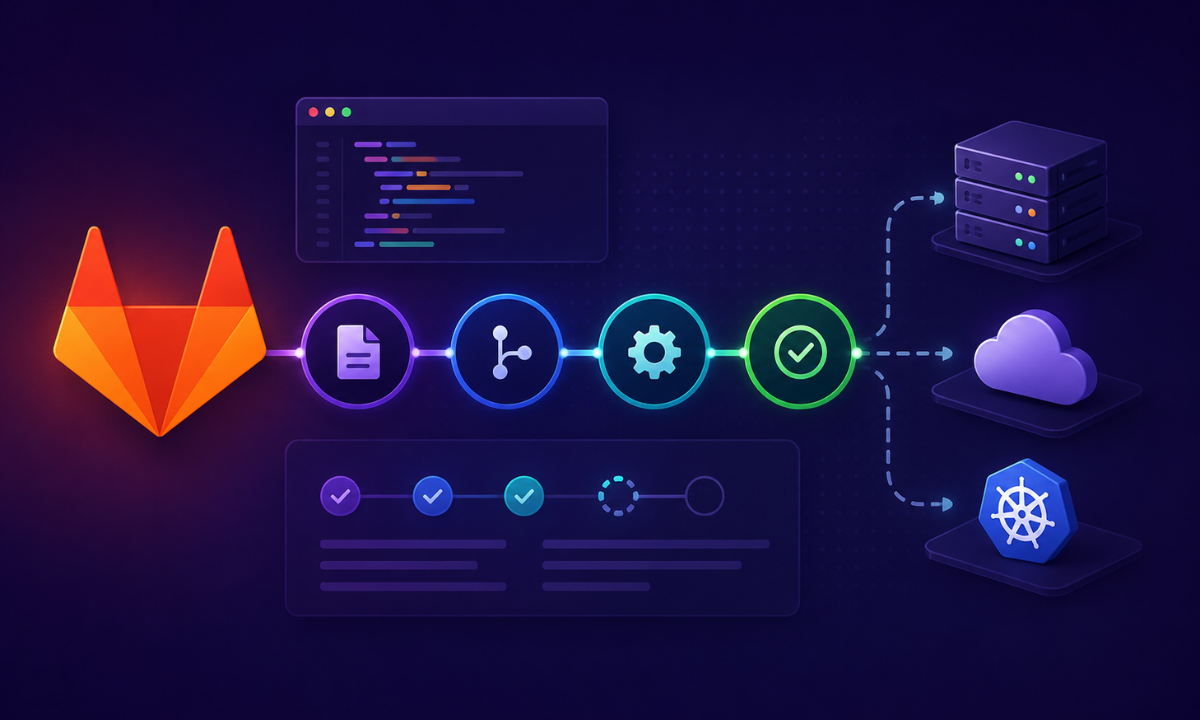
While GitHub takes a modular approach by relying on third-party marketplace apps, GitLab operates on a fundamentally different philosophy: everything you need should live under one single roof. GitLab CI/CD is an integrated component of an all-in-one software delivery lifecycle platform that shares a completely unified data model across project planning, source control, container registries, and final deployments.
GitLab is built to scale inside heavily regulated enterprises that prioritize rigid governance and deep internal compliance. Its premium pipelines natively bundle static and dynamic security scanning (SAST/DAST), dependency tracking, and secret detection right out of the box.
If your engineering team handles high-compliance environments or requires self-hosted Git repositories that instantly scale automated runners on internal Kubernetes clusters, GitLab is the premier enterprise ecosystem.
9. Jenkins: The Open-Source Customization

Despite being an older technology, Jenkins remains the absolute operational backbone for a significant portion of Fortune 500 enterprise environments. As a free, open-source automation server running on your own dedicated infrastructure, it provides a level of extreme customization and control that modern cloud-managed platforms simply cannot match.
Jenkins shines when pipelines are non-linear, multi-repository, or deeply intertwined with legacy internal systems. Backed by an index of over 1,800 specialized plugins, it can integrate with nearly any obscure hardware, internal database, or air-gapped system that cloud-native services cannot reach.
While it demands a much higher maintenance overhead, requiring dedicated engineers to handle patches, plugins, and server scaling, the modern maturation of Jenkins Configuration as Code (JCasC) and dynamic Kubernetes agents ensures it remains highly viable for complex, isolated corporate infrastructure.
Configuration Management & GitOps Automators: Maintaining and Synchronizing System State
Once your infrastructure is built and your containers are packaged, you need a way to manage the ongoing software state inside those environments. If an operating system patch needs to be applied to five hundred existing servers, or if a Kubernetes deployment needs to perfectly match the state of your development branch, doing it manually is impossible.
This layer of the pipeline handles configuration management, the process of controlling the internal software setup, user privileges, and packages of existing machines. In modern platform engineering teams, these tools ensure that systems do not suffer from "configuration drift," where environments slowly become inconsistent over time due to ad hoc manual tweaks.
Here are the three essential tools for handling system state and synchronization in 2026:
10. Ansible: Agentless Automation
Owned by Red Hat, Ansible is the default industry standard for managing and hardening operating systems. Unlike older tools that require you to install heavy background management software (agents) on every single target machine, Ansible is entirely agentless.
It communicates across your network using standard SSH for Linux or WinRM for Windows, which are already running natively on your servers.
Ansible uses human-readable YAML configuration files called "Playbooks" to describe the exact state your servers should be in (e.g., ensuring a specific web server is installed, security certificates are copied, and a database service is active). As it is idempotent, you can run the exact same playbook ten times, and Ansible will only apply changes if the server has drifted from the desired state, preventing duplicate errors and system instability.
11. ArgoCD: The Declarative GitOps Engine for Kubernetes
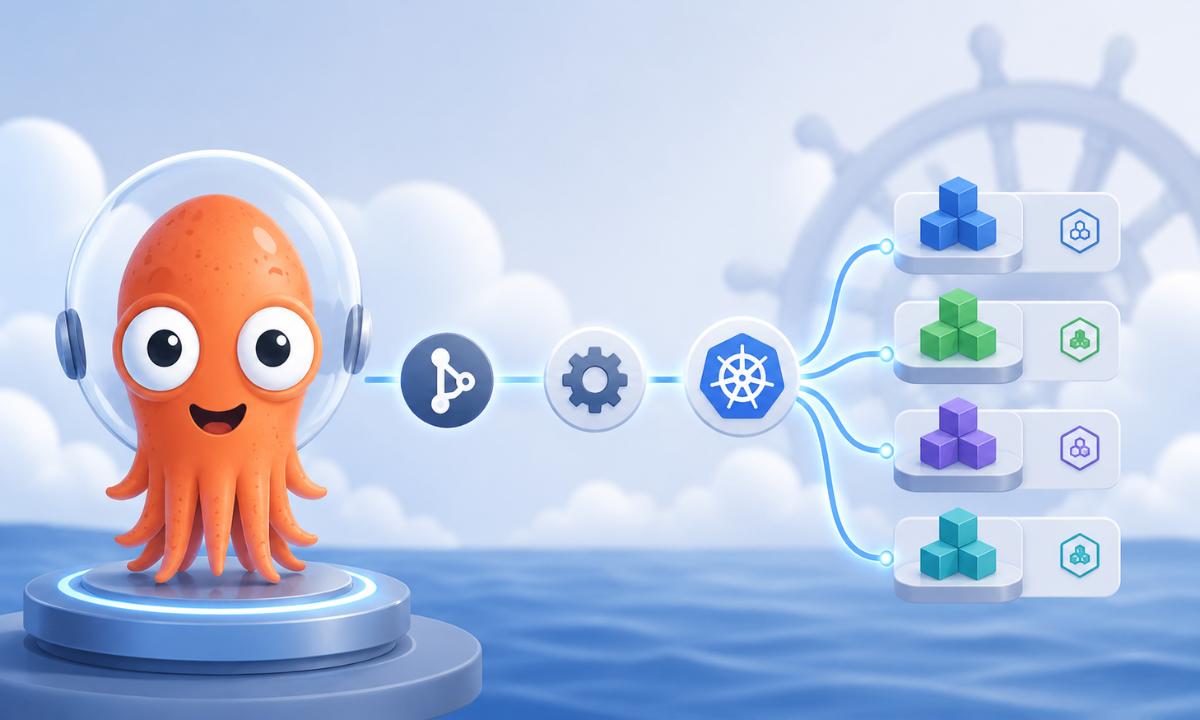
As organizations shift fully toward containerized microservices, managing application deployments inside Kubernetes clusters presents a unique challenge. ArgoCD addresses this by pioneering the GitOps methodology, treating your Git repository as the singular, absolute source of truth for your live infrastructure state.
ArgoCD runs directly inside your Kubernetes cluster and continuously pulls data from your Git repository. If a developer updates an application version inside a Git configuration file, ArgoCD instantly detects the difference and pulls the live cluster into alignment with the code (Auto-Sync).
Conversely, if an engineer manually alters a setting directly inside the live cluster using a terminal command, ArgoCD flags it as "OutOfSync" and automatically overwrites it to match the authorized Git blueprint, providing absolute protection against undocumented cluster modifications.
12. Chef
While Ansible is favored for its simplicity and agentless model, Chef takes a code-first approach to infrastructure. It treats server configuration like standard software development, utilizing Ruby-based languages to write "Recipes" and "Cookbooks" that describe exactly how a machine should be constructed and maintained.
Chef relies on a client-agent architecture where target servers regularly pull their configuration instructions from a central master server. As Chef configurations are written in a fully featured programming language rather than static data properties, it is incredibly powerful for massive, multi-tenant enterprise environments that require intricate conditional logic, dynamic loops, and deep compliance auditing directly embedded within the configuration engine.
Observability, Security, and DevSecOps Systems: Keeping Production Healthy and Secure
The true test of an engineering pipeline doesn’t happen during the build phase; it happens at two o'clock in the morning when thousands of concurrent users are hitting your application. Once your code is deployed via cloud automation, you need absolute visibility into how your infrastructure is behaving.
Without deep system metrics and centralized telemetry, debugging a microservices crash becomes an expensive guessing game.
Simultaneously, speed cannot come at the expense of safety. Modern software delivery integrates automated security safeguards straight into the development pipeline. This methodology, known as DevSecOps, ensures that security vulnerability assessments occur automatically alongside your regular code compilation, rather than waiting for an annual manual audit.
Here are the final three core tools that handle the vital telemetry, log tracking, and security posture of modern cloud applications:
13. Prometheus & Grafana: The Observability Standard
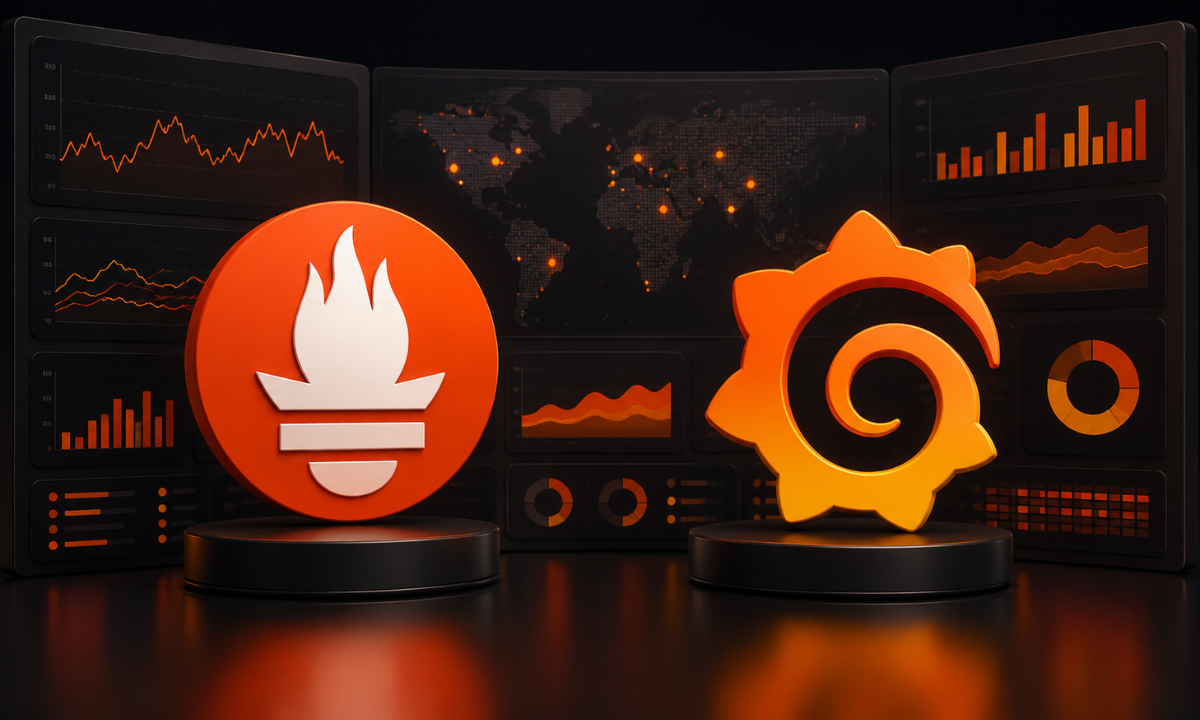
Prometheus and Grafana are almost always deployed together as a unified open-source monitoring powerhouse. Prometheus operates on a "pull model," periodically gathering real-time performance data (like CPU usage, memory consumption, or request latencies) from your running containers and saving it inside a high-speed time-series database.
Prometheus excels at collecting raw numeric data, but its default text display isn't suited for executive dashboards. Grafana steps in to translate those raw time-series metrics into beautiful, interactive, and highly dynamic graphs, heatmaps, and alert panels.
Together, they allow engineering teams to set intelligent thresholds, automatically alerting on-call engineers via Slack or PagerDuty at the exact moment an application starts slowing down.
14. The ELK Stack
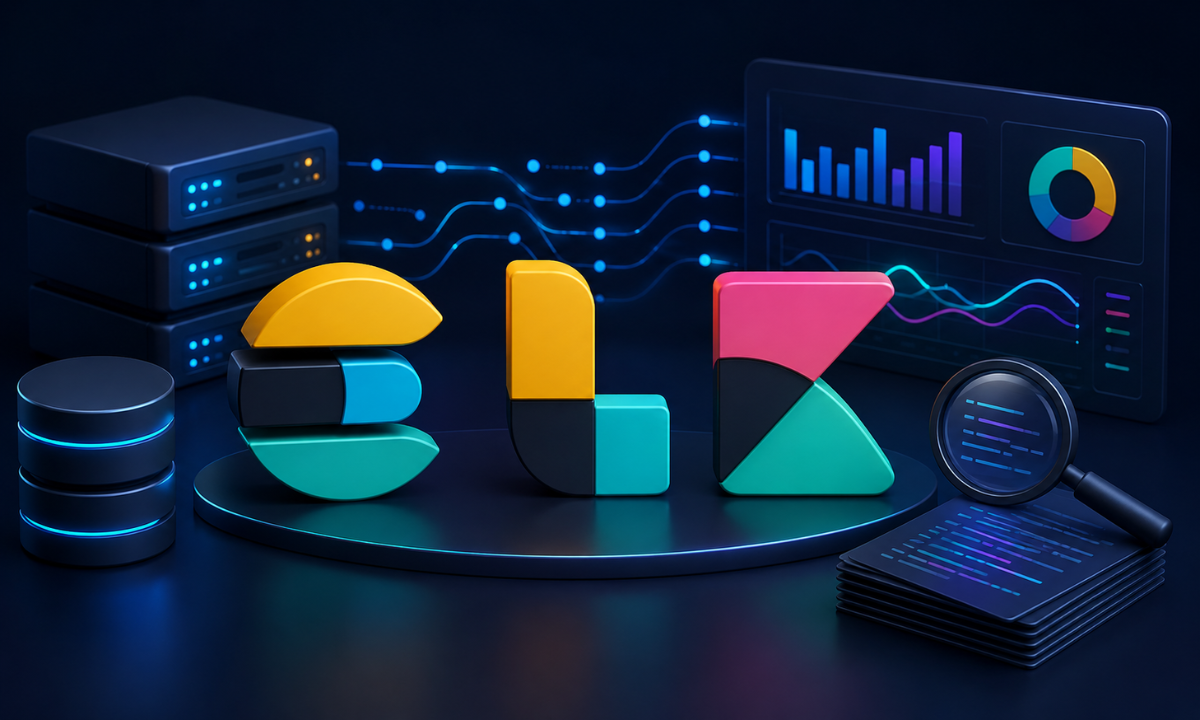
While metrics tell you how much a system is struggling, system logs tell you why it is struggling. The ELK Stack, composed of Elasticsearch, Logstash, and Kibana, is the absolute standard for enterprise monitoring and logging.
In a distributed cloud environment, a single user transaction might touch ten different microservices running across ten separate servers. Logging into each machine to view text files is impossible. Logstash acts as a data pipeline, collecting and standardizing raw log files from every machine across your fleet. Elasticsearch indexes that massive ocean of text
15. Snyk
The vast majority of modern software is not written entirely from scratch; it relies heavily on open-source packages and external libraries.
If one of those underlying packages contains a security flaw, your entire application becomes vulnerable to exploitation. Snyk is a developer-first security platform designed to automatically find and patch those hidden vulnerabilities.
Snyk integrates directly into your version control system and your continuous delivery pipelines. Every time code is pushed, Snyk scans your code, container images, and Kubernetes manifests against a massive, real-time database of known security vulnerabilities.
Instead of just providing a scary list of alerts, Snyk stands out by offering automated pull requests that instantly upgrade your dependencies to the nearest safe, secure version, allowing your developers to resolve security issues without disrupting their delivery timelines.
Why Choose Apponix?
To successfully transition into a high-paying platform engineering role, theoretical knowledge isn't enough; you need to build and break real cloud systems. As a premier Training Institute in Bangalore, Apponix Technologies provides the advanced, hands-on environment required to master the modern automated ecosystem:
-
Production-Scale Enterprise Labs: Move past local setups. You will design and deploy a live, multi-region architecture using industry-standard tools like Terraform, Kubernetes, and AWS.
-
End-to-End Pipeline Blueprints: You won't just study tools in isolation. You will construct complete, functional delivery pipelines that automatically integrate testing, security scanning, and containerized deployment.
-
Direct Expert Mentorship: Learn side-by-side with seasoned cloud architects who actively manage production infrastructures and can teach you how to troubleshoot complex, real-world deployment failures.
Strategic Career Placement: We eliminate the guesswork from your career pivot with dedicated portfolio reviews, rigorous technical mock interviews, and direct recruitment pathways to leading global technology firms.
Conclusion
The global demand for infrastructure specialists who can wield these automation platforms is at an all-time high. Stop consuming generic tutorials and start building enterprise solutions. Enroll today, master the tools defining the future of cloud computing, and launch your career as a certified DevOps professional with Apponix.
Reference:
https://northflank.com/blog/devops-automation-tools
https://www.coursera.org/articles/devops-tools

Apponix Academy
Apponix Academy