POPULAR COURSES
Master Programs





Table of contents:
|
1. Key Takeaways |
|
2. AIOps Full Form and Meaning |
|
3. Why AIOps is Important in Today’s IT World |
|
4. Key Components of AIOps
|
|
5. How AIOps Works (Step-by-Step) |
|
6.Types of AIOps
|
|
7. Popular AIOps Tools |
|
8. AIOps vs Traditional IT Operations |
|
9. Difference Between AIOps and MLOps |
|
10. How AIOps Improves Customer Experience |
|
11. Practical Tips to Get Started with AIOps |
|
12. Final Thoughts |
|
13. FAQs |
In today’s fast-moving digital world, IT systems are becoming more complex than ever, and that’s where What is AIOps? becomes an important question for beginners and professionals alike. If you are exploring modern IT practices and considering a DevOps course in Bangalore, understanding AIOps can give you a strong advantage in efficiently managing systems.
AIOps uses artificial intelligence to simplify IT operations, reduce errors, and improve overall performance without constant manual effort. It is especially useful in cloud and hybrid environments where data is huge, and systems are interconnected.
But how exactly does AIOps work, and why is it becoming essential for IT professionals today? Let’s explore everything step by step.
Key Takeaways
-
AIOps full form is Artificial Intelligence for IT Operations
-
It combines big data, machine learning, and automation
-
Helps improve customer experience by reducing downtime
-
Identifies issues before they become major problems
-
Reduces alert fatigue and improves productivity
-
There are different types of AIOps based on functionality
-
AIOps tools automate monitoring and issue resolution
-
Understanding the difference between AIOps and MLOps is important for career growth
AIOps Full Form and Meaning
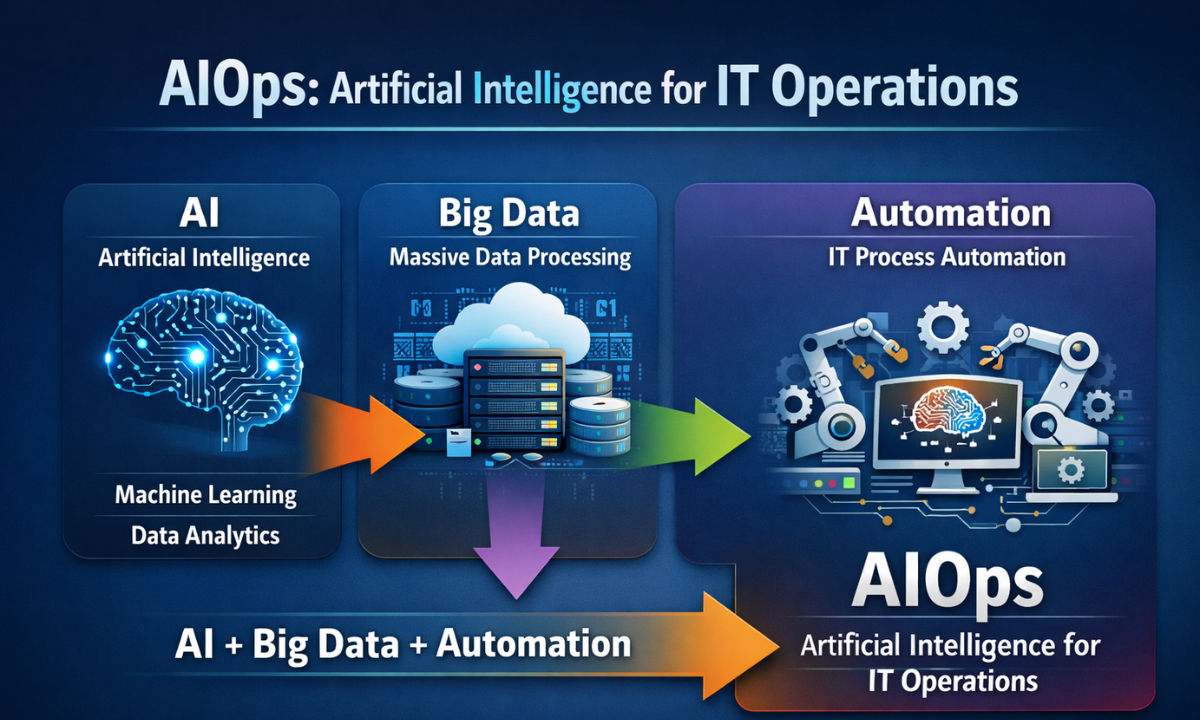
The AIOps full form is Artificial Intelligence for IT Operations. It is a modern approach that uses AI and machine learning to automate and enhance IT system management.
Instead of manually monitoring servers, applications, and networks, we can rely on AIOps to analyse large amounts of data and detect issues in real time. This makes IT operations faster, smarter, and more reliable.
Why AIOps is Important in Today’s IT World

Modern IT environments generate massive amounts of data every second, and handling this manually is almost impossible. AIOps helps us make sense of this data and act quickly.
Here’s why it matters:
|
Benefit |
Description |
|
Reduced Alert Fatigue |
Filters unnecessary alerts and highlights critical ones |
|
Faster Issue Resolution |
Identifies root causes quickly |
|
Proactive Monitoring |
Detects problems before they occur |
|
Improved Customer Experience |
Reduces downtime and ensures smooth services |
|
Increased Efficiency |
Automates repetitive IT tasks |
When systems run smoothly, it directly improves customer experience, which is a key goal for any organisation.
Key Components of AIOps
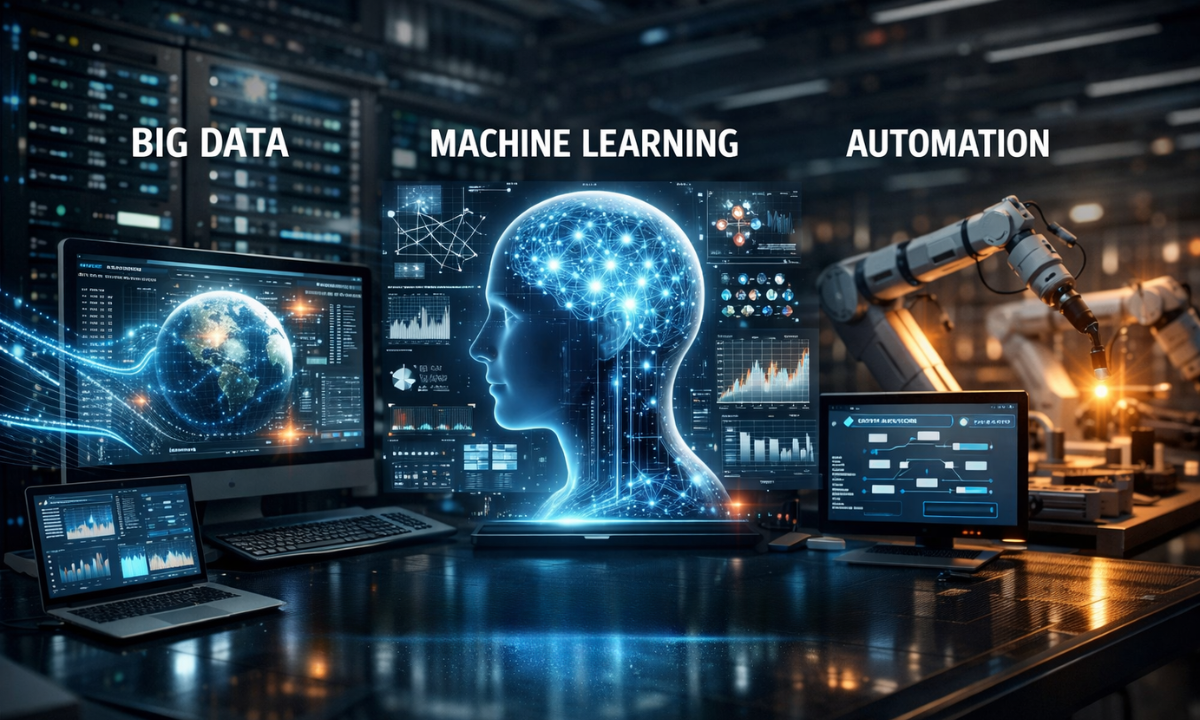
AIOps is built on three main components that work together to make IT operations smarter and more efficient:
1. Big Data
We collect data from multiple sources like logs, metrics, events, and alerts generated by servers, applications, and networks. This data is often scattered across different systems, and AIOps platforms bring it together into one centralised view for better analysis.
By handling large volumes of structured and unstructured data, Big Data helps us get a complete picture of the IT environment.
2. Machine Learning
Machine learning analyses this data to detect patterns, anomalies, and unusual behaviour that humans might miss. It continuously learns from historical data and improves its accuracy over time.
This helps in identifying potential issues early and provides insights that support faster and smarter decision-making.
3. Automation
Automation allows the system to respond to issues automatically or suggest solutions to IT teams. For example, it can restart a server, allocate resources, or trigger alerts without manual intervention.
This reduces workload, saves time, and ensures faster resolution of problems.
Together, these components make AIOps powerful, proactive, and highly efficient in managing modern IT environments.
How AIOps Works (Step-by-Step)

AIOps follows a simple yet powerful workflow that helps us manage IT systems more efficiently and proactively. Instead of reacting to issues after they occur, AIOps continuously monitors data in real time and identifies patterns that may indicate potential problems.
It brings together data from multiple sources, applies intelligent analysis, and ensures quick action without human delay. This not only reduces downtime but also improves overall system performance and reliability.
|
Step |
Process |
Explanation |
|
1 |
Data Collection |
Gathers data from servers, applications, and networks |
|
2 |
Cleans and organises data for analysis |
|
|
3 |
Uses AI/ML to detect anomalies |
|
|
4 |
Action |
Triggers automated responses or alerts |
For example, if there is an unusual spike in CPU usage, AIOps can detect it instantly and take action before it affects performance.
Types of AIOps
There are different types of AIOps based on how they are used in IT environments, and each type serves a specific purpose depending on the complexity and needs of the organisation:
1. Domain-Centric AIOps
This type focuses on specific areas like network monitoring, application performance, or security operations. It is ideal for teams that want deep insights into a single domain and need specialised monitoring for better control.
It helps improve performance within that particular area without handling the entire IT ecosystem.
2. Domain-Agnostic AIOps
Domain-agnostic AIOps works across multiple IT domains and integrates data from various systems into one unified platform. It provides a complete, end-to-end view of the IT infrastructure.
This makes it easier to identify issues that may be connected across different systems and improves overall visibility.
3. Reactive AIOps
Reactive AIOps responds to issues after they occur, but much faster than traditional systems. It quickly detects incidents and helps reduce downtime by speeding up resolution.
While it is not preventive, it is still highly efficient in handling unexpected problems.
4. Proactive AIOps
Proactive AIOps predicts issues before they happen by analysing historical data and identifying patterns. It allows teams to fix potential problems in advance and avoid disruptions.
This approach is highly valuable for maintaining system stability and ensuring a smooth user experience.
Each type helps organisations manage IT operations in different ways, allowing them to choose the right approach based on their infrastructure, scale, and business goals.
Popular AIOps Tools
Many organisations use advanced AIOps tools to automate their IT operations. Some common features of these tools include:
-
Real-time monitoring
Continuously tracks system performance and health to detect issues as they happen. -
Anomaly detection
Identifies unusual patterns or behaviours that may indicate potential problems. -
Automated alerts
Sends instant notifications to IT teams when critical issues are detected. -
Root cause analysis
Helps quickly identify the main reason behind a problem to speed up resolution. -
Predictive analytics
Uses historical data to forecast future issues and prevent system failures.
These tools help IT teams focus more on strategy rather than routine tasks.
AIOps vs Traditional IT Operations
Let’s understand how AIOps is different from traditional IT management. In traditional setups, teams often rely on manual monitoring and react only after problems occur, which can lead to delays and increased downtime.
AIOps, on the other hand, uses intelligent systems to analyse data in real time, helping us predict and prevent issues before they impact business operations.
|
Feature |
Traditional IT Operations |
AIOps |
|
Approach |
Reactive |
Proactive |
|
Data Usage |
Siloed |
Centralised |
|
Alerts |
High noise |
Filtered |
|
Decision-Making |
Manual |
AI-driven |
|
Efficiency |
Low |
High |
AIOps clearly provides a smarter and faster way to handle IT operations.
Difference Between AIOps and MLOps
Many beginners get confused about the difference between AIOps and MLOps, as both involve artificial intelligence and automation. However, they serve different purposes and are used by different teams within an organisation.
Understanding this distinction helps us choose the right learning path and apply the correct tools in real-world IT and data environments.
|
Feature |
AIOps |
MLOps |
|
Focus |
IT Operations |
Machine Learning lifecycle |
|
Goal |
Improve system performance |
Manage ML models |
|
Users |
IT teams |
Data scientists |
|
Function |
Monitoring & automation |
Model deployment & training |
In simple terms, AIOps manages IT systems, while MLOps manages machine learning models.
How AIOps Improves Customer Experience
AIOps plays a big role in enhancing customer experience by ensuring systems run smoothly and efficiently. In today’s digital world, even a small delay or outage can impact user trust, making performance and reliability extremely important.
By using intelligent monitoring and automation, AIOps helps businesses deliver faster, more consistent, and uninterrupted services to their users.
Here’s how:
-
Reduces downtime and outages
-
Improves application performance
-
Provides faster issue resolution
-
Ensures consistent service availability
When systems are reliable, customers are happier and more satisfied.
Practical Tips to Get Started with AIOps
If we are beginners, here are some simple tips to start learning AIOps:
-
Understand basic IT operations and DevOps concepts
-
Learn about data analysis and machine learning basics
-
Explore popular AIOps tools
-
Practice real-world scenarios and case studies
-
Join a trusted training institute in Bangalore for hands-on learning
These steps can help us build a strong foundation in AIOps.
Final Thoughts
AIOps is transforming the way we manage IT operations by making systems smarter, faster, and more reliable. As technology continues to grow, learning AIOps can open up exciting career opportunities for you, especially when combined with skills from a DevOps course in Bangalore.
If you are serious about building a career in modern IT, choosing the right training institute in Bangalore, like Apponix, can help you gain practical knowledge and stay ahead in this competitive field.
FAQs
1. What is AIOps in simple terms?
AIOps is a smart way of managing IT systems using artificial intelligence and machine learning. Instead of relying only on manual monitoring, it helps us analyse large amounts of data, detect issues quickly, and even fix some problems automatically. This makes IT operations faster, more accurate, and less stressful for teams, especially in complex environments like cloud and hybrid systems.
2. Is AIOps difficult to learn?
AIOps is not very difficult to learn if we start with the basics. Having a foundation in IT operations, DevOps, and a little understanding of data and machine learning can make the learning process easier. With the right guidance, practice, and real-world examples, we can gradually build our skills and become confident in using AIOps tools and concepts.
3. Who should learn AIOps?
AIOps is ideal for IT professionals such as system administrators, DevOps engineers, and IT support teams who want to upgrade their skills. It is also a great option for beginners interested in combining AI with IT operations. Learning AIOps can open up new career opportunities and help us stay relevant in a rapidly evolving technology landscape.
4. What are AIOps tools used for?
AIOps tools are used to monitor IT systems, analyse performance data, and detect unusual patterns or issues. They help automate routine tasks like alerting, troubleshooting, and even resolving common problems. By using these tools, IT teams can save time, reduce manual effort, and focus more on strategic tasks that improve system performance and business outcomes.
5. Does AIOps replace IT jobs?
AIOps does not replace IT jobs but instead supports IT professionals by reducing repetitive and manual work. It allows teams to focus on more important tasks like planning, innovation, and improving system performance. Rather than replacing roles, AIOps enhances productivity and creates new opportunities for professionals to learn advanced skills and grow in their careers.
Reference
1. https://www.ibm.com/think/topics/it-operations
2. https://dev.to/rushikesh_langale_42ac365/what-is-aiops-a-beginners-guide-to-ai-driven-it-operations-14kj

Apponix Academy
Apponix Academy