POPULAR COURSES
Master Programs




Table of contents:
|
1. Network Reconnaissance & Vulnerability Discovery Tools
|
|
2. Web Application & Network Exploitation Frameworks
|
|
3. Security Monitoring, SIEM & Intrusion Defense Tools
|
|
4. Operating Systems, Forensics & Password Security Tools
|
|
5. Why Choose Apponix Technologies for Your Cybersecurity Journey? |
|
6. Conclusion |
Starting a career in information defense requires mastering hands-on cyber security tools for beginners before attempting industry examinations.
Enrolling in a comprehensive Cyber Security Course in Bangalore provides the structured virtual lab environments, expert mentorship, and real-world project scenarios needed to analyze network traffic, discover system vulnerabilities, and defend enterprise infrastructures.
While theoretical study builds your understanding of security frameworks, global compliance standards, and risk management models, hiring managers look for candidates who can operate live security software on day one. Certified practitioners are expected to know how to perform host discovery, intercept HTTP traffic, analyze packet captures, and evaluate Security Information and Event Management (SIEM) alerts in real time.
Mastering software utilities before taking your certification exam builds test-taking confidence, reinforces core concepts through practical muscle memory, and ensures your resume stands out to corporate security teams.
This comprehensive guide breaks down 12 essential cybersecurity tools that every beginner should learn to build a competitive, recruiter-ready profile.
Essential Cyber Security Tools at a Glance
|
Tool Name |
Security Category |
Primary Functional Capability |
Licensing & Ecosystem
|
|---|---|---|---|
|
Nmap |
Network Reconnaissance |
Host discovery, open port scanning, OS and service version detection |
Open-Source |
|
Wireshark |
Network Packet Analysis |
Deep packet inspection, display filtering, TCP stream reconstruction |
Open-Source |
|
Nessus |
Vulnerability Management |
Automated CVE scanning, CVSS scoring, compliance risk auditing |
Commercial / Proprietary |
|
Burp Suite |
Web App Proxy & Testing |
HTTP/HTTPS request interception, payload modification, security auditing |
Freemium (Community & Pro) |
|
Metasploit |
Exploitation Framework |
Exploit payload delivery, Meterpreter sessions, vulnerability verification |
Open-Source / Commercial |
|
OWASP ZAP |
Automated Web Scanning |
Automated spidering, passive/active vulnerability scans, AJAX crawling |
Open-Source |
|
Splunk |
SIEM & Log Telemetry |
Log data indexing, SPL query analysis, real-time threat dashboards |
Commercial / Free Tier |
|
Snort |
Network NIDS / IPS |
Real-time packet inspection, rule-based signature intrusion detection |
Open-Source |
|
Kali Linux |
Penetration Testing OS |
Pre-installed security suite with 600+ penetration testing utilities |
Open-Source |
|
Autopsy |
Digital Forensics |
Disk image analysis, artifact extraction, timeline event reconstruction |
Open-Source |
|
John the Ripper |
Password Security Audit |
Hash auto-detection, dictionary attacks, rule-based password cracking |
Open-Source |
|
Hashcat |
GPU Hash Cracking Engine |
GPU-accelerated hash recovery across 300+ cryptographic algorithms |
Open-Source |
Network Reconnaissance & Vulnerability Discovery Tools
Reconnaissance and vulnerability assessment represent the initial phases of both offensive security testing and defensive network auditing. Learning penetration testing basics begins with mastering utilities that map network topologies, identify active hosts, and uncover unpatched system vulnerabilities.
1. Nmap (Network Mapper)
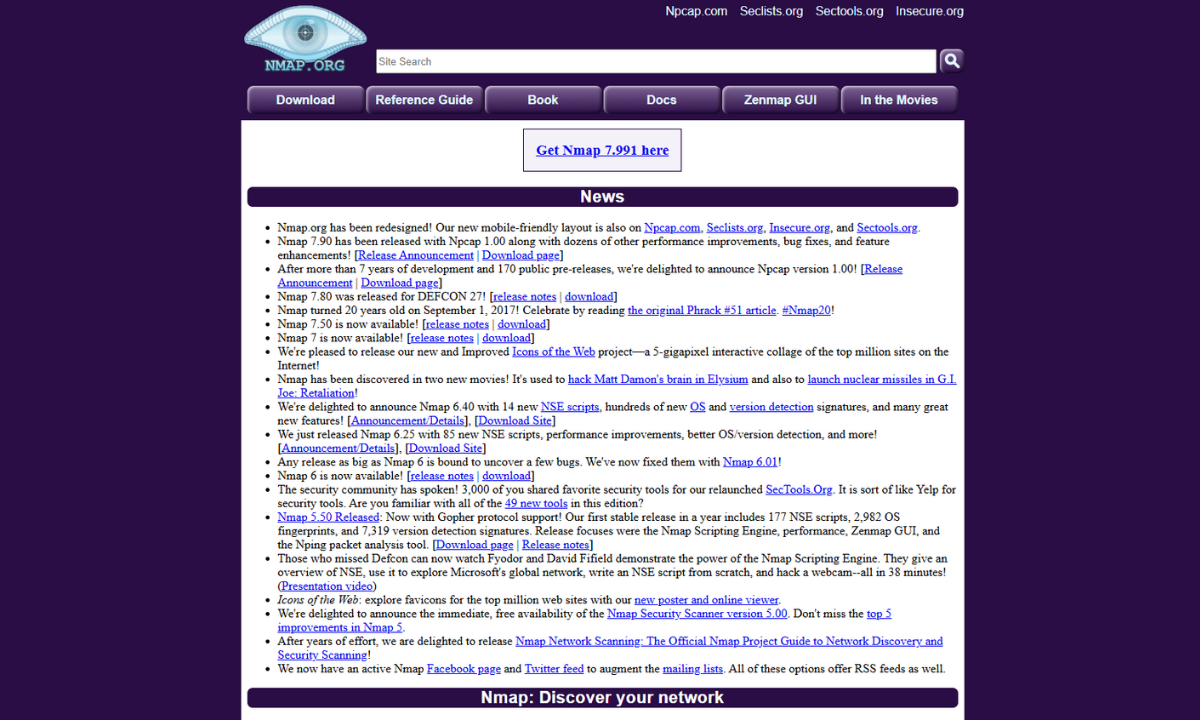
Nmap is the industry-standard, open-source utility used by network administrators and security auditors for host discovery, port scanning, and service version detection. It operates by sending custom raw IP packets across a target network to analyze response characteristics, revealing open ports, running OS versions, and hardware details.
For beginners, mastering Nmap commands provides fundamental insights into network communications and firewall behavior. Operating the Nmap Scripting Engine (NSE) allows security analysts to automate basic vulnerability checks, detect misconfigured services, and inventory large corporate networks efficiently.
Understanding Nmap scanning techniques such as SYN stealth scans, UDP sweeps, and aggressive OS detection forms the backbone of network reconnaissance, making it an indispensable tool for every security practitioner.
2. Wireshark
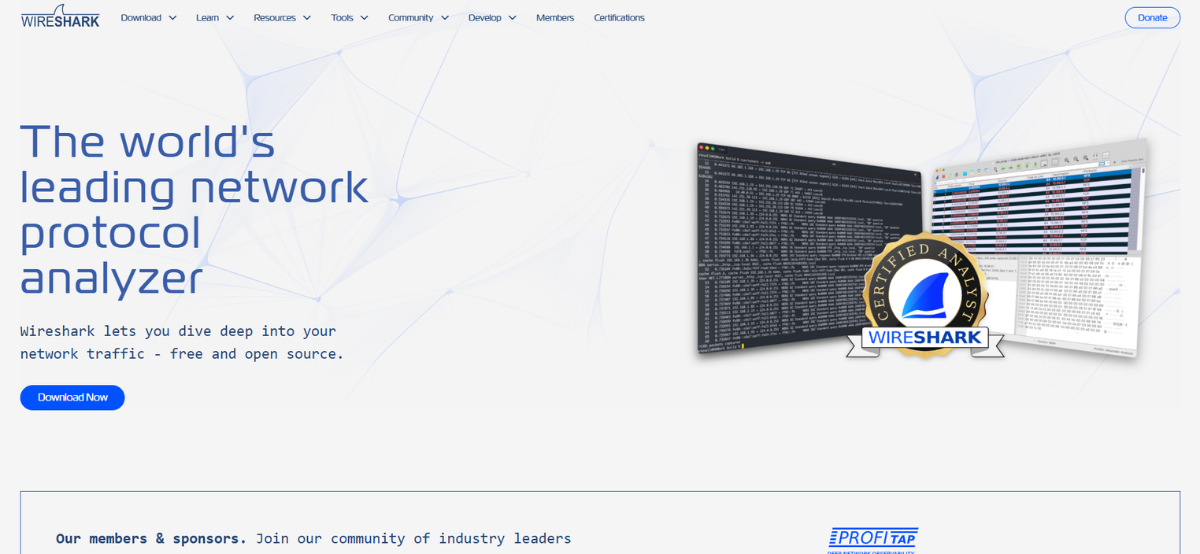
Wireshark is the world’s most widely used network protocol analyzer, providing deep microscopic inspection of live network traffic. It captures data packets passing through network interfaces and displays them in a human-readable format, allowing analysts to examine protocol headers, payload contents, and communication sequences.
By utilizing Wireshark, beginners gain a clear visual understanding of how protocols operate across different OSI layers:
-
Packet Filtering: Writing display filters to isolate specific IP addresses, ports, or protocols (e.g., HTTP, DNS, TCP).
-
Protocol Dissection: Analyzing unencrypted credentials, handshake sequences, and malformed packet structures.
-
Traffic Flow Following: Reconstructing full TCP streams to analyze data exchanges between clients and servers.
Mastering packet analysis with Wireshark is crucial for troubleshooting network anomalies, detecting unauthorized data exfiltration, and investigating security incidents across enterprise environments.
3. Nessus by Tenable
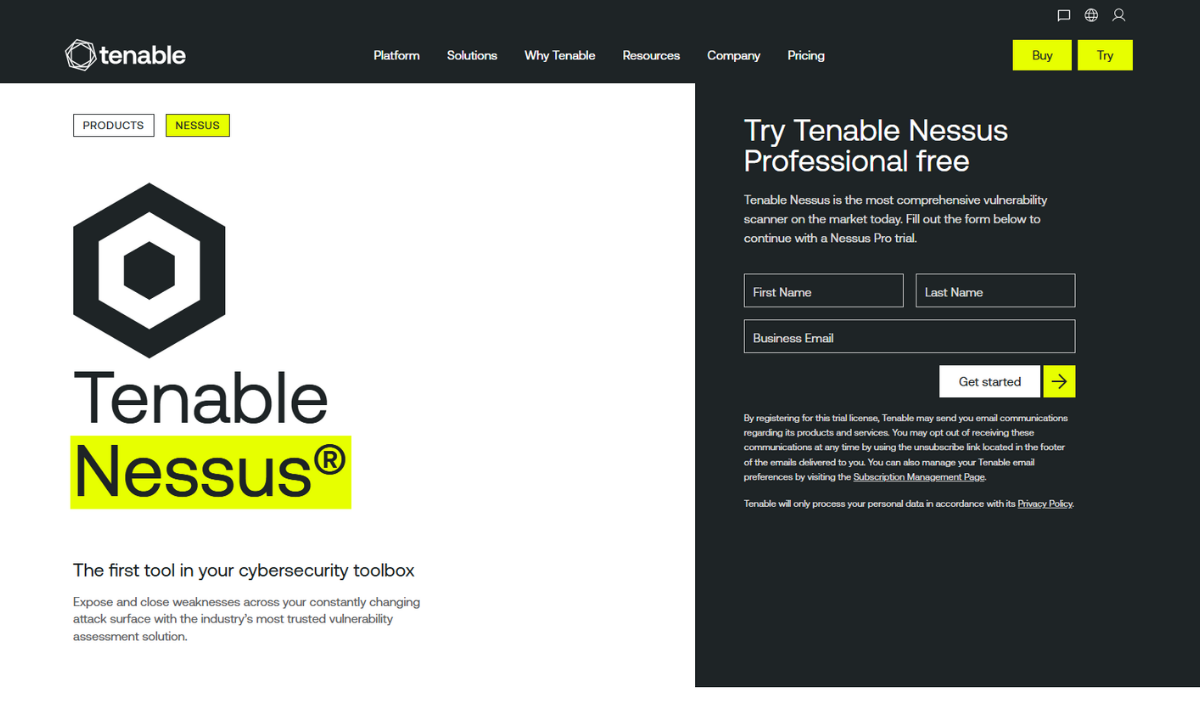
Nessus is a widely deployed vulnerability scanner trusted by enterprise security teams to perform automated system audits and compliance checks. It scans servers, network devices, and web applications against a vast database of known Common Vulnerabilities and Exposures (CVEs), generating detailed risk assessment reports.
Learning how to configure Nessus scans helps beginners understand vulnerability scoring systems like CVSS (Common Vulnerability Scoring System). Analysts learn to differentiate between high-severity exploitable flaws, misconfigurations, and false positives across complex network infrastructures.
By interpreting Nessus assessment reports, aspiring security engineers learn how to prioritize remediation steps, draft technical advisories, and communicate system risks effectively to IT infrastructure teams.
Web Application & Network Exploitation Frameworks
Evaluating the security posture of web applications and network services requires utilizing specialized ethical hacking tools to test system defenses, intercept HTTP sessions, and validate vulnerabilities safely.
4. Burp Suite (Community Edition)
Burp Suite is an integrated platform designed for evaluating web application security. Developed by PortSwigger, the Community Edition serves as an essential intercepting proxy that routes web browser traffic through an intermediary interface, enabling security testers to inspect, modify, and replay HTTP/HTTPS requests.
For beginners, Burp Suite demystifies web communications by making client-server interactions fully transparent. Using the Proxy module, analysts can view request headers, cookies, and POST parameters, helping them understand how web applications process user inputs.
The Repeater and Decoder modules allow security enthusiasts to craft custom request payloads manually, testing for common web vulnerabilities such as SQL injection, Cross-Site Scripting (XSS), and broken access controls.
Mastering Burp Suite prepares aspiring web security auditors to analyze modern API endpoints, single-page web applications, and enterprise SaaS platforms effectively.
5. Metasploit Framework
The Metasploit Framework is a powerful penetration testing platform that simplifies the validation of system vulnerabilities. Maintained by Rapid7, it provides a centralized repository of verified exploit modules, payloads, and post-exploitation scripts that allow security professionals to demonstrate the real-world impact of unpatched software flaws.
Learning Metasploit helps beginners understand how security weaknesses are exploited in practice. Users learn to pair specific vulnerability identifiers with corresponding exploit modules and execute Meterpreter payloads within isolated testing environments.
Practicing with Metasploit inside authorized virtual lab networks reinforces the importance of patch management and defense-in-depth strategies across corporate systems.
6. OWASP ZAP (Zed Attack Proxy)
OWASP ZAP is a free, open-source web application security scanner maintained under the Open Web Application Security Project (OWASP). Designed specifically for developers, security analysts, and quality assurance engineers, ZAP acts as an automated proxy tool that identifies security flaws in web applications during development and testing phases.
To help users systematically evaluate web targets, ZAP provides flexible testing modes:
-
Automated Spidering: Crawling web application structures to map out hidden endpoints, directories, and input forms.
-
Passive & Active Scanning: Analyzing HTTP responses passively for missing security headers, then performing active tests for injection flaws.
-
AJAX Spidering: Navigating dynamic JavaScript-heavy interfaces to discover client-side rendering vulnerabilities.
Integrating ZAP into basic testing routines teaches beginners how automated web scanning tools operate alongside manual testing workflows.
Security Monitoring, SIEM & Intrusion Defense Tools
Defensive cybersecurity relies on continuous monitoring, log aggregation, and real-time threat detection. Preparing for a professional SOC analyst course involves getting hands-on experience with Security Information and Event Management (SIEM) systems and intrusion detection engines.
7. Splunk

Splunk is an enterprise data analytics and SIEM platform that ingests, indexes, and correlates machine-generated log data from firewalls, servers, endpoints, and cloud services. Security Operations Center (SOC) analysts rely on Splunk to monitor real-time security events, investigate policy violations, and respond to active threats.
Beginners who learn Splunk gain practical experience with Search Processing Language (SPL) to query large datasets efficiently. Writing custom SPL queries allows analysts to correlate failed login attempts, identify unusual traffic spikes, and trace lateral movement across enterprise networks.
Developing custom dashboards and alert rules in Splunk teaches students how security teams establish baseline behavior patterns and detect suspicious activity before data breaches occur.
Understanding Splunk's log indexing and correlation capabilities serves as a foundational skill for anyone aiming to work as a SOC Analyst or Incident Responder.
8. Snort
Snort is an open-source Network Intrusion Detection System (NIDS) and Intrusion Prevention System (IPS) developed by Cisco. It performs real-time traffic analysis and packet logging to detect network attacks, port scans, OS fingerprinting attempts, and malware propagation.
Learning Snort teaches beginners how signature-based intrusion detection systems operate. By studying Snort rule syntax, students learn to write custom rules that match specific byte patterns, protocol flags, and header options within network packet payloads.
Operating Systems, Forensics & Password Security Tools
Completing your practical toolset requires learning specialized operating systems, digital forensics suites, and credential auditing software before sitting for an official cyber security certification exam.
9. Kali Linux
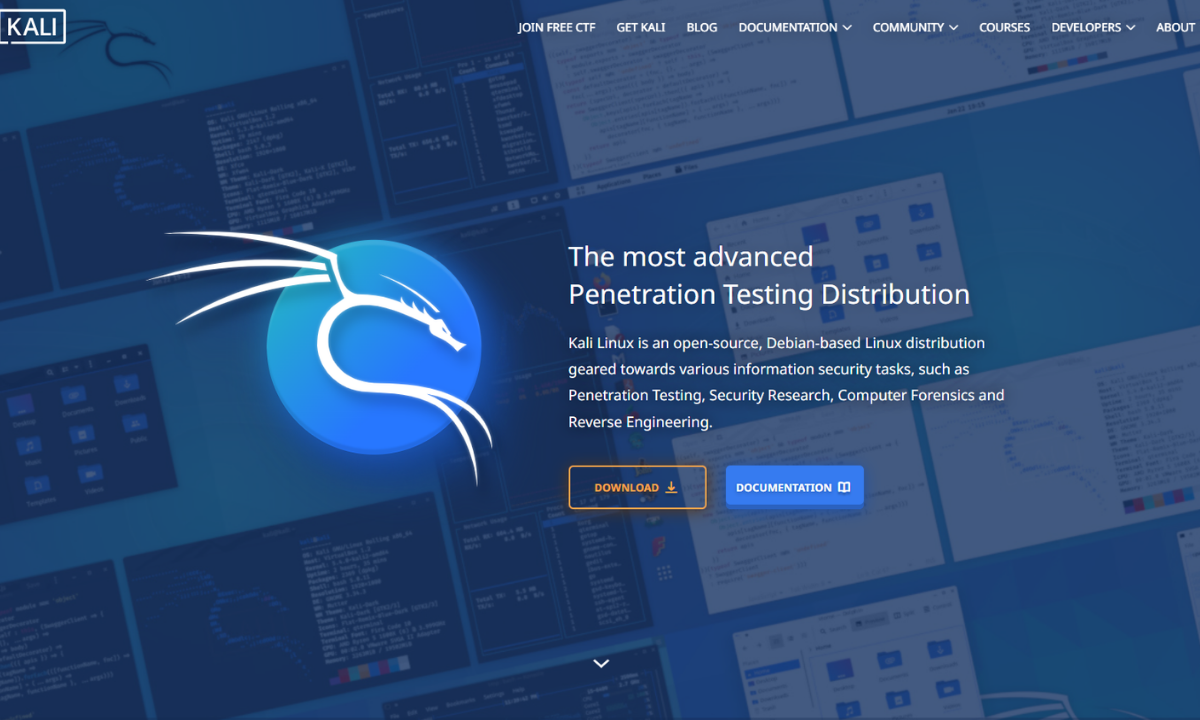
Kali Linux is an open-source, Debian-based Linux distribution custom-built for penetration testing, security auditing, and digital forensics. Maintained by OffSec, it comes pre-installed with over 600 security tools, eliminating complex software dependency setups for security practitioners.
Navigating Kali Linux builds essential Linux command-line fluency, teaching students how to manage file permissions, configure network interface modes, and run terminal-based security utilities.
Utilizing Kali Linux as your primary testing environment ensures you become comfortable working within the standardized OS platform used across professional penetration testing and security research industries.
10. Autopsy
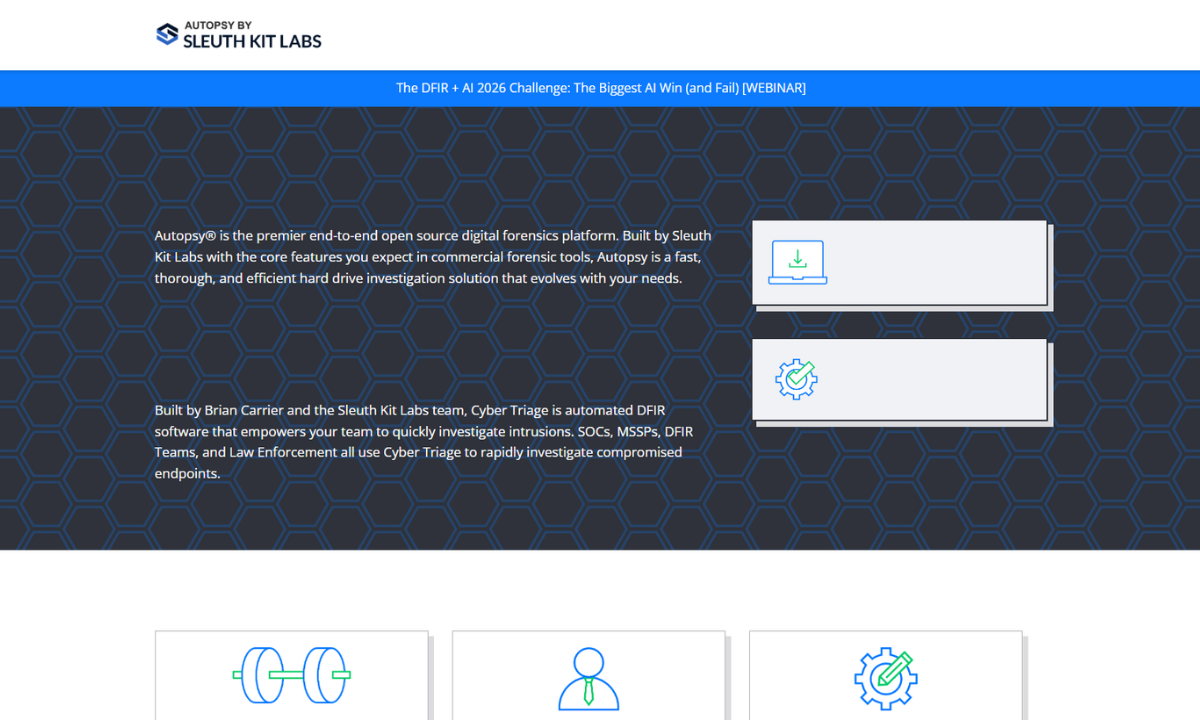
Autopsy is a digital forensics platform and graphical interface for The Sleuth Kit and other digital forensic tools. Used by law enforcement, military, and corporate investigation teams, it analyzes hard drives, disk images, and mobile devices to recover deleted files and reconstruct digital evidence.
Autopsy equips investigators with essential forensic modules:
-
Timeline Analysis: Mapping system events chronologically to trace user activity and file modifications.
-
Keyword Search & Hash Matching: Searching drive images for specific string patterns or matching file hashes against known malware databases.
-
Artifact Extraction: Recovering web browsing history, EXIF metadata from images, and unallocated space records.
Learning Autopsy introduces beginners to the fundamentals of digital evidence handling, chain of custody rules, and post-incident investigation methodologies.
11. John the Ripper
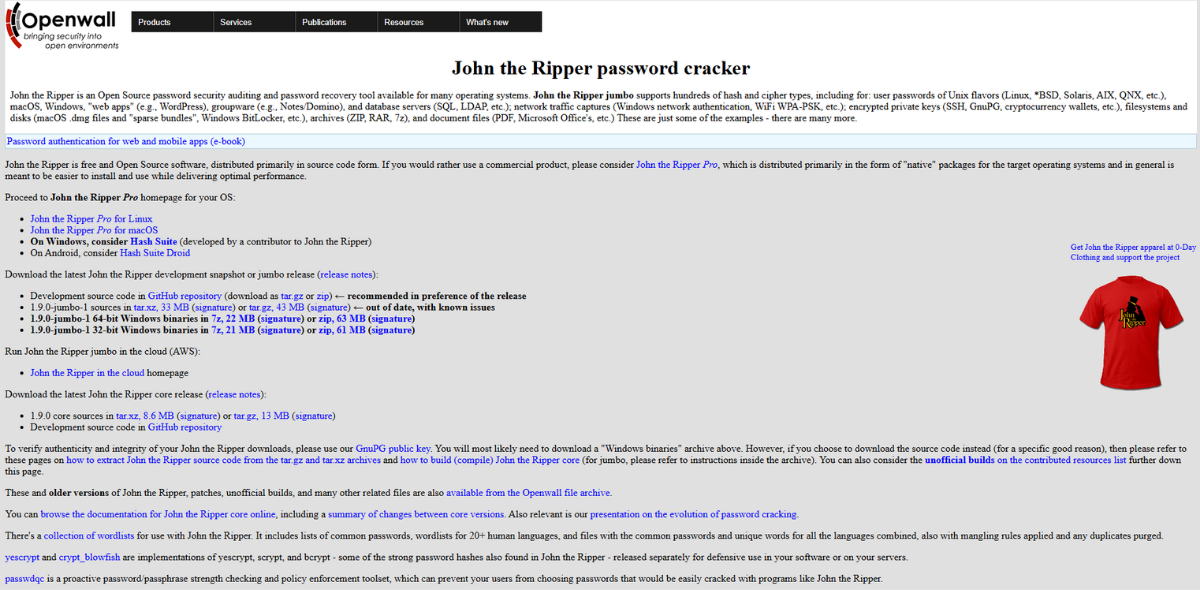
John the Ripper is an open-source, offline password security auditing tool designed to test password strength and recover lost credentials. It automatically detects hash types and executes dictionary attacks, rule-based mutations, and brute-force cracking attempts against stored password hashes.
Using John the Ripper teaches students how cryptographic hashes operate and why weak, predictable passwords expose organizations to credential stuffing attacks.
Auditing shadow files and password databases using custom wordlists demonstrates the critical importance of enforcing multi-factor authentication (MFA) and strong password complexity policies.
12. Hashcat
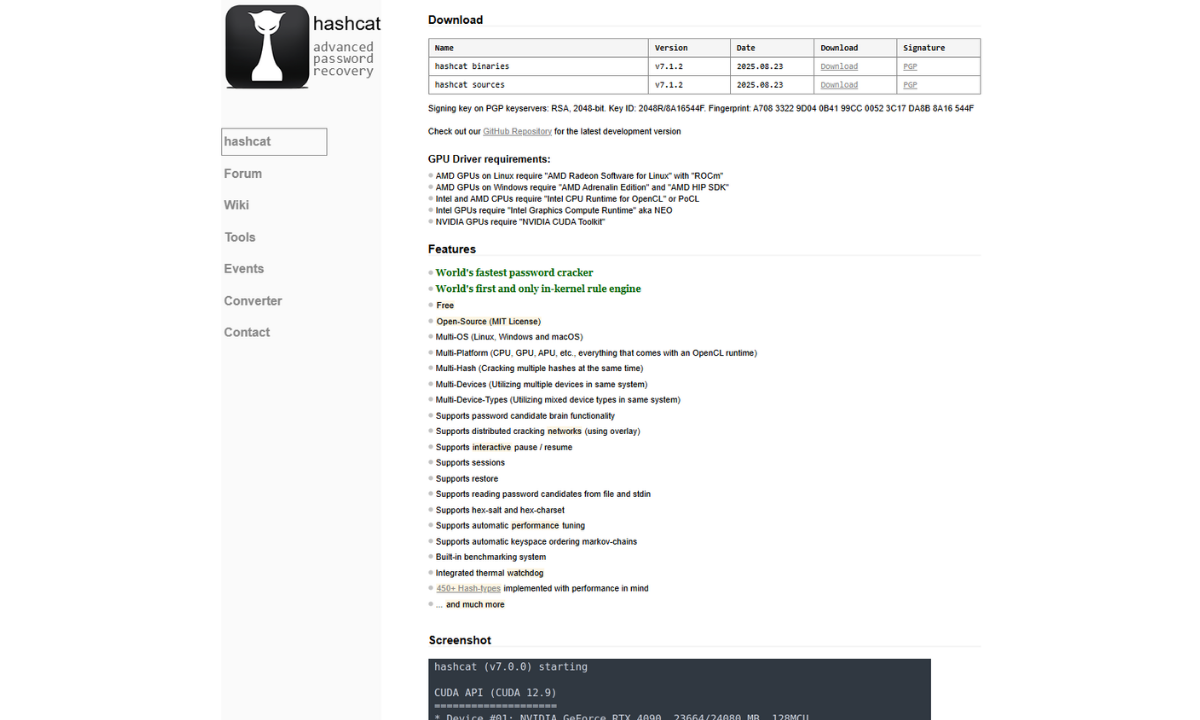
Hashcat is an advanced, GPU-accelerated hash cracking engine capable of processing billions of hash comparisons per second. It supports over 300 hashing algorithms, including MD5, SHA-256, NTLM, and bcrypt, making it the preferred utility for large-scale credential recovery operations.
Understanding Hashcat's attack modes such as mask attacks, combinator attacks, and hybrid rule sets helps beginners grasp the computational mechanics behind modern password cracking.
Why Choose Apponix Technologies for Your Cybersecurity Journey?
Enrolling in a structured cybersecurity training program in Bangalore at Apponix Technologies ensures you gain hands-on experience with these essential tools under expert guidance. Self-study can introduce basic software concepts, but mastering professional vulnerability analysis, log monitoring, and network defense requires guided practice in live lab environments.
Apponix offers a practical, career-focused learning experience designed to prepare you for high-demand cybersecurity roles:
-
Live Cyber-Range & Tool Sandboxes: Gain practical experience running scans with Nmap, analyzing packets in Wireshark, configuring Splunk dashboards, and testing web applications with Burp Suite.
-
1-on-1 Mentor Code & Lab Reviews: Receive direct feedback on your security reports, scan configurations, and attack analysis from active industry security professionals.
-
Resume Engineering & Portfolio Building: Optimize your professional resume and LinkedIn profile to showcase practical lab write-ups, vulnerability reports, and tool proficiencies that clear corporate ATS filters.
-
Mock Technical Interviews & Scenario Preparation: Practice answering real-world technical interview questions, whiteboarding security architectures, and demonstrating incident response workflows.
-
Direct Placement Connections Across Bangalore Tech Hubs: Access Apponix’s recruitment partner network across major Bangalore technology parks and Global Capability Centers (GCCs) for direct job interview opportunities, featuring guaranteed interview scheduling support.
Combining practical tool mastery with personalized mentorship and dedicated placement support equips you with the technical confidence and verifiable skills needed to launch a successful career in cybersecurity.
Conclusion
Building a successful career in cybersecurity starts with developing practical fluency in industry-standard software tools. Rather than focusing solely on memorizing certification study guides, dedicate regular hours to configuring lab environments, capturing network traffic, and analyzing system vulnerabilities using open-source tools like Nmap, Wireshark, Burp Suite, and Splunk. Document your hands-on exercises by writing detailed lab reports, publishing machine write-ups, and sharing custom scripts on public GitHub repositories to demonstrate your problem-solving capabilities to prospective employers.
After pairing practical software experience with structured training and targeted certification preparation, you establish a solid technical foundation that prepares you to clear professional exams and excel in high-impact security roles.
Reference:
1. https://nmap.org/
2. https://www.tenable.com/products/nessus

Apponix Academy
Apponix Academy