POPULAR COURSES
Master Programs




Table of contents:
|
1. Section 1: The Foundation (Beginner Tier)
|
|
2. Section 2: The Practical Tier (Moving Toward Enterprise Standards)
|
|
3. Section 3: The Portfolio Tier (Engineering for Production)
|
|
4. Why Choose Apponix? |
|
5. Conclusion |
The value of passive, certificate-based learning has effectively collapsed. Enterprise hiring managers are no longer screening candidates based on the number of tutorials completed; they are headhunting professionals who can showcase shippable, production-grade systems.
To secure a high-leverage role, you must demonstrate the ability to architect live solutions. This guide details curated AI project ideas that bridge the gap between academic theory and complex enterprise demands.
For those ready to transition from a student to a system architect, enrolling in an advanced AI Course in Bangalore at Apponix Technologies provides the necessary production-grade sandbox environment to deploy these concepts.
We are moving definitively beyond local Python scripts; the modern industrial tech stack demands scalable, observable, and autonomous systems.
Whether you are aiming for roles in MLOps, Generative AI engineering, or data orchestration, your portfolio is your primary legal tender. Below, we break down eight distinct project tiers ranging from foundational logic to advanced agentic workflows that define the current hiring baseline.
Section 1: The Foundation (Beginner Tier)
Before you can architect complex autonomous agents, you must master the fundamental interaction between data structures and algorithmic outputs.
These best AI projects for beginners are not just simple Hello World exercises; when approached with a production-first mindset, they teach you how to handle real-world data noise and pipeline bottlenecks, the exact hurdles every entry-level engineer faces in their first month on the job.
The objective here is to move beyond passive Jupyter Notebook experimentation. Instead, treat these as micro-services. You aren't just writing code; you are building discrete functional units that demonstrate clean data handling and logical precision.
1. Customer Sentiment Analyzer (The Contextual Clarity Project)

Instead of the standard, overused movie review classifiers, build a tool that monitors live social media feeds or product feedback APIs. The goal is to classify feedback not just as Positive or Negative, but to map sentiment to specific product features.
Don't just dump text into a model. Implement a data cleaning pipeline that strips HTML/JSON artifacts, normalizes text tokens, and handles edge cases (like sarcasm or short-form slang).
Instead of running this as a local script, containerize it using Docker so it can run as a background service that continuously polls a live feedback stream.
2. Automated Resume Parser (The Structured Extraction Project)

Every HR department deals with thousands of unstructured PDFs. Your task is to build a parser that uses Natural Language Processing (NLP) to convert a blob of resume text into a structured JSON schema.
The Technical Challenge: Your system should identify entities like Skillset, Years of Experience, and Education History regardless of the resume's unique formatting or PDF layout.
Focus on designing a schema that is database-ready. If you can output clean JSON that maps directly to an SQL table or a NoSQL collection, you’ve solved a real business problem.
Quick Tech Stack Comparison for Entry-Level Engineering
To succeed with these beginner AI projects using Python, you need to select a modern stack that emphasizes efficiency over bloat:
|
Feature |
Legacy Approach (Avoid) |
Modern Standard (Adopt)
|
|---|---|---|
|
Data Handling |
Manual string slicing & global variables. |
Pandas or Polars for efficient dataframes. |
|
NLP Backend |
Basic RegEx (Regular Expressions). |
SpaCy for entity recognition or LangChain. |
|
Execution |
Raw .py script execution. |
FastAPI to expose the parser as an endpoint. |
|
Environment |
Conda environments (heavy). |
venv or poetry for lightweight dependencies. |
By mastering these foundational elements, data cleaning, schema extraction, and endpoint exposure, you demonstrate to recruiters that you understand the plumbing of an AI application. That is the difference between a student who plays with models and an engineer who can integrate them into a business workflow.
Section 2: The Practical Tier (Moving Toward Enterprise Standards)
Now that you've mastered the basics, it’s time to stop building standalone classifiers and start architecting systems.
These represent real-world artificial intelligence projects as they move you away from training on static files and into the reality of modern tech: streaming data, retrieval, and persistent system state.
At this stage, you aren't just coding; you're building infrastructure that has to handle live inputs and deliver structured, reliable outputs.
3. PDF/Doc Q&A Engine (Retrieval-Augmented Generation)

Stop relying on an LLM’s internal training data. Build a system that allows a user to chat with their own private documents. This is the cornerstone of the current enterprise AI boom, where corporations need private, secure, and context-aware agents.
The Technical Challenge: Implement an RAG (Retrieval-Augmented Generation) pipeline. This means learning how to chunk text effectively, generate embeddings, store them in a vector database (like ChromaDB or Pinecone), and retrieve the right context for the LLM to answer specific questions accurately.
Production Skill Add-on: Don't just show a terminal output. Add source citation. If the model answers a question, it must cite exactly which page and paragraph of the source PDF it used. This trust factor is what recruiters look for.
4. Real-time Object Detection
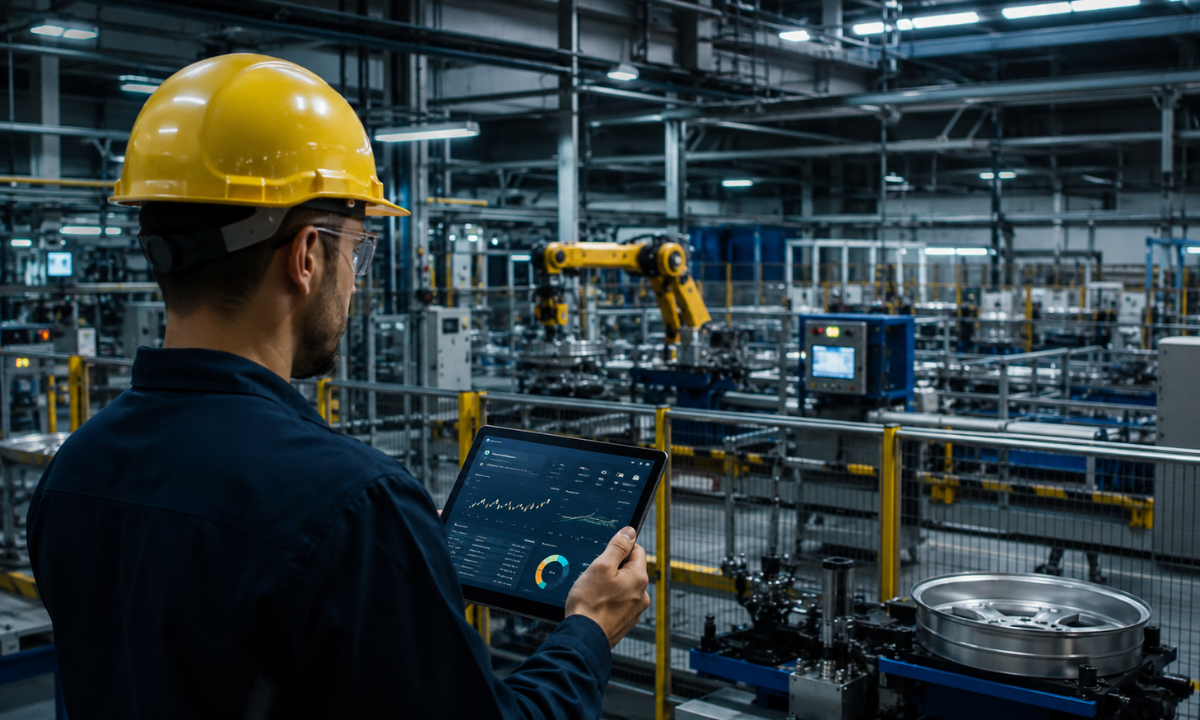
Static image classification is a solved problem. The real value is in video processing. Build an application that can take a live camera feed or a video file and detect specific objects like safety equipment in a factory or inventory items on a shelf in real-time.
The Technical Challenge: You’ll be working with OpenCV and YOLO (You Only Look Once) architectures. The focus here is latency. Can your code process 30 frames per second without crashing your machine?
Optimize your model. Use quantization or model conversion (like ONNX) to make your detection model lightweight enough to run on an edge device (like a Raspberry Pi or a smartphone).
5. Recommendation Engine (The Personalization Layer)

Every massive platform, Netflix, Spotify, and Amazon, is built on the back of recommendation engines. Build a system that learns user preferences based on interaction history (e.g., clicks, ratings, or watch time) and provides personalized suggestions.
Learn the difference between Collaborative Filtering (people who liked this also liked...) and Content-Based Filtering (suggesting items similar to what you've already engaged with).
Production Skill Add-on: Build a Cold Start strategy. How does your system recommend items to a user who has zero history? Solving the cold start problem is exactly what senior engineers do to keep new users engaged.
Comparing Your Growth: From Script to System
To visualize how your engineering approach evolves, look at how the complexity of your requirements scales as you build these projects:
|
Feature |
Beginner Projects |
Practical Projects
|
|---|---|---|
|
Data Source |
Static CSV or manual text. |
Live API feeds or unstructured docs. |
|
Model Role |
Providing a single label. |
Acting as an agent to track/retrieve. |
|
Performance |
Accuracy score. |
Throughput & context-fidelity. |
|
Output Type |
Simple strings or numbers. |
Structured JSON, cited references. |
Building these, you’re not just showing you can write Python; you’re showing you can manage state and performance. You're building systems that mimic the actual software found in high-revenue companies today.
Section 3: The Portfolio Tier (Engineering for Production)
If previous sections were about verifying your technical literacy, this final tier is about demonstrating engineering maturity.
These are the AI portfolio projects for students that separate the code-tinkerers from the engineers who understand how businesses actually run. At this level, you aren't just solving a puzzle; you are architecting a sustainable system that requires security, monitoring, and iterative improvement.
You should treat these as The Anchor Projects. A single deployment here, where you own the entire lifecycle, carries more weight than ten tutorials combined.
6. Autonomous Task Agent (The Agentic Orchestration Project)

Modern companies are moving beyond simple Q&A bots toward agents that can take action. Build an agent using a framework like LangGraph or AutoGen that can browse the web, interact with a database, and perform a multi-step task (e.g., Research a competitor's pricing and draft a summary report).
Master ReAct patterns (Reasoning + Acting). The system needs to decide which tool to use, handle loop failures (when the agent gets stuck), and manage hallucinations by implementing multi-step verification.
Production Skill Add-on: Integrate an observability tool like LangSmith or Weights & Biases to trace exactly why the agent made a specific decision. Debugging an agent's reasoning chain is a top-tier industry skill.
7. MLOps Lifecycle Pipeline (The Industrialization Project)

An AI model in a Jupyter Notebook is worth nothing to an enterprise. A model in a production container, however, is an asset. Your goal is to build a CI/CD pipeline that automates the training, testing, and deployment of a model.
Utilize Data Version Control (DVC) to manage datasets, write automated unit tests for your model output, and create a GitHub Actions workflow that pushes your model to a Docker registry upon a code commit.
Build a Model Drift monitor. If the accuracy of your model drops as the incoming data changes, your system should trigger an alert or an automated retraining loop.
8. Small Language Model (SLM) Fine-Tuning (The Niche Authority Project)

Foundation models are expensive and generic. The future belongs to SLMs (like Phi-3 or Mistral) tuned for specific business domains (e.g., Medical diagnosis, Legal compliance, or Coding standards).
Instead of just calling an API, fine-tune a model using Parameter-Efficient Fine-Tuning (PEFT) techniques like LoRA or QLoRA. This allows you to train a model on a consumer-grade GPU. Build a benchmarking suite. Compare your fine-tuned model's performance against the base model. Show the business case: My model is 90% as accurate as the generic giant but 10x cheaper to run.
The Hierarchy of Engineering Sophistication
To help you categorize your work, look at the following architectural evolution. Moving from the left column to the right column is the single best way to justify a higher salary bracket during your interview phase:
|
Level |
Focus |
Primary Metric
|
|---|---|---|
|
Beginner |
Logic & Syntax |
Model Accuracy |
|
Practical |
Pipeline & Retrieval |
Latency |
|
Portfolio |
Architecture & Governance |
Reliability/Cost-Efficiency |
Focusing your efforts on this advanced tier, you shift your identity from student to systems architect. You are not just building software; you are proving that you can take ownership of the entire intelligence pipeline.
Why Choose Apponix?
Building a portfolio is a necessary first step, but it is rarely sufficient without the right technical scaffolding. The modern job market requires more than just an active GitHub profile; it demands evidence of operational stability, system security, and code maintainability.
Apponix was designed to bridge this gap by simulating the exact production environments you will face in top-tier engineering roles, ensuring that your learning experience mirrors the day-to-day realities of senior software developers.
-
Production-Grade Infrastructure: We provide dedicated access to cloud-based GPU environments, allowing you to train, tune, and deploy your models on AWS and Azure platforms rather than struggling with local system limitations.
-
Active Architectural Mentorship: Unlike platforms that offer passive video content, our curriculum is delivered by veteran data scientists who review your codebase, identify structural inefficiencies, and guide you through real-world debugging workflows.
-
Industry-Aligned Curriculum: Every module is mapped directly to the technical requirements found in today’s top Global Capability Centers (GCCs), ensuring that the frameworks and libraries you learn are the ones currently driving market value.
-
Placement-Focused Iteration: Your projects undergo rigorous review cycles that mimic professional pull-request workflows, ensuring your portfolio showcases not just code, but the professional discipline of clean, scalable engineering.
Choosing an environment that prioritizes hands-on deployment over rote memorization, you effectively shorten the distance between your current technical level and the requirements for senior-level hiring. Your education should be an investment in your career trajectory, not merely a theoretical exercise in coding syntax.
Conclusion
The transition from a student to a high-earning artificial intelligence engineer is paved by the quality of the systems you build. As the market continues to saturate with candidates who have nothing to show but theoretical certifications, those who can demonstrate live, functioning pipelines will naturally command the most competitive offers and the highest professional respect.
If you are ready to stop studying and start engineering, it is time to align your efforts with a Training institute in Bangalore that understands the difference between a classroom exercise and a production-ready solution.
Connect with the career advisory team at Apponix today to schedule your technical consultation, select your specialized path, and begin building the high-impact projects that will define your career. The industry is waiting for architects who can deliver; ensure you are one of them.
Reference:
1. https://skillifysolutions.com/blogs/artificial-intelligence/best-ai-project-ideas-for-students/
2. https://huggingface.co/blog/jjokah/small-language-model

Apponix Academy
Apponix Academy