POPULAR COURSES
Master Programs



Table of contents:
|
1. Phase 1: Mastering the Pre-Cloud Prerequisites (Linux & Networking)
|
|
2. Phase 2: Infrastructure as Code (IaC) & Automation
|
|
3. Phase 3: Containerization & Microservices Orchestration
|
|
4. Phase 4: Multi-Cloud Proficiency, Security & AI Integration
|
|
5. Why Choose Apponix Technologies for Your Cloud Journey |
|
6. Conclusion |
The transition from manual IT administration to automated, AI-integrated cloud architectures has fundamentally redefined the technology industry. With India’s public cloud market projected by Gartner to surpass $17.5 billion, the demand for specialized infrastructure architects has reached unprecedented heights. For ambitious professionals, mastering foundational cloud computing skills for beginners is the critical first step.
Enrolling in an industry-aligned Cloud Computing Course in Bangalore accelerates this transition, providing the hands-on environment needed to move from legacy data center management to modern infrastructure engineering.
However, the definition of a competent cloud professional is rapidly evolving. As we approach 2027, the era of "ClickOps", manually configuring servers and networks via web consoles, is entirely dead.
Today’s Global Capability Centers (GCCs) and enterprise product startups require engineers who can write declarative infrastructure code, orchestrate containerized microservices, and deploy resilient, AI-ready multi-cloud environments.
IT professionals must aggressively upscale their technical portfolios beyond basic platform navigation to capture the lucrative salary premiums available across India's top tech hubs.
This comprehensive guide outlines the exact phases and technical competencies you must master to remain competitive, transition into high-impact roles, and become truly job-ready by 2027.
Phase 1: Mastering the Pre-Cloud Prerequisites (Linux & Networking)

The cloud is essentially a massive, highly optimized network of physical servers running complex hypervisors. Before you can secure a Virtual Private Cloud (VPC) or deploy autoscaling clusters, you must understand the underlying operating systems and data transmission protocols. Skipping these pre-cloud fundamentals is the most common mistake IT professionals make when structuring their cloud career roadmap.
Industry Insight: You cannot troubleshoot a failing containerized microservice in the cloud if you do not fundamentally understand how DNS resolves hostnames or how Linux handles process permissions.
To build a resilient foundation for 2027 cloud environments, your initial training must be strictly divided into two core technical domains before touching a cloud provider's console.
Domain A: Linux Command-Line Fluency
Over 90% of global public cloud workloads run on enterprise Linux distributions. In a modern cloud engineering environment, Graphical User Interfaces (GUIs) are considered anti-patterns because they consume unnecessary compute resources and cannot be automated. You must be comfortable operating entirely within a headless terminal.
-
Core Utilities & File Systems: Navigating directories, manipulating text, and managing permissions using commands like grep, awk, sed, chmod, and chown.
-
Process Management: Monitoring system performance, managing background daemons, and killing runaway processes using systemctl, top, and journalctl.
-
Shell Scripting: Writing robust Bash scripts to automate repetitive administrative tasks, handle environment variables, and bootstrap new virtual machines upon launch.
Domain B: Enterprise Networking Fundamentals
Cloud computing is entirely dependent on software-defined networking (SDN). An architect must understand exactly how a data packet travels from an end-user's browser through a web application firewall, into a load balancer, and finally to a backend database.
|
Core Networking Concept |
Application in Modern Cloud Architecture |
Critical Importance by 2027
|
|---|---|---|
|
TCP/IP & Subnetting |
Designing AWS VPCs, Azure VNets, and assigning CIDR blocks. |
Miscalculating subnets leads to IP address exhaustion or overlapping network ranges, causing catastrophic outages during corporate mergers. |
|
DNS & Traffic Routing |
Configuring Amazon Route 53 or Google Cloud DNS configurations. |
Absolute necessity for directing global traffic, implementing disaster recovery failovers, and reducing latency for regional users. |
|
Firewalls & Protocols |
Managing cloud Security Groups and Network Access Control Lists (NACLs). |
Serves as the primary zero-trust defense layer. Leaving administrative ports (like SSH port 22) open to the public internet remains a leading cause of ransomware breaches. |
|
Virtualization Mechanics |
Understanding compute allocation (EC2, Compute Engine). |
Clarifies exactly how physical CPU threads and RAM are abstracted, partitioned, and billed when you provision virtual machines. |
Mastering these infrastructure prerequisites ensures that when you transition to vendor-specific cloud platforms, you are learning how to orchestrate scalable environments rather than struggling to understand basic server connectivity issues.
Phase 2: Infrastructure as Code (IaC) & Automation

The days of logging into a web console, clicking through dropdown menus, and manually spinning up virtual machines are officially over. This manual process, widely mocked across the industry as "ClickOps," is unscalable, highly prone to human error, and virtually impossible to audit during a security breach.
In modern cloud environments, enterprise infrastructure is treated exactly like application software; it is written in declarative code, version-controlled in Git, and deployed through automated pipelines.
Enrolling in a rigorous cloud engineer course will rapidly demonstrate that Infrastructure as Code (IaC) is no longer an optional DevOps specialization; it is a mandatory architectural discipline.
Mastering IaC empowers you to provision thousands of servers in minutes, roll back destructive changes instantly, and enforce strict security compliance before a single cloud resource is even created.
The Paradigm Shift: Traditional IT vs. Modern IaC
To understand why hiring managers demand IaC capabilities, consider how it fundamentally upgrades infrastructure management:
|
Operational Metric |
Traditional "ClickOps" Model |
Modern IaC Model (2027 Standard)
|
|---|---|---|
|
Deployment Velocity |
Hours to weeks (Bottlenecked by manual IT ticketing systems). |
Minutes (Executed automatically via CI/CD pipelines). |
|
Environment Parity |
High "Configuration Drift" (Dev, Staging, and Prod rarely match). |
Perfect Consistency (All environments are spun from the exact same source code). |
|
Audit & Governance |
Poor (Requires searching through obscure administrative logs). |
Transparent (Git commit history tracks every precise change, author, and timestamp). |
|
Disaster Recovery |
Painstaking manual reconstruction of networks and servers. |
Executing a single command to instantly recreate the entire data center architecture. |
The Essential IaC Toolkit
To navigate this phase, you must build hands-on proficiency with the specific declarative tools driving India's Global Capability Centers (GCCs):
-
Terraform & OpenTofu: The undisputed industry standards for cloud-agnostic provisioning. They allow you to define vast network topologies across AWS, Azure, and Google Cloud using human-readable HashiCorp Configuration Language (HCL).
-
Ansible: While Terraform provides the virtual hardware (the servers and networks), Ansible configures the software inside those servers (installing security patches, managing application runtimes, and configuring firewalls).
-
Pulumi & AWS CDK: For professionals transitioning from software development, these modern tools allow you to provision infrastructure using general-purpose programming languages like Python, TypeScript, or Go.
Architecture in Action: Writing Your Data Center
Below is a glimpse of how modern cloud professionals operate. Instead of navigating complex AWS dashboards, an engineer writes this precise, readable code to instantly deploy a standardized, trackable web server:
|
PYTHON |
|
# Standard Terraform code to provision an AWS EC2 instance |
By mastering this code-first approach, you evolve from a reactive system administrator into a proactive infrastructure architect capable of managing massive, multi-region cloud deployments with absolute precision.
Phase 3: Containerization & Microservices Orchestration
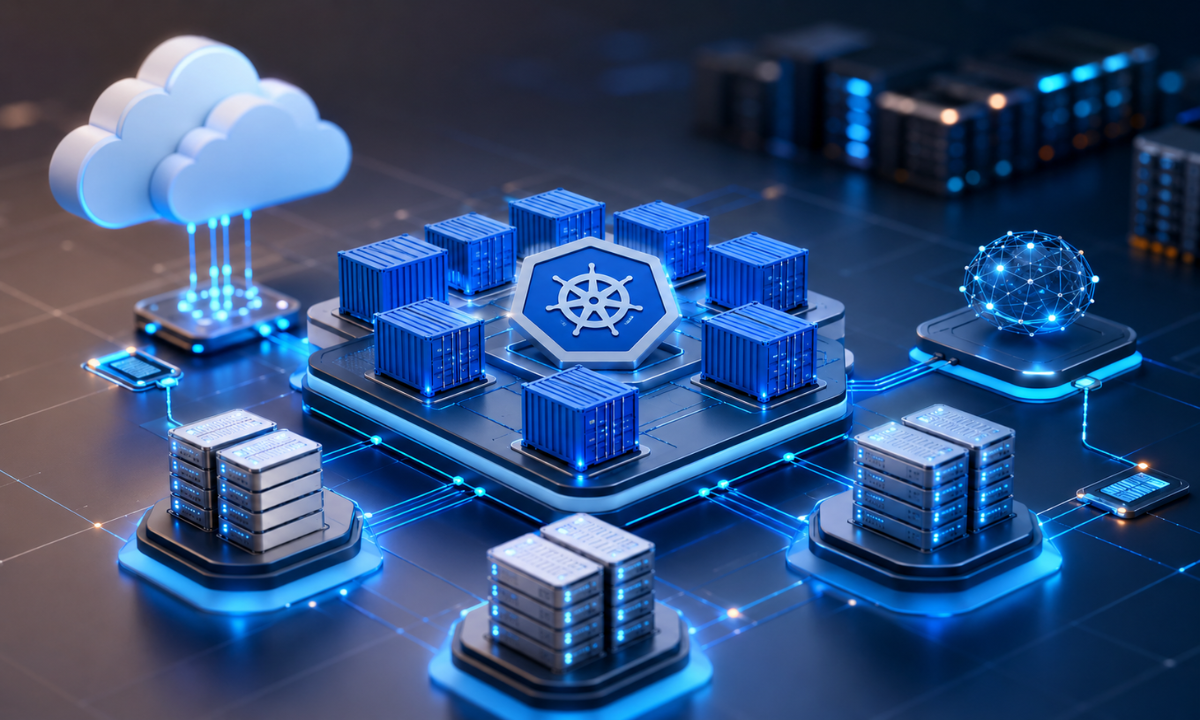
Once you can provision networks using code, the next architectural leap is changing how applications actually run on those networks. By 2027, the traditional monolithic application where the frontend, backend, and database are fused into a single massive codebase running on a heavy Virtual Machine (VM) is an obsolete anti-pattern.
Today's enterprises engineer applications as decoupled "microservices." This means breaking the application down into independent, bite-sized components (e.g., a payment service, an authentication service, and a search service) that communicate via APIs. To deploy these microservices efficiently without compatibility conflicts, engineers use Containerization.
Undertaking formal cloud computing training is crucial at this stage, as it provides the structured sandbox environments necessary to master the nuances of container lifecycles, resource allocation, and cluster management before attempting to orchestrate them in production.
The Evolution: Virtual Machines vs. Containers
To understand why Global Capability Centers (GCCs) mandate containerization, you must look at the compute efficiency it unlocks. While traditional Virtual Machines require a complete, heavy guest Operating System for every single application, containers share the host’s OS kernel.
|
Feature |
Legacy Virtual Machines (VMs) |
Modern Containers (Docker)
|
|---|---|---|
|
Architecture |
Heavy; requires a full Guest OS (Windows/Linux) per application. |
Lightweight; shares the host machine's OS kernel. |
|
Boot Time |
Minutes (Subject to OS boot sequences). |
Milliseconds to Seconds (Instant process startup). |
|
Portability |
Low; often tied to specific hypervisors (VMware, Hyper-V). |
High; guaranteed to run identically on a developer's laptop and an AWS production server. |
|
Resource Efficiency |
Poor; reserves static RAM/CPU even when idle. |
Excellent; it dynamically consumes only what the application needs. |
Core Tool 1: Docker (The Packager)
Docker is the industry-standard engine used to create containers. Instead of writing a 50-page manual on how to install software dependencies, developers write a simple Dockerfile. This file acts as a blueprint that packages the application code, system libraries, and runtime environment into a single, immutable unit called an "Image."
|
PYTHON |
|
# Example: A lightweight multi-stage Dockerfile for a Node.js Microservice |
Core Tool 2: Kubernetes (The Orchestrator)
If Docker is the shipping container, Kubernetes (K8s) is the automated shipping port. Managing 5 containers is easy; managing 5,000 containers across 50 global servers is a logistical nightmare.
Recent industry data highlights that Kubernetes is no longer just experimental infrastructure plumbing; it has become the de facto operating system for enterprise workloads, including stateful applications and AI agent pipelines. Kubernetes continuously monitors your containers, automatically achieving the following:
-
Self-Healing: If a payment container crashes at 3:00 AM, Kubernetes detects the failure and automatically spins up a replacement before users notice.
-
Horizontal Autoscaling: If web traffic spikes during a holiday sale, K8s automatically duplicates your frontend containers to handle the load, then scales them back down to save costs when traffic drops.
-
Rolling Updates: Deploys new application versions with zero downtime by gradually swapping out old containers for new ones.
In 2027, you will rarely install Kubernetes from scratch. Instead, you must master the managed Kubernetes services offered by hyperscalers: Amazon EKS, Azure AKS, and Google GKE. Combining declarative IaC (Terraform) to build the cluster, and Kubernetes manifests to deploy the containers, forms the absolute core of modern cloud engineering.
Phase 4: Multi-Cloud Proficiency, Security & AI Integration

Relying on a single cloud vendor is considered a critical business risk for enterprises. High-profile regional outages, regulatory data residency mandates, and pricing renegotiations have pushed organizations toward hybrid and multi-cloud strategies.
Modern cloud architects are expected to design resilient architectures that distribute risk across Amazon Web Services (AWS), Microsoft Azure, and Google Cloud Platform (GCP).
Enrolling in a specialized Google Cloud course in Bangalore provides deep exposure to Google's industry-leading data analytics, Kubernetes networking, and AI engines, complementing traditional AWS or Azure administration and giving engineers a distinct competitive edge across global enterprises.
The Hyperscaler Triumvirate: Strategic Alignment
Each major cloud provider has carved out distinct enterprise specializations. High-performing infrastructure engineers understand how to leverage the specific architectural strengths of each platform:
|
Cloud Provider |
Enterprise Stronghold |
Primary Workloads & Differentiators
|
|---|---|---|
|
Amazon Web Services (AWS) |
Market Dominance & Breadth |
Broadest catalog of mature managed services, enterprise IaaS migrations, and global footprint. |
|
Microsoft Azure |
Enterprise Ecosystem & Hybrid Cloud |
Seamless Active Directory/Office 365 integration, Windows Server modernization, and hybrid Azure Arc deployments. |
|
Google Cloud Platform (GCP) |
Big Data, AI/ML & Kubernetes Native |
High-throughput data pipelines (BigQuery), native container orchestration (GKE), and advanced AI infrastructure (Vertex AI). |
Cloud Security & Zero-Trust Architecture
In a distributed cloud perimeter, the old model of “protecting the network border” is obsolete. Modern cloud security operates on a strict Zero-trust architecture framework, assuming a breach and explicitly verifying every single request.
-
Identity & Access Management (IAM): Enforcing the Principle of Least Privilege (PoLP) using granular Role-Based Access Control (RBAC) and Attribute-Based Access Control (ABAC) policies.
-
Secrets & Key Management: Eliminating hard-coded API credentials by leveraging managed key stores like AWS Secrets Manager, Azure Key Vault, or HashiCorp Vault.
-
Cloud Security Posture Management (CSPM): Continuously scanning cloud infrastructure for misconfigured S3 buckets, exposed ports, and non-compliant IAM roles before vulnerabilities are exploited.
Cloud FinOps: The Rise of Cost Engineering
Cloud scalability can lead to budget overruns if infrastructure is provisioned without financial governance. Cloud FinOps combines engineering, finance, and operations to maximize the business value of every dollar spent on cloud computing.
Key Architectural KPI: Modern cloud engineers are measured not just by system uptime, but by unit economics, building auto-scaling architectures that dynamically contract during idle periods to eliminate cloud waste.
-
Capacity Rightsizing: Analyzing compute utilization metrics to downgrade over-provisioned virtual machine instance types and memory allocations.
-
Pricing Models: Combining On-Demand instances with Spot/Preemptible instances for fault-tolerant batch workloads and Savings Plans/Reserved Instances for predictable baseline computing.
-
Tagging & Cost Allocation: Enforcing strict metadata tagging across all automated IaC scripts to trace cloud expenditures back to specific business units, projects, and environments.
Generative AI & Cloud Infrastructure Integration
The rapid integration of Large Language Models (LLMs) and generative AI with agentic workflows into enterprise applications has made AI infrastructure management a primary cloud competency. Cloud engineers must now configure the scalable backends that host, fine-tune, and serve AI applications.
Key AI infrastructure proficiencies include:
-
Managed AI Gateways: Deploying scalable model endpoints using platforms like AWS Bedrock, Azure OpenAI Service, and GCP Vertex AI without managing physical GPU clusters.
-
Vector Database Hosting: Provisioning and scaling high-performance vector databases (such as Pinecone, ChromaDB, or pgvector on managed PostgreSQL) to power Retrieval-Augmented Generation (RAG) pipelines.
-
GPU Cluster Orchestration: Managing specialized compute instances equipped with NVIDIA H100/A100 Tensor Core GPUs, configuring high-bandwidth interconnects, and optimizing model inference latency.
Why Choose Apponix Technologies for Your Cloud Journey
Preparing for complex, multi-cloud enterprise architectures requires more than just watching theoretical video tutorials. It demands rigorous, guided practice in live configurations. Enrolling in specialized cloud certification programs in Bangalore at Apponix Technologies, a leading Training institute in Bangalore, ensures that you bridge the gap between basic IT administration and advanced infrastructure automation under the mentorship of active industry architects.
Apponix provides a structured, job-ready environment designed specifically to meet the high-bar hiring requirements of Global Capability Centers (GCCs) and product startups across India’s major tech hubs:
-
40+ Hours of Live Sandbox Labs: Move beyond slide decks by actively provisioning AWS VPCs, deploying Dockerized microservices via Kubernetes, and executing Terraform infrastructure-as-code scripts in dedicated virtual environments.
-
Comprehensive Exam Preparation: Access a structured curriculum, practice questions, and specific exam strategies designed to help you confidently clear recognized credentials like the AWS Certified Solutions Architect and Microsoft Azure Administrator.
-
1-on-1 Mentorship & Code Reviews: Receive direct architectural feedback on your IaC configurations and container deployments from senior cloud engineers.
-
Strategic Resume Engineering: Optimize your CV and GitHub portfolio to highlight practical project architecture, ensuring your application clears automated Applicant Tracking System (ATS) screening filters.
-
Direct Placement Connections Across Bengaluru Tech Parks: Leverage Apponix's established recruitment network across major IT corridors for exclusive interview opportunities and direct placement assistance.
Combining intensive lab practice, credential preparation, and focused career support, Apponix Technologies empowers IT professionals to execute modern cloud strategies and confidently step into high-paying infrastructure roles.
Conclusion
The cloud engineering landscape of 2027 rewards professionals who can execute complex, automated architectural deployments. Your roadmap to career advancement begins with securing the pre-cloud fundamentals of Linux administration and TCP/IP networking.
Once that foundation is solid, immediately pivot to learning declarative automation by writing Terraform modules and orchestrating application containers using Docker and Kubernetes. By committing to continuous, practical lab learning and networking strategically within India's thriving cloud ecosystem, you position yourself to capture critical leadership roles driving the future of enterprise infrastructure.
Reference:
https://www.coursera.org/articles/cloud-computing-skills
https://nareshit.com/blogs/what-skills-are-required-for-cloud-computing-a-complete-guide-for-beginners

Apponix Academy
Apponix Academy