POPULAR COURSES
Master Programs



Table of contents:
|
1. Why 2026 Is a Good Time to Start |
|
2. The Beginner's Digital Marketing Roadmap: Step by Step
|
|
3. Roadmap Summary Table |
|
4. Common Mistakes Beginners Make |
|
5. Essential Digital Skills Every Beginner Should Prioritize |
|
6. Why Learn Digital Marketing with Apponix Academy |
|
7. Conclusion |
|
8. Frequently Asked Questions |
Starting digital marketing from scratch can feel confusing. There are so many areas to learn, SEO, social media, Google Ads, content marketing, email marketing, analytics, and now AI-powered tools, that beginners often don't know where to start or what to learn next. A structured digital marketing roadmap for beginners can make the process much easier by giving you a clear learning path instead of trying to master everything at once.
Whether you're planning to learn through a digital marketing course in Bangalore or build your skills independently, this guide will take you through the key areas of digital marketing step by step and help you understand what to learn, when to learn it, and how to put those skills into practice.
Why 2026 Is a Good Time to Start

Digital marketing is always changing, but the need for skilled digital marketers is growing. The rise of AI tools has made essential skills like strategy, analytics, and content judgment even more valuable. Businesses still need humans who can use these tools effectively. By starting a structured digital marketing learning path now, you’ll build skills that remain relevant as tools and platforms evolve.
The Beginner's Digital Marketing Roadmap: Step by Step
Step 1: Understand How Digital Marketing Actually Works
Before touching any tool, spend time understanding the big picture: how different channels (search, social, email, paid ads) work together to attract, engage, and convert an audience. This foundational thinking is what makes every skill you learn afterward click into place faster, instead of feeling like a random collection of tactics.
Step 2: Learn the Core Digital Skills
This is where your actual marketing roadmap begins to take shape. Focus on building a working understanding of each core area before specializing in any one of them:
Search Engine Optimization (SEO): How websites rank on Google, and the basics of keyword research and on-page optimization
Social Media Marketing: How platforms like Instagram, LinkedIn, and Facebook are used for organic brand building
Content Marketing: Writing clear, purposeful content, blogs, captions, and ad copy
Email Marketing: Building lists and writing campaigns that people actually open and act on
Paid Advertising (Google Ads, Meta Ads): How paid campaigns are structured, targeted, and measured
Analytics: Reading data from tools like Google Analytics to understand what's actually working
For a more detailed breakdown of what "learning" each of these skills really looks like in practice, our article on core digital marketing skills you develop in a professional course is a useful companion to this stage.
Step 3: Get Hands-On With Real Tools
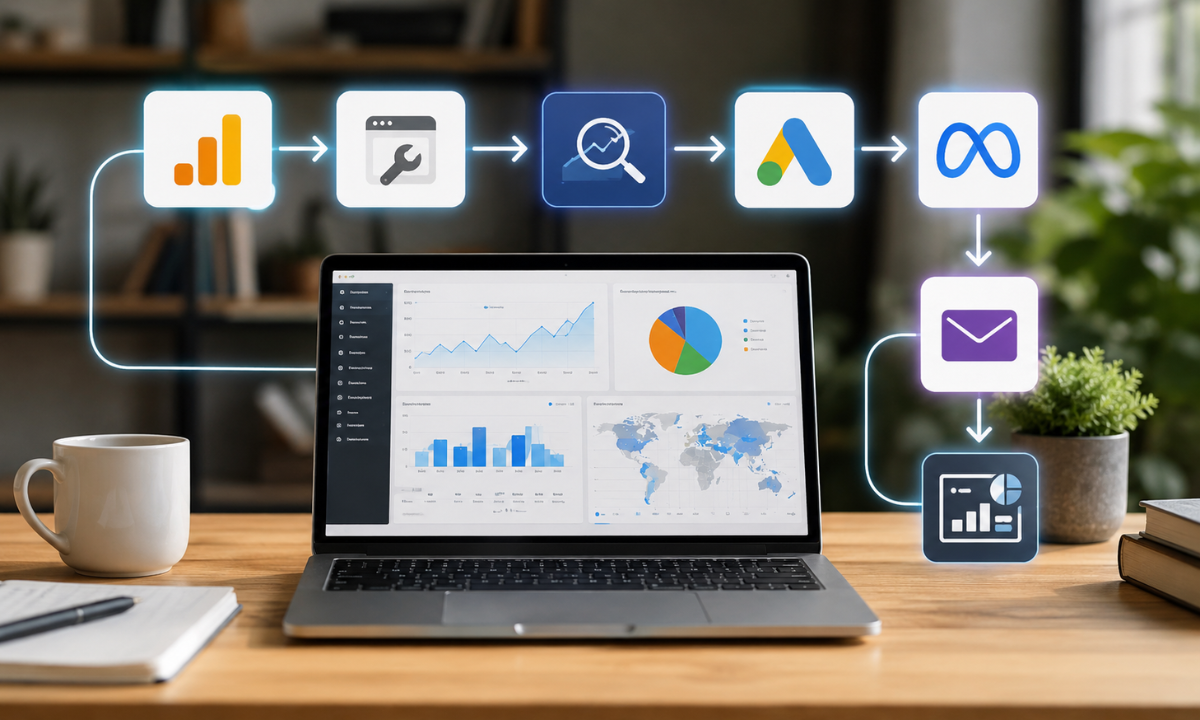
Reading about SEO or Google Ads is very different from actually using them. This stage is about hands-on practice:
Set up a free Google Analytics and Search Console account and explore real data
Run a small, low-budget Google Ads or Meta Ads campaign (even ₹500 teaches you more than hours of theory)
Use a free SEO tool to research keywords for a sample website or blog
Build a simple email sequence using a free-tier email marketing tool
This is also usually where structured, guided learning environments help the most, having someone available to explain why a campaign underperformed, rather than guessing on your own.
Step 4: Choose a Specialization
Once you have a working understanding of every core area, pick one or two areas to go deeper into. Most learners naturally gravitate toward either:
SEO and Content - for those who enjoy research, writing, and long-term strategy
Paid Advertising and Analytics - for those who enjoy numbers, testing, and fast feedback loops
Social Media and Content Creation - for those who enjoy creative, audience-facing work
Specializing doesn't mean abandoning the rest - it means having one area you can speak about with real depth, which matters a lot when you start applying for roles or clients.
Step 5: Build Real Projects and a Portfolio

At this stage, stop learning passively and start producing evidence of your skill. Some practical project ideas:
Grow a small blog or Instagram page from scratch and document the strategy behind it
Run and optimize a sample ad campaign, then write up what you learned from the results
Audit a local business's online presence and put together SEO or social media recommendations
Build a simple case study showing a "before and after" for any channel you specialize in
A portfolio like this does far more for your credibility than a list of completed courses, especially when talking to potential employers or clients.
Step 6: Get Certified and Start Applying Your Skills
Once you have both foundational knowledge and real project experience, formal certification adds credibility, especially recognized ones like Google Ads or HubSpot certifications, alongside a structured course certificate. At this point, you're ready to start applying for entry-level roles, internships, or freelance projects, whichever route matches your goals. If you're curious about what a career actually looks like once you're working, our piece on what a digital marketing analyst does and our broader digital marketing career roadmap from intern to specialist are good next reads.
Roadmap Summary Table
|
Stage |
Timeframe |
Focus |
|
Understand the landscape |
Week 1–2 |
How channels work together |
|
Learn core digital skills |
Month 1 |
SEO, social, content, email, ads, analytics |
|
Hands-on tool practice |
Month 2 |
Real accounts, small campaigns, real data |
|
Choose a specialization |
Month 2–3 |
Go deeper into 1–2 areas |
|
Build projects & portfolio |
Month 3–4 |
Real, demonstrable work |
|
Certify & apply skills |
Month 4 onward |
Credibility + job or freelance readiness |
This timeline is a general guide, not a strict rule. The right pace depends on how much time you can dedicate each week and whether you're learning independently or through a structured course.
Common Mistakes Beginners Make
Trying to learn every channel in depth at once, instead of building broad awareness first and specializing later
Skipping hands-on practice and relying only on theory or videos, without ever touching real tools or data
Chasing tools instead of fundamental tools changes constantly, but the underlying marketing thinking doesn't
Not building a portfolio, which makes it harder to demonstrate skill, regardless of how much you've actually learned
Learning in isolation, without feedback from someone more experienced who can point out blind spots early
Essential Digital Skills Every Beginner Should Prioritize
If your time is limited and you can only focus on a few things first, prioritize these digital skills, since they form the foundation on which almost everything else is built:
Basic SEO and keyword research
Google Analytics and reading campaign data
Writing clear, purposeful content
Understanding online marketing is structured
Comfort with at least one major social media platform for business use
Why Learn Digital Marketing with Apponix Academy
Following a roadmap on your own is possible, but a structured environment can meaningfully shorten the learning curve, especially the hands-on, feedback-heavy parts that are hardest to self-teach. Our Digital Marketing Course in Bangalore is built to follow a similar step-by-step logic to this roadmap:
Structured, beginner-friendly curriculum covering every core skill in this roadmap, in the right order
Live projects and real campaigns, so you get hands-on practice, not just theory
Trainers who are working digital marketing professionals, giving you real-world context beyond the textbook
Portfolio-building support, helping you turn coursework into demonstrable, job-ready proof of skill
Placement assistance, including resume building and interview preparation
If you're also evaluating multiple institutes before committing, our companion guide on how to choose the right digital marketing institute in Bangalore covers exactly what to look for.
Conclusion
Learning digital marketing doesn't have to mean jumping from one tutorial to another without knowing what to learn next. A clear beginner's marketing guide can help you understand the basics, build core skills, gain practical experience, choose a specialization, and gradually create real projects for your portfolio.
Whether you learn independently or enrol in a structured digital marketing course, following the right sequence can make your learning more focused and effective. If you're looking for digital marketing training in Bangalore, Apponix, a trusted Training Institute in Bangalore, can help you build practical, industry-relevant skills through structured training and hands-on learning.
Explore Apponix's digital marketing course and take your first step towards building a career in digital marketing.
Frequently Asked Questions
1. How long does it take a complete beginner to learn digital marketing?
With consistent effort, most beginners can build a solid working foundation in 3 to 4 months, and become genuinely job-ready with a portfolio in around 4 to 6 months. The exact timeline depends on how much time you can dedicate each week.
2. Do I need a technical or marketing background to start?
No. Digital marketing is accessible to complete beginners from any background. What matters most is consistent practice and a willingness to actually use the tools, not just read about them.
3. Should I learn everything or specialize early?
Start broad build a working understanding of all core areas first before specializing. Specializing too early can leave gaps in your fundamental understanding that show up later.
4. Is it possible to learn digital marketing for free?
Yes, many free resources exist for individual topics, but they often lack structure, hands-on feedback, and a clear sequence. A structured course can help you learn faster and avoid the common beginner mistake of jumping between disconnected tutorials.
5. What's the single most important skill to start with?
There isn't one "most important" skill, but understanding how different channels connect to the big-picture view covered in Step 1 makes every skill you learn afterward easier to apply correctly.
6. Can I follow this roadmap while working a full-time job?
Yes, many learners follow a similar roadmap part-time, dedicating a few hours a week. It simply takes longer to move through each stage is flexible or self-paced course formats can make this easier to manage.
Reference:
https://www.coursera.org/resources/digital-marketing-learning-roadmap
https://digitaltrainee.com/digital-marketing-knowledge-blogs/digital-marketing-roadmap-2026/

Apponix Academy
Apponix Academy