POPULAR COURSES
Master Programs


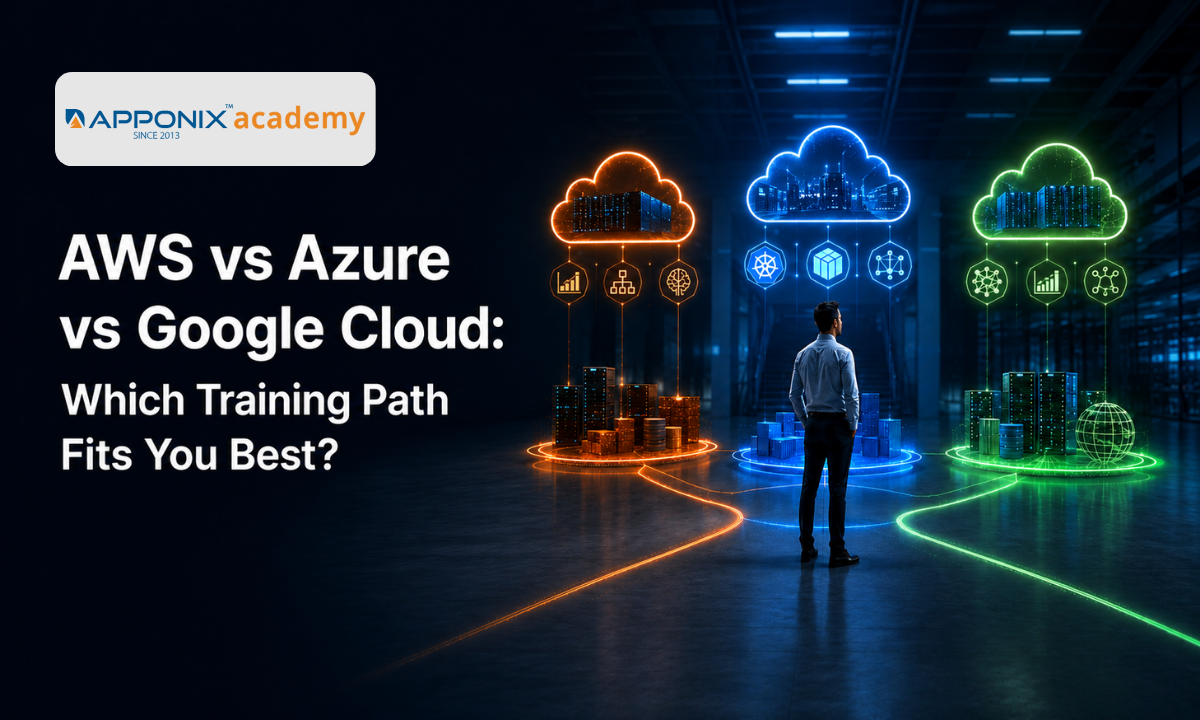
Table of contents:
|
1. Amazon Web Services (AWS) vs. Microsoft Azure
|
|
2. Google Cloud Platform (GCP)
|
|
3. Architectural Feature & Learning Curve Matrix
|
|
4. Personality & Background Profiler: Which Cloud Should You Learn First?
|
|
5. Why Choose Apponix Technologies for Multi-Cloud Mastery? |
|
6. Conclusion |
The global cloud infrastructure market has reached unprecedented velocity in 2026, surpassing $129 billion in quarterly spending as enterprises worldwide scale artificial intelligence and microservices workloads.
For IT professionals seeking to navigate this expanding ecosystem, enrolling in an industry-aligned Cloud Computing Course in Bangalore provides the practical foundation required to architect and deploy modern cloud solutions.
However, choosing where to begin requires a clear cloud platform comparison for beginners, as selecting between Amazon Web Services (AWS), Microsoft Azure, and Google Cloud Platform (GCP) directly shapes your day-to-day engineering workflows, project opportunities, and earning potential.
Together, the "Big Three" hyperscalers account for nearly 63% to 68% of worldwide enterprise cloud infrastructure. Yet, their underlying architectures, enterprise target audiences, and tooling philosophies differ significantly:
-
Amazon Web Services (AWS): The pioneer and global volume leader, holding roughly 28% to 31% of the market with the broadest catalog of mature IaaS and serverless offerings.
-
Microsoft Azure: The enterprise corporate backbone, commanding approximately 21% to 24% of the market with seamless Active Directory integrations and dominant enterprise software bundling.
-
Google Cloud Platform (GCP): The high-velocity data and AI challenger, capturing roughly 12% to 14% of the market with industry-leading analytics, container orchestration, and specialized AI infrastructure.
Choosing your initial training path is not about finding an undisputed "winner"; it is about aligning platform capabilities with your current technical background and long-term career aspirations. This guide breaks down the architectural differentiators, compensation trajectories, and role profiles across each major provider to help you make an informed, high-ROI career decision.
Amazon Web Services (AWS) vs. Microsoft Azure
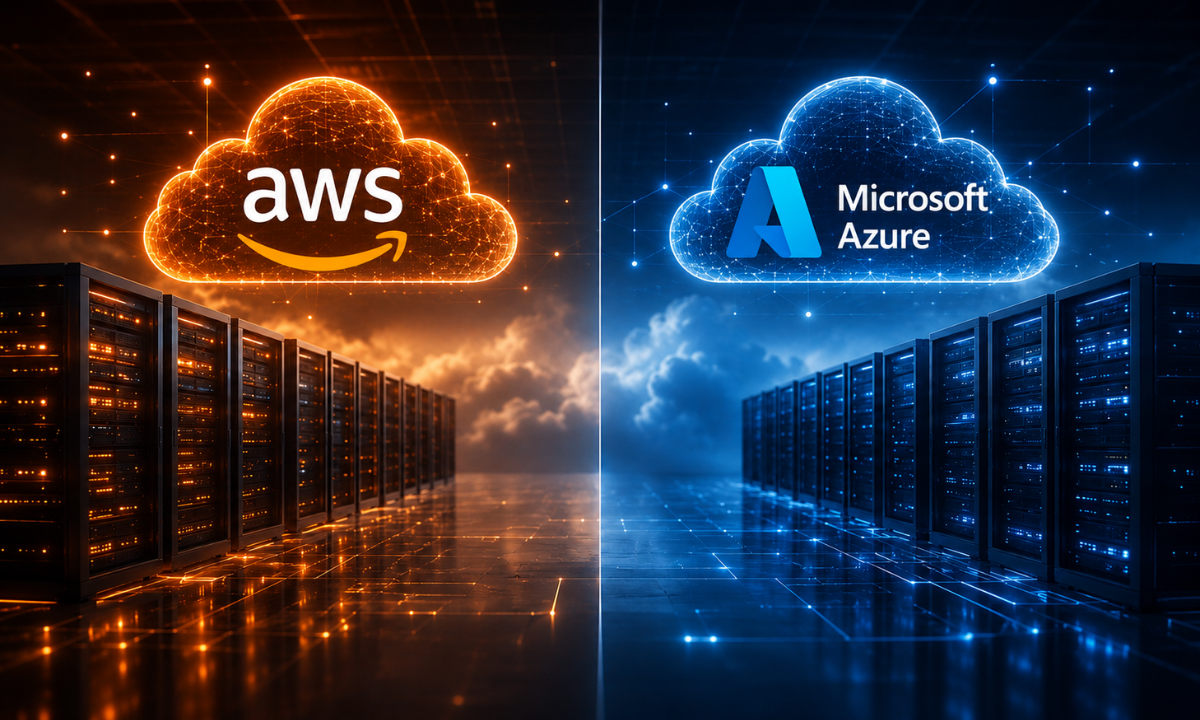
When evaluating AWS vs Azure, the decision often hinges on whether an organization prioritizes open-source, cloud-native agility or deep enterprise integration with existing Microsoft infrastructure.
Together, these two hyperscalers command more than half of the worldwide cloud market, representing the primary employment engines for cloud engineers in 2026.
Amazon Web Services (AWS): The Cloud-Native Benchmark
Pioneering the Infrastructure-as-a-Service (IaaS) sector in 2006, AWS remains the global market leader. It is the default operational platform for modern software companies, high-growth startups, and large-scale digital platforms that require granular infrastructure control.
-
Service Breadth & Maturity: AWS provides over 200 fully featured services, offering the deepest configurability across compute (Amazon EC2), serverless execution (AWS Lambda), and distributed databases (Amazon DynamoDB, Aurora).
-
Developer Ecosystem: Enjoys the largest global community, extensive open-source SDK support, and standard-setting documentation, making third-party tool integration seamless.
-
Infrastructure Granularity: Provides fine-grained networking controls and multi-availability-zone architectures designed for high availability and low-latency global deployments.
Microsoft Azure: The Corporate & Hybrid Heavyweight
Microsoft Azure is the premier choice for established enterprises, government agencies, and regulated industries undergoing digital modernization. Its rapid market share growth is propelled by deep integration with existing corporate Microsoft ecosystems.
-
Seamless Enterprise Identity: Native integration with Microsoft Entra ID (formerly Active Directory) and Microsoft 365 streamlines single sign-on, identity governance, and access controls for enterprise workforces.
-
Hybrid Cloud Leadership: Through services like Azure Arc and Azure Stack, organizations can manage on-premises data centers, edge appliances, and multi-cloud nodes from a unified Azure control plane.
-
Enterprise Generative AI: Exclusive partnerships and deep integrations with OpenAI give Azure a distinct competitive edge, allowing enterprise teams to deploy secure, private instances of advanced foundation models (Azure OpenAI Service).
Architectural & Career Comparison
|
Evaluation Metric |
Amazon Web Services (AWS) |
Microsoft Azure
|
|---|---|---|
|
Market Share (2026) |
~28% – 31% (Global Volume Leader) |
~23% – 25% (Fastest Enterprise Expansion) |
|
Primary Architecture Style |
Modular, granular, microservices-driven |
Integrated, enterprise PaaS, hybrid-ready |
|
Primary Target Market |
Startups, SaaS providers, digital-native enterprises |
Fortune 500, healthcare, banking, government |
|
Identity & Access Layer |
AWS IAM (Policy-based JSON definitions) |
Microsoft Entra ID (Role-based access & enterprise directory) |
|
Enterprise AI Workloads |
Amazon Bedrock, SageMaker, multi-model hubs |
Azure OpenAI Service, Copilot Studio, Cognitive Search |
|
Ideal Professional Profile |
Linux administrators, open-source developers, DevOps engineers |
Windows Server admins, .NET developers, enterprise IT architects |
Choosing between these two depends on your target employer: AWS provides maximum job availability across modern product firms, while Azure provides a direct path into large corporate enterprises managing hybrid digital transformations.
Google Cloud Platform (GCP)

While holding roughly 12% to 14% of the global cloud market in 2026, Google Cloud Platform (GCP) distinguishes itself not by raw catalog size, but by specialized architectural superiority.
In any practical cloud platform comparison, GCP consistently outperforms competitors in big data analytics, native container orchestration, and cost-effective artificial intelligence training.
Rather than competing head-to-head on generic enterprise office software, Google has positioned its cloud as the premier engine for data-first companies, high-throughput engineering teams, and AI research labs.
Core Architectural Pillars of GCP
-
Managed Container Dominance (Google Kubernetes Engine - GKE): As the original creator of Kubernetes, Google delivers the most mature, feature-rich, and automated managed Kubernetes service in the industry. GKE provides advanced multi-cluster management, automated node provisioning, and optimized GPU orchestration that enterprises rely on for microservices.
-
Serverless Big Data Analytics (BigQuery): Google's flagship serverless data warehouse allows data engineers to run ultra-fast SQL queries across petabytes of structured and semi-structured datasets in seconds, without requiring manual node provisioning or index tuning.
-
Custom AI Hardware & Machine Learning (Vertex AI & TPUs): Google’s proprietary Tensor Processing Units (TPUs) deliver industry-leading price-to-performance ratios for training and fine-tuning large language models. Through Vertex AI, engineering teams seamlessly integrate foundation models like Gemini with enterprise data pipelines.
-
Private Fiber Backbone: GCP traffic travels across Google’s privately owned, high-speed software-defined global fiber network, resulting in lower latency, fewer public hops, and consistent cross-region data transfers.
The GCP Talent & Compensation Profile
Because GCP targets high-complexity workloads rather than basic IT maintenance, the talent market behaves differently compared to AWS or Azure:
-
Specialized Skill Concentration: The job market for GCP focuses heavily on specialized roles such as Cloud Data Engineers, MLOps Specialists, and Kubernetes Infrastructure Architects rather than general sysadmin positions.
-
Premium Salary Trajectory: Because fewer engineers hold advanced GCP certifications compared to the larger pool of AWS candidates, certified GCP architects often command a notable salary premium in tech hubs like Bengaluru and Hyderabad.
-
Modern Tooling Alignment: GCP's developer experience is heavily centered around open-source standards, Terraform-first provisioning, and container native tools, providing a modern development environment for software engineers.
For professionals focused on artificial intelligence, large-scale data engineering, or advanced Kubernetes systems, Google Cloud offers a direct route into high-paying, cutting-edge technical roles.
Architectural Feature & Learning Curve Matrix
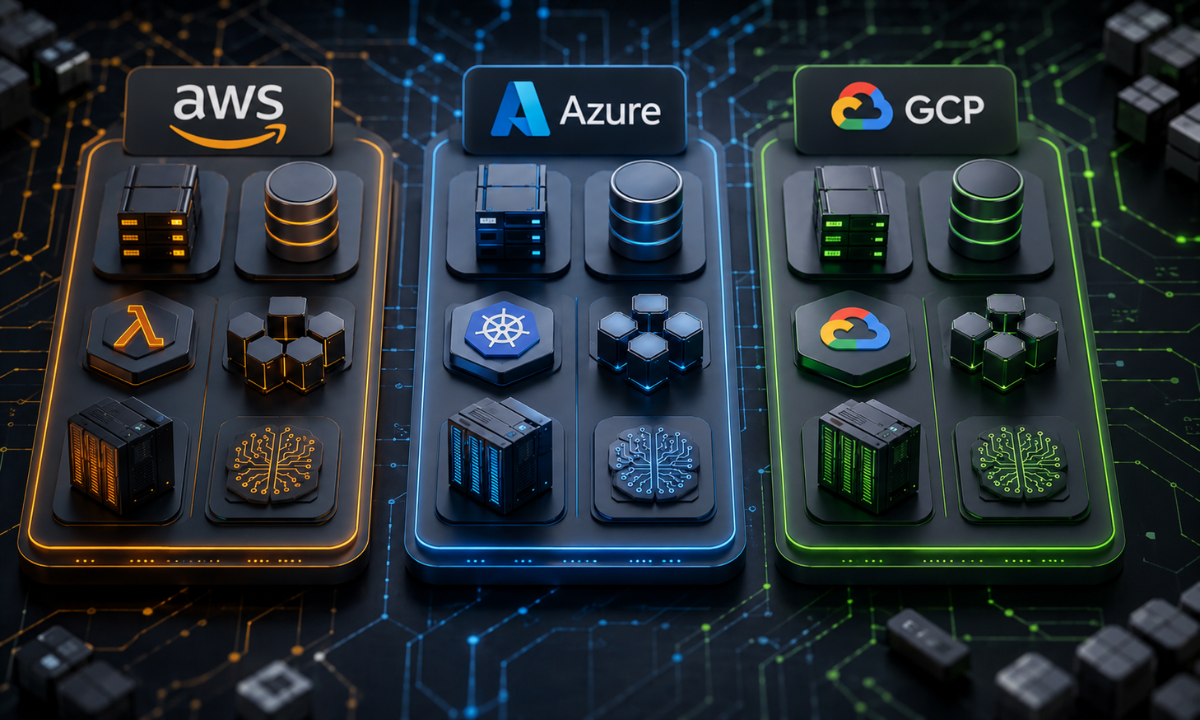
Navigating the nuanced differences between the three major providers requires looking past marketing buzzwords and analyzing their core infrastructure services.
Investing in structured cloud computing training accelerates this process by providing hands-on lab environments where you can test how each platform abstracts compute instances, partitions storage, and orchestrates artificial intelligence workflows.
Hyperscaler Architectural Service Mapping
|
Infrastructure Dimension |
Amazon Web Services (AWS) |
Microsoft Azure |
Google Cloud Platform (GCP)
|
|---|---|---|---|
|
Virtual Compute |
Amazon EC2 |
Azure Virtual Machines |
Google Compute Engine (GCE) |
|
Serverless Execution |
AWS Lambda |
Azure Functions |
Cloud Functions / Cloud Run |
|
Object Storage |
Amazon S3 |
Azure Blob Storage |
Google Cloud Storage |
|
Block Storage |
Amazon EBS |
Azure Managed Disks |
Google Persistent Disk |
|
Managed Kubernetes |
Amazon EKS |
Azure Kubernetes Service (AKS) |
Google Kubernetes Engine (GKE) |
|
Data Warehousing |
Amazon Redshift |
Azure Synapse / Fabric |
Google BigQuery |
|
Enterprise AI & ML Suite |
Amazon Bedrock & SageMaker |
Azure OpenAI Service |
Vertex AI & Gemini Enterprise |
|
Global Market Position |
~28% – 30% (Volume Leader) |
~20% – 23% (Enterprise Standard) |
~12% – 14% (Data/AI Specialist) |
|
Learning Curve |
Moderate (Extensive documentation) |
Moderate-to-Steep (Complex portal) |
Steep (Specialized conceptual models) |
Usability & Console Experience Breakdown
-
AWS Console & Navigation: AWS provides a modular, highly stable web interface backed by granular access policies. However, because its service catalog contains hundreds of discrete tools, beginners can easily feel overwhelmed by the sheer volume of configuration parameters.
-
Azure Portal & Blade Navigation: Azure utilizes a horizontal scrolling "blade" dashboard that unifies subscription management, resource groups, and billing. While it simplifies organizing complex corporate subscriptions, searching through deeply nested settings requires deliberate practice.
-
Google Cloud Console & Project Hierarchy: GCP organizes all infrastructure strictly under a clean "Project" hierarchy. Its interface is clean and developer-centric, making it straightforward to track API quotas, spin up managed clusters, and monitor unified spending.
Evaluating these operational characteristics alongside your technical strengths ensures that your initial learning efforts yield rapid practical competence rather than console confusion.
Personality & Background Profiler: Which Cloud Should You Learn First?

Choosing an initial cloud ecosystem is most effective when guided by your existing technical strengths, daily work environment, and target industry sector. Rather than attempting to learn all three providers simultaneously, focusing on the platform that naturally complements your background accelerates your path to practical competence and employment.
Profile 1: The Windows Administrator or Enterprise IT Specialist
-
Your Technical Background: You manage on-premises Windows Server environments, configure Active Directory domain controllers, administer Microsoft 365 tenants, or build applications using .NET and C#.
-
Your Recommended Platform: Microsoft Azure
-
Why It Fits: Azure shares the same architectural conventions as Microsoft’s enterprise ecosystem. Your foundational understanding of Active Directory translates directly into Microsoft Entra ID governance, reducing your learning curve and qualifying you for enterprise hybrid cloud migrations.
-
Target Starting Credential: Microsoft Certified: Azure Administrator Associate (AZ-104).
Profile 2: The Linux Admin, Open-Source Developer, or Tech Beginner
-
Your Technical Background: You are comfortable working inside Linux terminals, writing scripts in Python or Node.js, contributing to open-source software, or entering IT with no legacy infrastructure baggage.
-
Your Recommended Platform: Amazon Web Services (AWS)
-
Why It Fits: AWS remains the default cloud platform for startups, SaaS businesses, and digital-native product companies. Its documentation, vast community support, and dominance in overall job openings make it the most reliable baseline credential for maximizing general market opportunities.
-
Target Starting Credential: AWS Certified Solutions Architect Associate (SAA-C03).
Profile 3: The Data Analyst, AI/ML Practitioner, or Data Engineer
-
Your Technical Background: You write SQL queries, build business intelligence dashboards, train machine learning models in Python, or manage distributed big data pipelines.
-
Your Recommended Platform: Google Cloud Platform (GCP)
-
Why It Fits: Google Cloud offers the industry's most advanced serverless data analytics environment through BigQuery, alongside native MLOps infrastructure in Vertex AI and custom TPU hardware. Mastering GCP positions you directly for high-paying data and AI engineering roles.
-
Target Starting Credential: Google Cloud Associate Cloud Engineer (ACE), followed by the Professional Data Engineer credential.
Profile 4: The DevOps Engineer or Site Reliability Specialist
-
Your Technical Background: You manage containerized workloads, configure automated CI/CD deployment pipelines, and write declarative Infrastructure as Code using Terraform.
-
Your Recommended Platform: AWS + GCP (Container & IaC Focus)
-
Why It Fits: Modern DevOps engineers must operate comfortably across multi-cloud topologies. Starting with AWS provides broad infrastructure exposure, while adding Google Cloud delivers deep mastery over native Kubernetes orchestration (GKE) and declarative multi-region automation.
-
Target Starting Credential: AWS Certified DevOps Engineer Professional or Google Professional Cloud DevOps Engineer.
Career Strategy Decision Framework
Selecting your initial cloud certification based on this alignment ensures that every concept you learn reinforces your day-to-day workflow, positioning you for rapid promotion and higher compensation across enterprise tech corridors.
Why Choose Apponix Technologies for Multi-Cloud Mastery?
Mastering enterprise cloud platforms requires moving past passive video walkthroughs and engaging directly with live production topologies.
Apponix Technologies delivers an industry-aligned learning environment structured specifically to help engineers build real-world competency across AWS, Azure, and Google Cloud. Under the direct guidance of practicing enterprise architects, learners transition from fundamental theory to multi-cloud deployment, automation, and infrastructure governance.
-
Practical Multi-Cloud Sandbox Labs: Provision live Virtual Private Clouds on AWS, configure identity federations in Microsoft Entra ID, and deploy scalable container clusters on Google Kubernetes Engine within dedicated enterprise sandboxes.
-
1-on-1 Architecture Mentorship: Work directly with senior cloud consultants who review your declarative Infrastructure as Code scripts, analyze system design choices, and provide personalized technical feedback.
-
Production-Grade Portfolio Engineering: Transform practical lab exercises into documented GitHub repositories featuring clear architecture schematics, security policies, and deployment scripts that demonstrate real capability to technical interviewers.
-
Direct Placement Support & Mock Interviews: Access an established recruitment network across major technology corridors and Global Capability Centers (GCCs), complete with targeted technical mock interviews and resume optimization.
Combining deep architectural training with rigorous lab practice and direct career coaching, Apponix Technologies, a leading Training institute in Bangalore, ensures you build the verifiable proof-of-work required to step confidently into high-demand infrastructure roles.
Conclusion
Navigating the multi-cloud era successfully comes down to depth before breadth. While enterprise architectures increasingly span multiple providers, attempting to learn AWS, Azure, and Google Cloud simultaneously often leads to surface-level memorization rather than true operational proficiency.
The most effective career trajectory begins by anchoring your skills in the ecosystem that directly complements your current technical background and target industry. Linux and open-source practitioners gain the broadest immediate market reach with Amazon Web Services, systems administrators and enterprise specialists achieve rapid impact within Microsoft Azure, and data or AI professionals unlock high-value engineering niches through Google Cloud Platform.
Once you have mastered the networking, security, and automation primitives of your primary provider, expanding into multi-cloud architectures becomes a natural and rewarding progression. Backed by structured lab environments, verified project repositories, and dedicated mentorship, your platform expertise will position you at the cutting edge of enterprise technology.
Reference:
https://kodekloud.com/blog/cloud-certification-roadmap-aws-azure-gcp/
https://www.ituonline.com/blogs/how-to-choose-between-aws-azure-and-google-cloud-certifications/

Apponix Academy
Apponix Academy