POPULAR COURSES
Master Programs

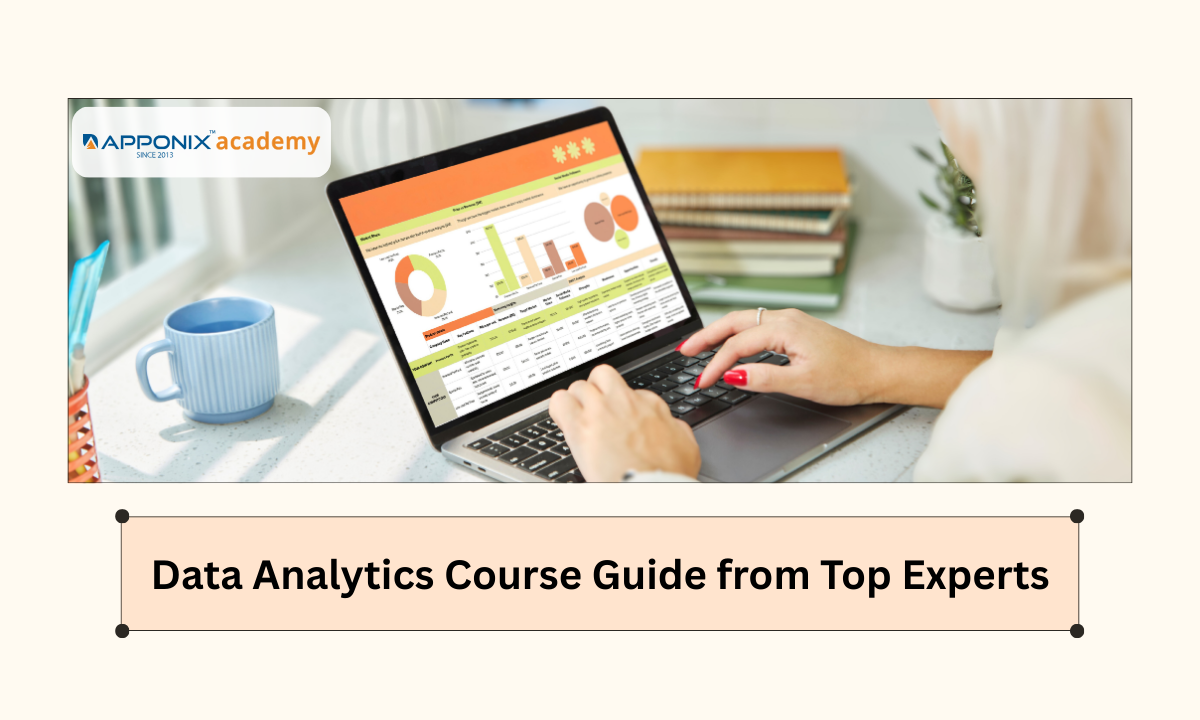
Table of contents:
|
1. Why a Well-Structured Syllabus Matters |
|
2. Core Modules in a Data Analytics Course Syllabus
|
|
3. Combining Modules: Building Real-World Analytics Skills |
|
4. Why Training Institute in Bangalore Helps Accelerate Your Learning |
|
5. What You Should Expect from a Good Data Analytics Course in Bangalore |
|
6. Final Thoughts |
|
7. FAQs |
As a trainer at Apponix, I have noticed that many aspiring analysts search for a comprehensive data analytics course in Bangalore before enrolling. To help them make an informed decision, I often share what an ideal data analytics course syllabus should include, covering all essential tools, techniques, and mindsets.
A strong syllabus ensures you get exposure to multiple skills required in real-world analytics roles, from data cleaning to visualisation and statistical modelling.
Why a Well-Structured Syllabus Matters
A well-designed syllabus acts as a roadmap: it ensures you build foundational skills first, add knowledge of software and tools next, and finally practise with real business problems. This structure helps avoid patchy learning, common when students jump directly into tools without understanding data analytics fundamentals.
With a good syllabus, you get clarity on what to expect, build confidence gradually, and prepare strongly for analytics job requirements.
Core Modules in a Data Analytics Course Syllabus
Here’s the breakdown of key modules and concepts that any robust course should cover.
1. Business Analytics Using Excel
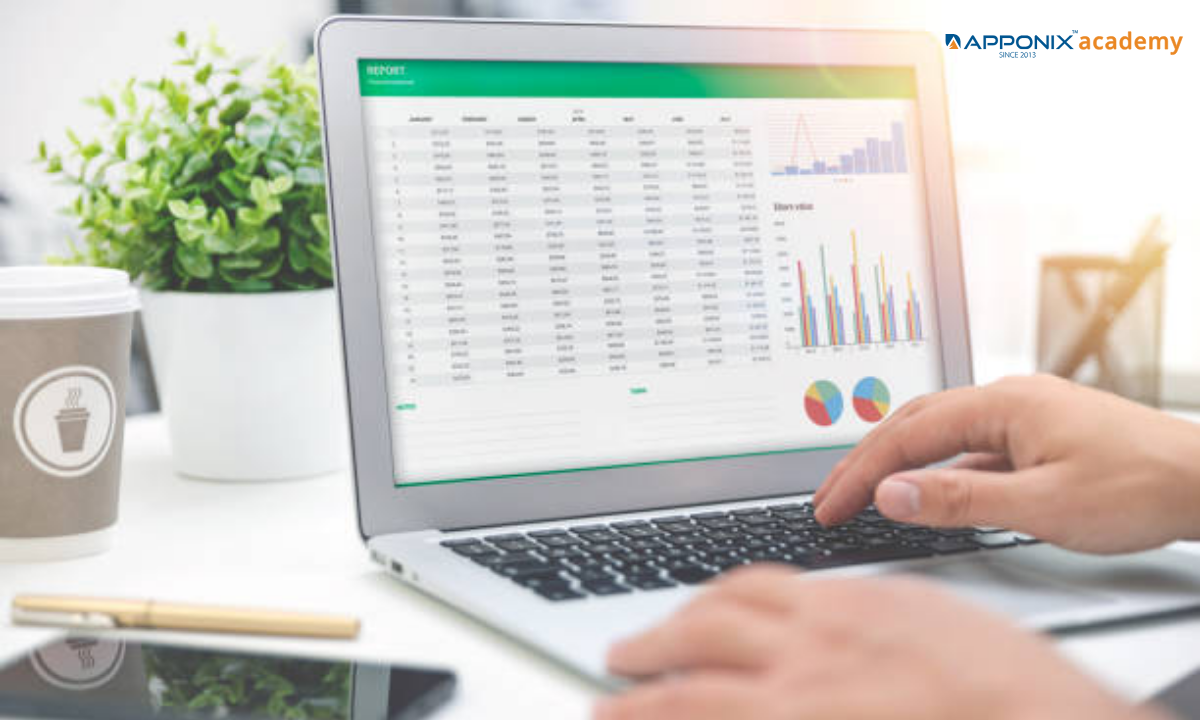
Excel remains a widely used tool in many businesses, especially for initial data reviews, quick analysis, budgeting, pivot tables and basic reporting. A good syllabus should cover:
-
Data cleaning and formatting in Excel
-
Functions and formulas for analysis (SUM, VLOOKUP, IF conditions, etc.)
-
Pivot tables and pivot charts
-
Basic data summarisation and descriptive statistics
-
Understanding data quality, data validation and error handling
Excel lays the foundation for simple analytics tasks and helps students develop data-handling habits early.
2. SQL Fundamentals for Data Manipulation
Databases are the backbone of data-driven organisations. SQL Fundamentals is a critical module that teaches how to query, filter and aggregate data stored in relational databases. Key skills include:
-
Writing SELECT queries
-
Filtering with WHERE, ORDER BY, LIMIT
-
Aggregation with GROUP BY, COUNT, SUM, AVG
-
Joins (INNER, LEFT, RIGHT) for combining multiple tables
-
Basic subqueries and nested queries
With SQL skills, learners are ready to extract and prepare data before analysis, a crucial step in any data workflow.
3. Python for Data Analytics
For advanced data handling, automation, statistical analysis, and scripting, a Python for Data Analytics module becomes very valuable. This part of the syllabus typically includes:
-
Core Python programming constructs (data types, loops, functions)
-
Libraries like pandas for data manipulation
-
NumPy for numerical operations
-
Data cleaning and preprocessing
-
Handling CSV, JSON, Excel and database exports
-
Basic scripting for data pipelines
Python’s flexibility makes it suitable for handling large datasets, automating repetitive tasks, and performing advanced analysis skills that many employers seek.
4. R Programming (Optional / Advanced)
For those interested in statistical modelling, hypothesis testing, or working in research-heavy roles, learning R programming offers advantages. A course may include:
-
Data frames, vectors and matrices
-
Statistical tests and distributions
-
Visualisation using built-in R plotting packages
-
Data summarization
-
Simple predictive modelling
R adds an additional tool in your analytics toolbox, especially useful in domains like research, pharma, social science or any role requiring strong statistics.
5. Data Visualisation: Tableau and Power BI
Once data is processed and analysed, data visualisation helps communicate insights clearly. A strong syllabus includes either or both Tableau for Data Visualization and Power BI modules. Students learn:
-
Importing datasets into Tableau/Power BI
-
Building charts: bar, line, scatter, heatmaps
-
Dashboards and interactive reporting
-
Filters, drill-downs and dynamic visualisations
-
Sharing and exporting reports
Visualisation skills are critical; stakeholders often rely on dashboards to make business decisions.
6. Statistics & Probability for Analytics Context
Data alone isn’t enough. You must interpret it correctly. The statistics & probability module in the syllabus teaches:
-
Descriptive statistics: mean, median, mode, variance, standard deviation
-
Probability fundamentals and distributions
-
Hypothesis testing, correlation, and regression analysis basics
-
Confidence intervals and sampling techniques
-
Inferential statistics
This statistical grounding ensures analysts can draw reliable conclusions, avoid misleading interpretations, and back their insights with mathematical reasoning.
7. Data Structures & Algorithms (Optional but Useful)
Though not core for all analytics roles, knowing data structures & algorithms is advantageous. Especially if you handle large data, optimisation, backend analytics pipelines, or data engineering tasks. This includes understanding lists, arrays, dictionaries/hash maps, search and sort algorithms, and basic complexity concepts.
Even basic knowledge enhances performance when writing code for data manipulation or backend logic.
Combining Modules: Building Real-World Analytics Skills
Bringing all these modules together equips learners to handle full data workflows, such as:
-
Extracting data from a database using SQL
-
Cleaning and preprocessing using Python or Excel
-
Performing statistical analysis using Python or R
-
Visualizing results with Tableau or Power BI
-
Preparing reports or dashboards for stakeholders
This end-to-end experience mirrors real industry requirements and makes you job-ready with practical exposure.
Why Training Institute in Bangalore Helps Accelerate Your Learning
As a trainer at Apponix, I’ve seen how structured learning environments help students avoid common pitfalls. At our training institute in Bangalore, we offer experienced instructors, peer interaction, deadlines, diverse datasets, and exposure to practical use cases, all of which matter more than isolated practice.
Guidance helps you understand nuances like data cleaning ethics, data privacy, handling missing values, and avoiding biases, lessons often missed in self-study but critical in professional settings.
What You Should Expect from a Good Data Analytics Course in Bangalore
A high-quality course should deliver:
-
A complete data analytics course syllabus covering all core modules
-
Clear explanations and hands-on projects
-
Balanced focus on theory (statistics, probability) and tools (SQL, Python, BI tools)
-
Real-world datasets to simulate job conditions
-
Regular assessments and feedback
-
Guidance for certifications or portfolio-building
Completing such a course positions you strongly to enter analytics roles confidently.
Final Thoughts
A well-rounded data analytics course syllabus is more than a list of topics; it’s the backbone of your analytics career. Mastering fundamentals such as SQL, Python, Excel, statistics, data visualization and data handling ensures that you can handle real-world problems and deliver valuable insights.
If you want to start your analytics journey on the right foot, enrolling in a structured data analytics course at Apponix Training Institute in Bangalore offers the training, guidance, and exposure you need. With dedication, practice and the right skill set, you can build a stable, growth-oriented career in data analysis and beyond.
FAQs
Q: Do I Need Programming Experience Before Starting A Data Analytics Course?
Not necessarily. With basics in Excel and logical thinking, you can begin. Courses often teach core programming and SQL from scratch.
Q: Is It Mandatory To Learn Both Python And R?
No. Learning one language (Python is more versatile) is usually enough. R helps if you plan statistical-heavy or research-based roles.
Q: How Long Does A Full Data Analytics Course Usually Take?
Depending on intensity and schedule, most courses can be completed in 3 to 6 months.
Q: What Tools Are Most Useful For Beginners?
Excel, SQL, Python and one BI tool (Tableau or Power BI) are great starting points.
Q: Does Completing A Data Analytics Course Guarantee A Job?
Certification helps, but practical skills, projects, communication and problem-solving ability matter more. Stay consistent, build a portfolio, and apply knowledge that improves your job chances significantly.
Apponix Academy
Apponix Academy