POPULAR COURSES
Master Programs





Table of contents:
|
1. Key Points |
|
2. What is a DevOps Engineer? |
|
3. What is the DevOps Engineer Role in Simple Terms |
|
4. What do DevOps Engineers do daily? |
|
5. Core DevOps Roles and Responsibilities |
|
6. Responsibility 1: Continuous Integration and Continuous Delivery (CI/CD) |
|
7. Responsibility 2: Infrastructure Automation |
|
8. Responsibility 3: Monitoring and Logging |
|
9. Responsibility 4: Cloud and Resource Management |
|
10. Responsibility 5: Security and Compliance (DevSecOps) |
|
11. Responsibility 6: Collaboration and Communication |
|
12. DevOps Engineer Job Role Across Different Companies |
|
13. Skills Required for DevOps Engineer Roles and Responsibilities |
|
14. Common Tools Used by DevOps Engineers |
|
15. Why DevOps Engineer Roles Are in High Demand |
|
16. Career Growth Path of a DevOps Engineer |
|
17. Tips for Beginners Learning DevOps |
|
18. Why Professional Training Matters |
|
19. Final Thoughts |
|
20. FAQs |
DevOps engineer roles and responsibilities define how modern software teams build, test, deploy, and maintain applications at speed and scale. When I first tried to understand DevOps, I realised it’s not just a job title but a mindset that connects development and operations into one smooth workflow.
A DevOps engineer acts as the bridge between teams, tools, and processes to ensure faster and more reliable software delivery. In this blog, I’ll clearly explain what a DevOps engineer does, why the role matters, and what responsibilities come with it in real-world projects.
Read till the end, because the actual role of a DevOps engineer is far more practical and impactful than most job descriptions make it sound.
Key Points
-
What are DevOps Engineer, and why does the role exists
-
What is a DevOps engineer's role in modern IT teams
-
Core DevOps roles and responsibilities explained simply
-
Daily tasks included in a DevOps engineer's job role
-
Tools and technologies DevOps engineers commonly use
-
Skills required to handle DevOps engineer roles and responsibilities
-
Career scope and learning path for DevOps aspirants
What is a DevOps Engineer?
When people ask me, “What are DevOps engineer?” I usually explain it this way. A DevOps engineer is a professional who helps development and operations teams work together efficiently.
Their main goal is to automate processes, reduce errors, and speed up software delivery. They focus on collaboration, automation, and continuous improvement.
What is the DevOps Engineer Role in Simple Terms
The DevOps engineer's job role is all about making software delivery smooth and reliable. Instead of working in silos, DevOps engineers connect coding, testing, deployment, and monitoring.
They ensure that applications move from development to production without delays. This role improves both speed and quality in software development.
What do DevOps Engineers do daily?
Many beginners wonder, “What do DevOps Engineers do every day?” Their daily work includes automation, monitoring systems, and managing deployments.
They also troubleshoot issues and improve system performance continuously. Here’s a simple overview of daily activities:
|
Daily Task |
Purpose |
|
Automating builds |
Faster software delivery |
|
Monitoring systems |
Detect issues early |
|
Managing servers |
Ensure uptime |
|
Collaborating with teams |
Improve workflows |
Core DevOps Roles and Responsibilities
The heart of DevOps lies in its responsibilities. These responsibilities help organisations release software faster and more safely.
A DevOps engineer works across tools, processes, and teams. Below are the core responsibilities explained clearly.
Responsibility 1: Continuous Integration and Continuous Delivery (CI/CD)

CI/CD is a major part of DevOps engineer roles and responsibilities. DevOps engineers set up pipelines to automate code integration and deployment.
This reduces manual errors and speeds up releases. It also helps teams catch bugs early.
Example:
Whenever developers push code, the pipeline automatically tests and deploys it.
Responsibility 2: Infrastructure Automation

Infrastructure automation means managing servers using code. DevOps engineers use tools to create and manage infrastructure efficiently.
This reduces manual configuration mistakes. Automation also makes scaling easier.
|
Automation Area |
Benefit |
|
Server setup |
Faster provisioning |
|
Configuration |
Consistency |
|
Scaling |
Better performance |
Responsibility 3: Monitoring and Logging

Monitoring ensures systems stay healthy. DevOps engineers track performance, uptime, and errors in real time.
Logs help identify the root cause of issues quickly. This responsibility improves reliability and user experience.
Responsibility 4: Cloud and Resource Management

Most DevOps engineers work with cloud platforms. They manage resources like servers, storage, and networks efficiently.
Cost optimization is also part of this responsibility. Smart resource usage saves money and improves performance.
Responsibility 5: Security and Compliance (DevSecOps)

Security is now part of DevOps workflows. DevOps engineers integrate security checks into pipelines.
This ensures safer deployments without slowing down development. Security becomes proactive, not reactive.
Responsibility 6: Collaboration and Communication

DevOps engineers act as team connectors. They collaborate with developers, testers, and system administrators.
Clear communication helps avoid misunderstandings. This responsibility improves teamwork and productivity.
DevOps Engineer Job Role Across Different Companies

The DevOps engineer job role can vary by organisation. Some focus more on automation, others on cloud or security.
However, the core goal remains the same. That goal is delivering reliable software faster.
|
Company Type |
DevOps Focus |
|
Startups |
Speed and automation |
|
Enterprises |
Stability and scalability |
|
SaaS companies |
CI/CD and monitoring |
Skills Required for DevOps Engineer Roles and Responsibilities
Handling DevOps work requires a mix of skills. Both technical and soft skills are important.
Professional training helps structure this learning. Here’s a simple breakdown.
|
Skill Type |
Examples |
|
Technical |
Linux, cloud, scripting |
|
Tools |
CI/CD, monitoring tools |
|
Soft skills |
Communication, problem-solving |
Common Tools Used by DevOps Engineers
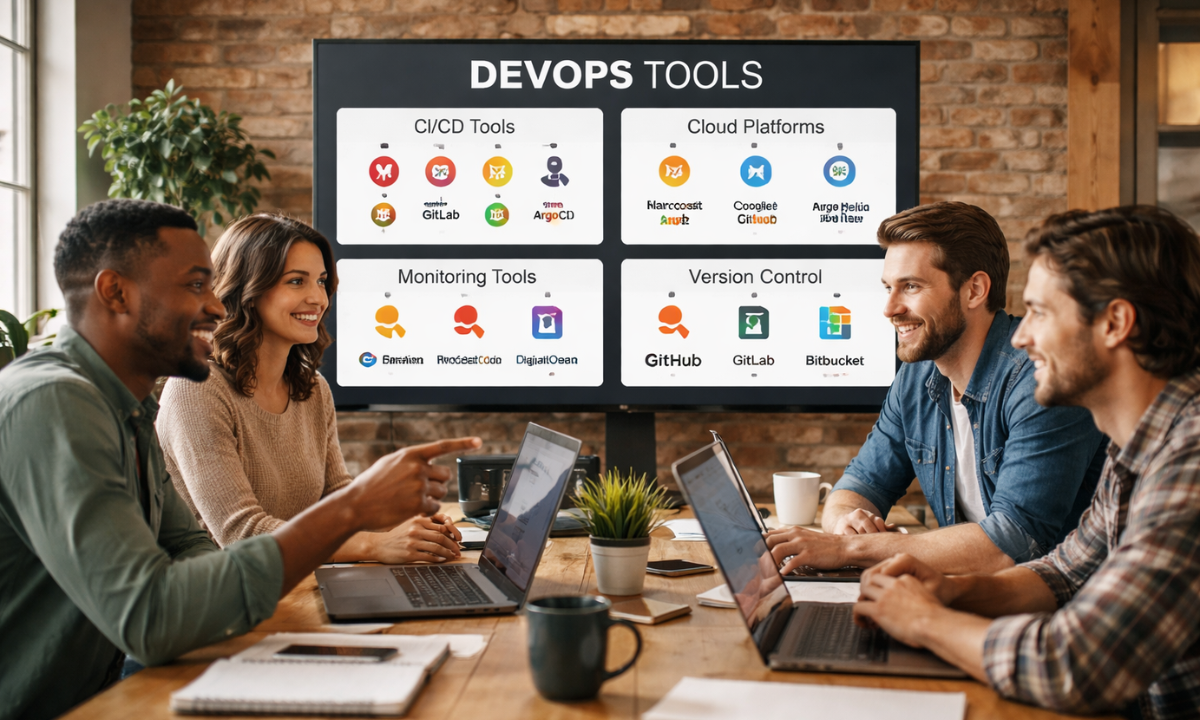
DevOps engineers rely on tools to automate and monitor systems. These tools make work efficient and repeatable.
Learning them hands-on is very important. Here are some commonly used tools.
|
Tool Category |
Purpose |
|
CI/CD tools |
Automate builds |
|
Cloud platforms |
Host applications |
|
Monitoring tools |
Track system health |
|
Version control |
Manage code |
Why DevOps Engineer Roles Are in High Demand
DevOps roles are growing rapidly across industries. Companies want faster releases and fewer failures.
DevOps engineers help achieve both goals. This demand makes DevOps a strong career choice.
Career Growth Path of a DevOps Engineer
DevOps offers long-term career growth. Beginners can move into senior or specialised roles.
Skills remain relevant across industries. Continuous learning keeps the career future-proof.
Tips for Beginners Learning DevOps
-
Start with Linux and basic networking
-
Learn automation concepts early
-
Practice with real projects
-
Understand workflows, not just tools
Consistency matters more than speed when learning DevOps.
Why Professional Training Matters
DevOps concepts can feel complex at first. Structured training makes learning easier and practical. Mentors help clear doubts quickly. Hands-on projects improve confidence.
Final Thoughts
Understanding DevOps engineer roles and responsibilities helps you see why this role is so valuable in modern IT. DevOps is about collaboration, automation, and continuous improvement.
If you are planning to build a career through a DevOps course in Bangalore, focus on practical learning and real-world tools. That’s why many learners choose Apponix to gain strong DevOps foundations with expert guidance.
FAQs
1. What is the role of a DevOps engineer in simple words?
A DevOps engineer helps development and operations teams work together smoothly. They automate software delivery processes, manage infrastructure, monitor systems, and ensure applications are deployed faster, more reliably, and with fewer errors across different environments.
2. Is DevOps suitable for beginners?
Yes, DevOps is suitable for beginners who have basic knowledge of computers and an interest in automation and systems. With structured training, step-by-step learning, and hands-on practice, beginners can gradually understand DevOps tools, workflows, and real-world responsibilities.
3. Do DevOps engineers need coding skills?
DevOps engineers do not need advanced coding skills at the beginning. Basic scripting knowledge in languages like Shell or Python is helpful for automation tasks. Most DevOps tools focus more on configuration, workflows, and process automation than complex programming.
4. Is DevOps a good career choice?
Yes, DevOps is a strong career choice due to high industry demand and continuous growth opportunities. Companies across sectors rely on DevOps engineers to improve software delivery speed and system reliability, making this role valuable and future-proof.

Apponix Academy
Apponix Academy