POPULAR COURSES
Master Programs
Table Of Contents:
| 1. What Is Python? |
| 2. Python Learning Curve |
| 3. Python Career Paths |
| 4. Common Myths About Python |
| 5. Can You Learn Java After Python? |
| 6. Why Learn Python with Apponix Academy |
| 6. What Is Java? |
| 7. Java Learning Curve |
| 8. Java Career Paths |
| 9. Common Myths About Java |
| 10. Can You Learn Python After Java? |
| 11. Python vs Java: Side-by-Side Comparison |
| 12. A Simple Way to Choose Between Python and Java |
| 13. Can You Learn Both Eventually? |
| 14. Conclusion |
| 15. Frequently Asked Questions |
If you're taking your first step into coding, you've probably come across the same question many beginners ask: Python vs Java – which one should you learn first? Both are widely used programming languages with applications across software development, web applications, automation, data, and more. If you're looking to build these skills through structured training, Apponix Academy offers programming courses designed to help beginners develop a strong foundation and practical coding skills.
However, they have different approaches to programming and may suit different learning goals. Understanding these differences can help you choose the right starting point, especially if you're considering a Full Stack Developer Course in Bangalore and want to build a strong foundation in programming.
In this guide, we'll compare Python and Java based on ease of learning, syntax, performance, career opportunities, applications, and other important factors to help you decide which language better matches your goals.
What Is Python?
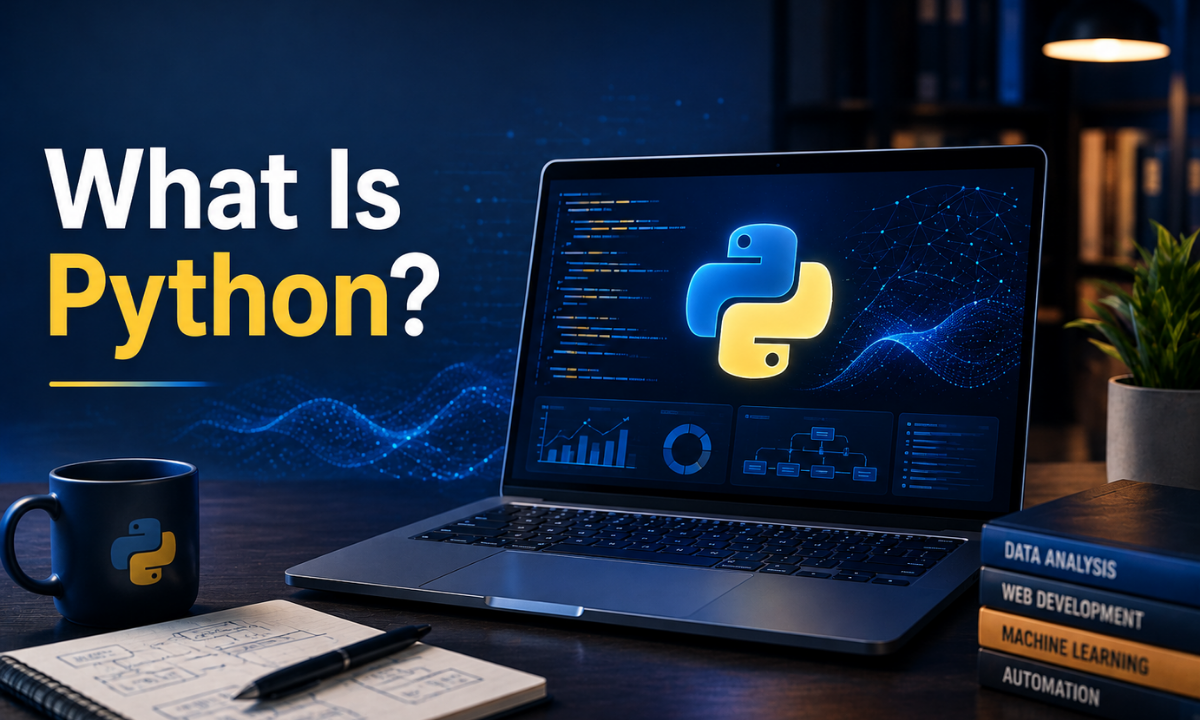
Python is a high-level, general-purpose programming language known for its simple and readable syntax. Its code is designed to be relatively easy to understand, which makes Python a popular starting point for people who are new to programming. Instead of focusing on complex syntax, beginners can spend more time learning important programming concepts such as variables, functions, conditions, loops, and data structures.
Python is also a versatile language. It is used for a wide range of applications, including web development, data analysis, artificial intelligence, machine learning, automation, testing, and scripting. Its large collection of libraries and frameworks allows developers to build applications without having to create every feature from scratch.
Another advantage is Python's large developer community and extensive ecosystem. Beginners can find a wide range of learning resources, documentation, and open-source tools while building their skills.
Because of its readability, flexibility, and broad range of applications, Python is often recommended as a first programming language. However, its suitability ultimately depends on what you want to build and the career path you plan to follow.
Python Learning Curve
For someone learning programming for the first time, Python is generally easier to start with than Java. Its simple and readable syntax allows beginners to focus on understanding programming concepts such as variables, loops, conditions, functions, and data structures without dealing with too much syntax at the beginning.
For example, Python allows you to write a basic program with relatively little code. This can make the early learning process less intimidating and help beginners see the results of their work quickly.
So, if your priority is getting started quickly and learning programming fundamentals with less complexity, Python may feel more approachable.
Python Career Paths
Python is widely used in areas such as data science, artificial intelligence, machine learning, automation, scripting, and web development. Frameworks such as Django and Flask allow developers to build web applications and backend systems, while libraries such as NumPy, pandas, and scikit-learn are commonly used for data-related work.
Python can be a good choice if you are interested in:
-
Data analysis and data science
-
Artificial intelligence and machine learning
-
Automation and scripting
-
Backend and web development
-
Testing and software development
-
Rapid prototyping
Its relatively simple syntax also allows developers to build and test ideas quickly, which is one reason Python is widely used across different technology fields.
Common Myths About Python
A few misconceptions come up often enough to be worth addressing directly:
-
"Python is only for beginners, not real jobs." False - Python powers production systems at major companies, particularly in data-heavy and AI-driven roles, and pays competitively at senior levels.
Can You Learn Java After Python?
Yes, and many working developers do exactly that over the course of their career. Since Python and Java share core programming fundamentals, variables, control flow, functions, object-oriented concepts, learning one makes the second noticeably easier to pick up later.
A common, practical approach is to master one language deeply first, build real projects and confidence with it, and then add the second once you have a job or a solid foundation, rather than trying to learn both simultaneously as a total beginner.
Why Learn Python with Apponix Academy
-
Our Python Programming course covers core fundamentals through to real-world application in data analysis, automation, and web development, with live projects throughout.
-
Both courses are led by working professionals, include hands-on coding exercises and real projects, and come with dedicated placement support, resume building, and interview preparation.
-
Flexible online, offline, and self-paced formats mean you can start whichever path fits your schedule and learning style.
What Is Java?

Java is a general-purpose, object-oriented programming language that has been widely used for building software applications for decades. One of its key features is its ability to run on different operating systems through the Java Virtual Machine (JVM). This is often described as “write once, run anywhere,” meaning developers can compile Java code and run it on different platforms that support the appropriate Java runtime.
Java is commonly used for enterprise applications, backend development, web applications, financial systems, cloud-based software, and Android development. Its strong structure and object-oriented approach make it suitable for building large applications where code needs to be organised, maintained, and scaled over time.
Java also has a large ecosystem of frameworks, libraries, development tools, and community support. While its syntax can feel more structured and detailed compared with Python, this structure can help beginners understand important programming concepts such as classes, objects, inheritance, interfaces, and data types.
Because of its reliability and widespread use in enterprise environments, Java continues to be an important programming language for developers working on large-scale and long-term software projects.
Java Learning Curve
Java has a more structured approach. Beginners need to become familiar with concepts such as classes, objects, methods, data types, and object-oriented programming relatively early. Java also uses stricter rules for declaring variables and writing code, which can make simple programs appear more complex when compared with Python.
However, this does not mean Java is a poor choice for beginners. Its structured approach can help learners develop a strong understanding of programming principles and prepare them for working on larger software projects.
If you are comfortable with a more structured learning process and want to build a strong foundation in object-oriented programming, Java can also be a good starting point.
Java Career Paths
Java has a strong presence in enterprise software, backend development, financial technology, large-scale applications, and Android development. Many organisations use Java for systems that need to handle large amounts of data and users while remaining maintainable over many years.
Java can be a good choice if you are interested in:
-
Backend development
-
Enterprise application development
-
Banking and financial technology
-
Large-scale software systems
-
Android development
-
Cloud and server-side applications
Java's structured, object-oriented approach is particularly useful when working on large development teams where applications need to be organised, tested, maintained, and expanded over time.
Common Myths About Java
-
"Java is outdated." Also false - Java continues to dominate enterprise systems and Android development, and remains one of the most in-demand skills in large organizations.
Can You Learn Python After Java?
Yes, and many working developers do exactly that over the course of their career. Since Python and Java share core programming fundamentals, variables, control flow, functions, object-oriented concepts, learning one makes the second noticeably easier to pick up later.
Why Learn Java with Apponix Academy
-
Our Java Programming course builds strong object-oriented foundations and takes you through frameworks used in real enterprise and Android development.
-
Both courses are led by working professionals, include hands-on coding exercises and real projects, and come with dedicated placement support, resume building, and interview preparation.
-
Flexible online, offline, and self-paced formats mean you can start whichever path fits your schedule and learning style.
Python vs Java: Side-by-Side Comparison
|
Factor |
Python |
Java |
|
Syntax |
Simple, close to plain English |
More structured, requires explicit typing |
|
Type system |
Dynamically typed |
Statically typed |
|
Execution |
Interpreted (slower raw execution) |
Compiled (generally faster execution) |
|
Learning curve |
Easier for complete beginners |
Steeper, especially around OOP concepts early on |
|
Best known for |
Data science, AI/ML, automation, scripting |
Android apps, enterprise systems, backend platforms |
|
Code length |
Shorter, more concise |
More verbose, more boilerplate |
|
Error handling |
Errors often surface at runtime |
Many errors caught at compile time |
|
Job market strength |
Strong in AI, data, and automation-heavy roles |
Strong in enterprise, backend, and Android roles |
A Simple Way to Choose Between Python and Java
If you're still unsure, start with your career goal and area of interest rather than choosing a language based only on popularity.
|
Your Interest |
A Good Starting Choice |
Why is it better? |
Data science and data analysis |
Python |
Python has a large ecosystem of data-focused libraries and tools, making it easier to work with datasets, analyse information, and build data-driven applications. |
Artificial intelligence and machine learning |
Python |
Python is widely used in AI and machine learning and provides access to popular libraries and frameworks, making it a practical starting point for learners interested in intelligent systems. |
Automation and scripting |
Python |
Python's simple syntax and extensive libraries make it relatively easy to create scripts that automate repetitive tasks and processes. |
Web and backend development |
Python or Java |
Both languages can be used for backend development. Python offers frameworks such as Django and Flask, while Java provides a structured ecosystem suited to building larger and more complex applications. |
Enterprise application development |
Java |
Java's structured, object-oriented approach and mature ecosystem make it well suited to large enterprise applications that need to be maintained and scaled over time. |
Large-scale backend systems |
Java |
Java is widely used for large backend systems where stability, performance, scalability, and long-term maintainability are important. |
Android development |
Java |
Java has a long history in Android development and provides a strong foundation for understanding object-oriented programming and Android application development, although Kotlin is now widely used as well. |
If you are completely new to programming and don't yet have a specific career direction, Python can be a comfortable starting point because its syntax is generally easier to read and learn. Once you understand programming fundamentals, you can also move to Java or another language more easily.
If your goal is to become a professional developer, however, learning the language is only the beginning. You will also need to understand databases, APIs, Git, frontend or backend technologies, problem-solving, and software development practices depending on your chosen career path.
Can You Learn Both Eventually?
Yes, and many working developers do exactly that over the course of their career. Since Python and Java share core programming fundamentals, variables, control flow, functions, object-oriented concepts, learning one makes the second noticeably easier to pick up later. A common, practical approach is to master one language deeply first, build real projects and confidence with it, and then add the second once you have a job or a solid foundation, rather than trying to learn both simultaneously as a total beginner.
Conclusion
There is no single winner in the Python vs Java debate. The right choice depends on your learning style, career goals, and the type of development you want to pursue. Python can be a beginner-friendly option for areas such as data, AI, automation, and web development, while Java remains a strong choice for enterprise applications, backend systems, and large-scale software development.
If you're planning to build a career in software development, learning either language can give you a strong programming foundation. For beginners looking to develop broader development skills, a structured Full Stack Developer Course can also help you learn programming alongside databases, web technologies, and practical development skills.
Ultimately, focus on building strong programming fundamentals and working on real projects. Once you understand how programming works, learning another language becomes much easier.
Frequently Asked Questions
1. Is Python easier to learn than Java?
For most complete beginners, yes. Python's simpler, more readable syntax lets you focus on core programming logic without getting caught up in strict typing rules or extensive boilerplate code early on.
2. Which pays more, Python or Java developers?
Both can lead to strong salaries, and pay depends more on specialization, experience, and company than on the language itself. Python developers in AI/ML-heavy roles and Java developers in senior enterprise or backend roles are both among the higher earners in software development.
3. Should I learn Python or Java first if I want to get into AI?
Python, without much debate. It's the dominant language across AI, machine learning, and data science tooling and libraries, making it the more direct and widely supported path into that field.
4. Is Java still relevant in 2026, or is Python replacing it?
Java remains highly relevant, particularly in enterprise systems, backend engineering, and Android development. Python's rise in AI and data hasn't replaced Java; the two languages largely serve different, coexisting parts of the industry.
5. Can a complete beginner learn Java as their first language
Yes, it's absolutely possible, and many successful developers started with Java. It simply requires a bit more patience early on with object-oriented concepts and stricter syntax compared to starting with Python.
6. How long does it take to become job-ready in Python or Java
With consistent, structured learning and real project practice, most beginners can reach a job-ready foundation in roughly 4 to 6 months, though this varies based on prior experience and the depth of the specialization you're aiming for.
Reference:
https://www.sparc.org.in/blog/python-vs-java-discover-which-one-you-should-learn

Apponix Academy
Apponix Academy