POPULAR COURSES
Master Programs



Table of contents:
|
1. De-Risking the Career Switch: Building Core Prerequisite Skills
|
|
2. The Hands-On Execution Path: Tools, Real Projects & Pipeline Mastery
|
|
3. Navigating the Hiring Landscape: Compensation Expectations & Resume Strategy
|
|
4. Why Choose Apponix Technologies for Your DevOps Career Switch? |
|
5. Conclusion |
Making a successful pivot into cloud automation doesn't require a decade of software development background; it demands a structured, practical approach. Following a clear DevOps career roadmap enables professionals with backgrounds in testing, technical support, or non-IT engineering to build the cloud-native skills required by modern engineering teams.
Partnering with an established Training Institute in Bangalore provides the hands-on lab environments, mentorship, and career guidance needed to transition into high-paying infrastructure roles.
The tech ecosystem across Bangalore has evolved rapidly. Today, roughly 35% of India's cloud and platform engineering openings are concentrated across the city's tech hubs, spanning the Outer Ring Road, Whitefield, and Electronic City.
Enterprise product firms, SaaS unicorns, and Global Capability Centers (GCCs) are actively shifting away from rigid, legacy hiring filters. Instead of demanding years of formal title experience, hiring managers evaluate candidates on their practical capability, specifically their ability to containerize applications, write declarative infrastructure code, and maintain automated deployment pipelines.
Many successful cloud engineers started their journeys in non-DevOps roles such as L1/L2 tech support, quality assurance, or system administration. The key to unlocking this transition is understanding that your background isn't a drawback; it gives you real-world familiarity with system behavior and troubleshooting.
Pairing that foundation with modern automation tools and a public portfolio of projects, you can bridge the experience gap and build a rewarding, resilient career in platform engineering.
De-Risking the Career Switch: Building Core Prerequisite Skills

When transitioning into cloud engineering without a formal background, jumping straight into complex container orchestrators or multi-cloud deployments can feel overwhelming. The most effective way to de-risk your career switch is by building strong foundational technical literacy.
Mastering foundational DevOps prerequisite skills such as Linux system administration, networking fundamentals, Git version control, and shell scripting ensures you understand how operating systems and networks behave before automating them.
1. Linux Operating System & Command-Line Fluency
The vast majority of cloud servers, container runtimes, and virtual machines run on Linux distribution variants like Red Hat, Ubuntu, and Amazon Linux. Gaining comfort in a terminal environment without a graphical interface is essential for day-to-day administration:
-
File System Hierarchy & Permissions: Navigating critical directory trees (/var/log, /etc, /opt), configuring file modes (chmod), and managing user ownership (chown) to maintain system security.
-
Process Control & Resource Monitoring: Inspecting active system processes using tools like top, htop, and ps, managing background services via systemctl, and monitoring memory or CPU utilization under load.
-
Text Processing & Log Parsing: Utilizing command-line text utilities like grep, awk, sed, and cut to search through application logs, filter system events, and extract error codes quickly during outages.
Developing fluency in the Linux command line gives you the confidence to manage headless cloud instances and troubleshoot system failures directly from the terminal interface.
2. Computer Networking & Security Fundamentals
Cloud platforms rely heavily on virtualised networks to securely connect microservices while isolating internal databases from the public internet. Building a clear mental model of networking protocols protects your systems from vulnerabilities:
-
IP Addressing & CIDR Subnetting: Understanding IPv4 allocation, calculating Classless Inter-Domain Routing (CIDR) blocks, and dividing networks into public and private subnets.
-
Protocols, Ports & Traffic Routing: Recognizing key application protocols (HTTP, HTTPS, SSH, DNS) alongside standard port assignments (22, 80, 443) to configure firewall access rules accurately.
-
SSH & Secure Remote Management: Generating public-private key pairs (ssh-keygen), configuring known_hosts files, and establishing encrypted terminal connections to remote servers without hardcoded passwords.
Grasping basic networking principles allows you to design secure VPC structures and trace network bottlenecks across distributed cloud components without guessing.
3. Version Control & Collaborative Git Workflows
In modern platform engineering, everything from application source code to cloud infrastructure definitions is tracked as code inside version control systems. Developing clean Git habits is vital for collaborative delivery:
-
Branching Strategies & Versioning: Working with feature branches, managing main release tracks, and adopting trunk-based development or Gitflow methodologies.
-
Reconciliation & Conflict Resolution: Handling merge conflicts, rebasing commits, and maintaining a clean commit history across distributed engineering teams.
-
Remote Repository Management: Connecting local workspaces to GitHub or GitLab, opening pull requests, running code reviews, and configuring automated webhooks for CI/CD pipelines.
Mastering Git ensures your infrastructure code and configuration files are versioned, audited, and ready for automated deployment across multi-developer environments.
4. Shell Scripting & Task Automation
Before adopting complex configuration management tools, engineers rely on shell scripts to automate repetitive system tasks, software installation, and backup routines:
-
Bash Scripting Essentials: Writing clean, executable shell scripts using variables, conditional logic (if-else), loops (for, while), and standard exit status handling (exit 0, exit 1).
-
Environment Variables & Configuration: Passing variables dynamically to scripts, managing PATH configurations, and handling secret credentials safely without committing them to source control.
-
Cron Jobs & Scheduled Execution: Scheduling recurring maintenance routines, log cleanups, and automated system health checks using the Linux cron daemon.
Building custom scripts bridges the gap between manual administration and infrastructure code, teaching you how to automate multi-step operations cleanly.
The Hands-On Execution Path: Tools, Real Projects & Pipeline Mastery

Once you have established your core prerequisites in Linux, networking, and shell scripting, the next phase of your transition focuses on mastering the core automation tools that power modern cloud environments. Understanding how to become a DevOps engineer without prior job experience comes down to one clear strategy: replacing missing years on a resume with verifiable, public proof of your technical ability.
Enrolling in a structured DevOps course in Bangalore for beginners helps bridge this gap by providing guided lab environments where you build, break, and fix production-grade cloud infrastructure from scratch.
1. Application Containerization & Microservice Packaging
Before orchestrating complex distributed systems across the cloud, you must master the fundamental unit of modern application deployment: the container. Containerization eliminates the classic "it works on my machine" problem by bundling application code, runtime dependencies, and system libraries into a portable image:
-
Dockerization Fundamentals: Writing optimized Dockerfiles using multi-stage builds to minimize image sizes, eliminate vulnerability attack surfaces, and speed up CI/CD build times.
-
Container Networking & Volumes: Configuring bridge networks, managing persistent host mounts, and running local multi-container application stacks using Docker Compose.
-
Security & Image Scanning: Integrating automated vulnerability scanners (like Trivy or Grype) into your container workflow to catch outdated dependencies before pushing images to container registries.
Mastering containerization ensures that application workloads run predictably across local laptops, staging environments, and multi-region production clusters.
2. Infrastructure as Code (IaC) & Cloud Provisioning
In enterprise cloud management, manually clicking buttons inside cloud provider consoles introduces human error and creates untracked configuration drift. Infrastructure as Code (IaC) replaces manual administration with declarative, version-controlled scripts:
-
Declarative Cloud Provisioning: Utilizing HashiCorp Terraform or OpenTofu to provision cloud resources such as Virtual Private Clouds (VPCs), subnets, security groups, and managed database instances.
-
Remote State & Concurrency Control: Managing remote state files safely inside cloud storage buckets with database locking to prevent concurrent deployment collisions across engineering teams.
-
Modular Infrastructure Design: Writing reusable Terraform modules to enforce standard security configurations, tagged resources, and consistent deployment environments.
Adopting IaC practices transforms infrastructure management into a repeatable, auditable software development process that can be recreated in minutes.
3. Kubernetes Orchestration & GitOps CI/CD
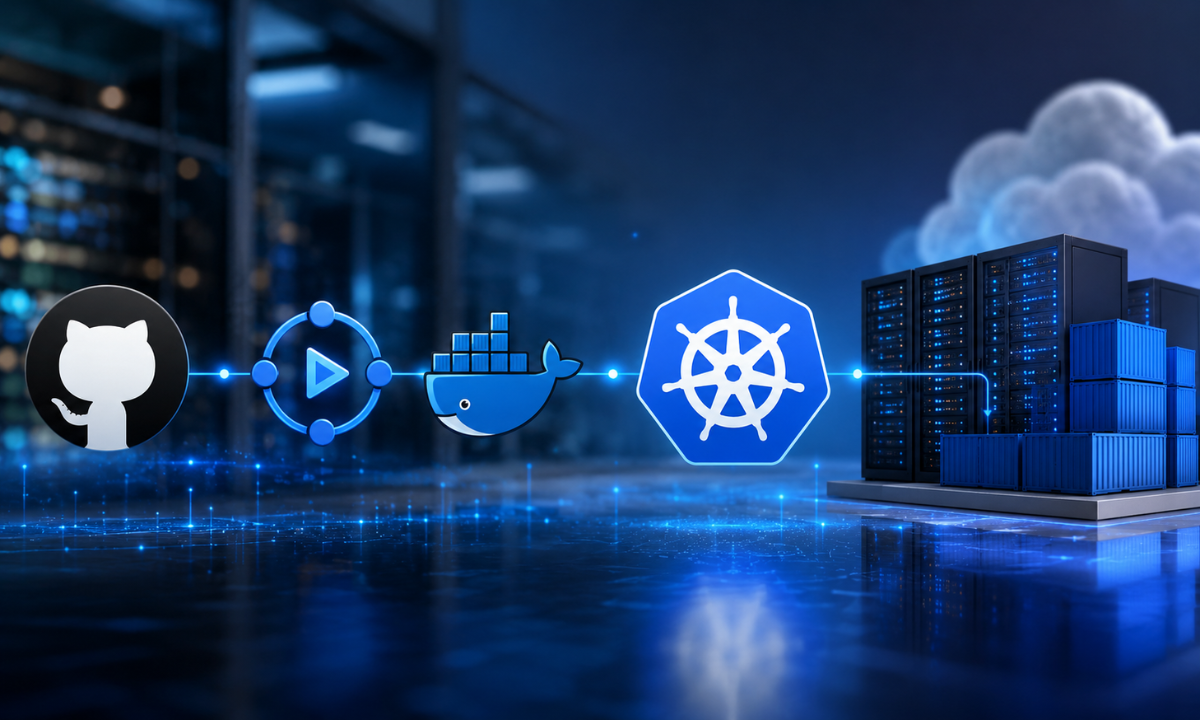
When containerized applications scale to handle millions of user requests, manually managing individual containers becomes impossible. Kubernetes provides the automated scheduling, scaling, and self-healing mechanisms required for high-availability systems:
-
Cluster Management & Manifests: Deploying and managing Pods, Deployments, StatefulSets, Services, and Ingress Controllers on managed Kubernetes platforms like Amazon EKS.
-
Automated Continuous Integration (CI): Building automated GitHub Actions or GitLab CI workflows that run unit tests, compile code, and publish verified container images on every code commit.
-
Declarative Continuous Delivery (CD) via GitOps: Using tools like Argo CD to continuously reconcile live cluster configurations with declarative manifests stored in Git, enabling automated deployments and instant rollbacks.
Combining Kubernetes orchestration with GitOps workflows ensures your deployments remain transparent, resilient, and fully synchronized with your source code repositories.
4. Building Your "Proof-of-Work" Portfolio on GitHub
For career switchers, a well-structured GitHub profile functions as your technical calling card during recruitment rounds. Instead of cluttering your resume with basic tutorial clones, hiring managers look for 2 to 3 comprehensive, deployed projects that solve real engineering problems:
-
Project 1: End-to-End Microservice Pipeline: A multi-tier web application containerized with Docker, deployed onto Amazon EKS using Terraform, and continuously delivered via GitHub Actions and Argo CD.
-
Project 2: Infrastructure Monitoring & Alerting Suite: An automated Prometheus and Grafana setup that tracks cluster metrics, visualizes CPU/memory spikes, and triggers Slack alerts during simulated outages.
-
Documentation & Architecture Diagrams: Including clear README.md files with visual architectural diagrams, setup steps, and live endpoint links to demonstrate clear technical communication skills.
Publishing complete, production-grade repositories gives hiring managers concrete evidence of your hands-on capability, effectively offsetting a lack of formal job titles during resume screening rounds.
Navigating the Hiring Landscape: Compensation Expectations & Resume Strategy

Navigating the job market in Bangalore as a career switcher requires aligning your technical preparation with market expectations.
Engineering hiring managers in IT product hubs and Global Capability Centers (GCCs) value practical problem-solving ability, hands-on lab projects, and clear architectural understanding over traditional years of experience.
1. Realistic Compensation & Career Growth Tiers
Compensation for platform and infrastructure roles in Bangalore remains among the highest in the technology sector. As you transition into cloud engineering, understanding typical salary brackets helps you set realistic expectations and negotiate effectively during recruitment rounds.
|
Career Stage & Profile |
Typical Experience Level |
Average Salary Range (Bangalore) |
Core Hiring Requirements & Competencies
|
|---|---|---|---|
|
Entry-Level / Fresher |
0 to 1 Years |
₹5.5 LPA – ₹9.5 LPA |
Strong Linux CLI skills, Docker containerization, basic Git workflows, public project repository |
|
Lateral Career Switcher |
1 to 3 Years (Adjacent Tech Background) |
₹8.5 LPA – ₹14.0 LPA |
CI/CD pipeline automation, Terraform IaC, AWS/Azure core services, domain experience |
|
Mid-Level Cloud Specialist |
3 to 5 Years |
₹15.0 LPA – ₹26.0 LPA |
Multi-cluster Kubernetes orchestration, GitOps, DevSecOps integration, observability stacks |
|
Senior Platform Architect |
6+ Years |
₹28.0 LPA – ₹48.0+ LPA |
Distributed system architecture, FinOps cost optimization, team leadership, multi-cloud governance |
Tracking the benchmark DevOps engineer salary Bangalore offers reveals that candidates who present verified GitHub portfolios with live cloud deployments routinely command offers at the upper end of their experience brackets.
2. Resume Engineering & ATS Optimization for Career Switchers

When applying for cloud roles without a traditional job title, your resume must be structured to pass automated Applicant Tracking Systems (ATS) while highlighting transferable technical skills.
|
Resume Section |
Traditional Application Approach |
Optimized Strategy for Career Switchers
|
|---|---|---|
|
Professional Summary |
Lists generic job responsibilities and past non-DevOps titles |
Highlights core technical competencies, cloud tools mastered, and total hands-on lab hours |
|
Technical Skills Matrix |
Vague list of tools without context or proficiency levels |
Categorized grid: Linux & Scripting, Containers & Kubernetes, IaC, CI/CD, Cloud & Observability |
|
Featured Projects |
Omitted or briefly mentioned at the bottom of the page |
Prominently placed near the top with live GitHub repo links, architecture diagrams, and outcomes |
|
Work Experience |
Focuses exclusively on non-cloud past roles |
Re-framed to emphasize automation, troubleshooting, scripting, and system monitoring achievements |
3. Positioning Your Portfolio for Technical Interviews
To clear ATS filters and capture the attention of technical recruiters, your application must demonstrate practical application rather than theoretical knowledge:
-
Focus on Problem-Solving Outcomes: Instead of stating "Learned Terraform," write "Provisioned automated AWS VPC infrastructure with isolated private subnets and S3 state locking using Terraform modules."
-
Embed Verifiable Proof: Include direct links to your active GitHub repositories, container registry images, and hosted project dashboards directly within your contact header.
-
Prepare for Scenario-Based Technical Rounds: Expect interviewers to test your troubleshooting methodology by asking how you handle stuck pipeline builds, crashing Kubernetes pods, or drift in infrastructure code.
Enrolling in a specialized DevOps developer course in Bangalore provides the structured project reviews, mock technical interviews, and resume refinement necessary to showcase your skills effectively to top hiring managers.
Why Choose Apponix Technologies for Your DevOps Career Switch?
Switching into cloud engineering without a formal background requires more than standard video lectures; it demands hands-on lab time, real-world scenario drills, and dedicated mentorship. Apponix Technologies has built a strong reputation as a top-tier learning center in Bangalore, specifically designed to help beginners and non-traditional candidates bridge the gap into enterprise platform engineering roles.
When you enroll with Apponix, you step into a career transformation ecosystem structured around practical technical growth:
-
100% Practical, Cloud-Native Labs: Configure, break, and repair live infrastructure environments across AWS and Azure, gaining real terminal experience with Linux, Docker, Kubernetes, and Terraform.
-
Mentorship from Active Industry Architects: Learn directly from senior DevOps and platform engineers who bring current production workflows, chaos engineering exercises, and enterprise security standards into every session.
-
Production-Ready GitHub Portfolio: Build and deploy real-world microservice pipelines to showcase on your public GitHub profile, giving hiring managers concrete proof of your technical ability.
-
End-to-End Placement & Career Support: Benefit from personalized resume engineering, 1-on-1 mock technical interviews, scenario-based architecture coaching, and direct interview opportunities through Apponix’s hiring partner network.
Combining rigorous technical instruction with hands-on lab practice and active career coaching, Apponix provides the structured environment you need to transition into the tech industry with confidence.
Conclusion
Transitioning into a cloud automation career with zero formal experience is entirely achievable when you focus on practical capability over traditional job titles. In a tech ecosystem like Bangalore's, hiring managers increasingly prioritize candidates who can demonstrate hands-on fluency with Linux systems, containerization, Infrastructure as Code, and automated GitOps pipelines. By shifting your mindset from consuming passive video content to actively building public, production-grade projects on GitHub, you create verifiable proof of your technical problem-solving ability.
To kickstart your transition today, execute a clear 4-step strategy: first, build absolute command over Linux command-line tools and networking fundamentals; second, master Docker and Kubernetes for container orchestration; third, automate multi-cloud deployments using Terraform and GitHub Actions; and fourth, publish your live projects, optimize your resume for ATS screening, and practice scenario-based technical interviews.
Taking structured, deliberate action today arms you with the technical confidence and portfolio required to land your first role as a cloud engineer.
Reference:
https://nareshit.com/blogs/how-to-switch-to-devops-engineer-guide-2025

Apponix Academy
Apponix Academy