POPULAR COURSES
Master Programs


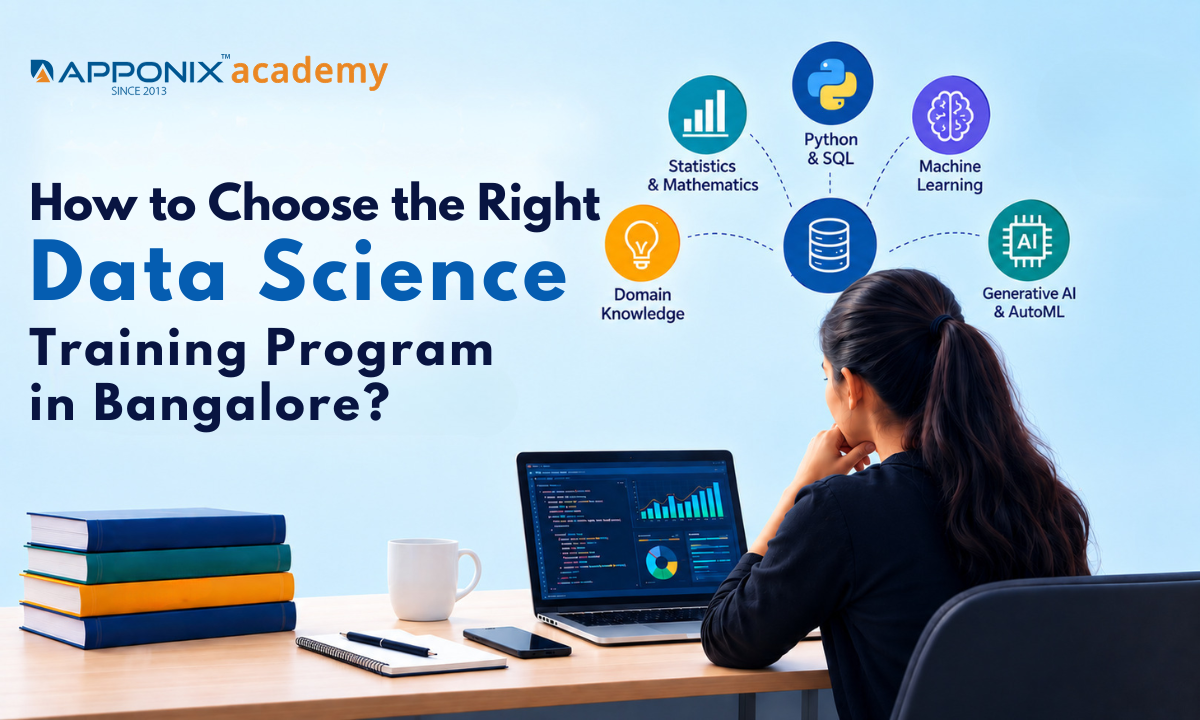
Table of contents:
|
1. What is data science? |
|
2. Aspects to check before joining a training program |
|
3. How to choose the right training centre in Bangalore |
|
4. Data science courses fees in Bangalore |
|
5. FAQs |
What data science actually is, why proper data science training matters, what to check before you enrol, and what training in Bangalore really costs in 2026.
Blog Summary:
In fact, Bangalore has one of the highest concentrations of data science training institutes in India and picking the right one really is a challenge — increasing options, more marketing hype, and more time and money to be wasted by choosing the wrong program. This guide explains the process of making any decision from the ground up, including what data science is (and isn't) and how it differs from data analytics. It's the answer to why structured training always wins over self-study for career changers. From there, it provides a list of nine things to check before enrolling, including who is actually teaching the class and how placement claims should be verified. It also discusses ways to filter and find a training centre in Bangalore by commute, instructor credibility, and neighbourhood, and concludes with what the price tag for each of these training courses would be as of now, ranging from certificates (self-paced) priced at ₹15,000 and up to full-time degree courses at ₹8,00,000 and more.
What is data science?
Data Science is a field that relies on both statistics and programming skills along with domain knowledge to gain insight and make predictions from data.
In real life, a data scientist transforms raw, messy data (such as sales figures, sensor readings, customer clicks, medical scans, etc.) into something useful that a business can use: a forecast, a recommendation engine, a fraud detector etc., or a model of which customers will churn.
The discipline is a combination of three skill sets: statistics and mathematics (to know what the data actually means), programming (typically Python or R, plus SQL for extracting data from databases) (to develop and test models), and domain or business knowledge (to know what questions to ask in the first place).
Separating data science from data analytics is important, given the proximity of the two concepts. A data analyst primarily answers queries related to what has occurred, and works with data tools such as Excel, SQL and BI dashboards. A data scientist takes it a step further, creating predictive models and machine-learning algorithms that answer the question of what might occur next; thus, data science courses tend to be longer, more mathematical, and more expensive than data analytics courses.

Why is data science training important?
In theory, it's possible to learn data science 100% from free YouTube videos and blog posts. It is extremely rare for anyone to end up that way and even less common for anyone to be job-ready. There are some specific reasons why structured training is important:
A sequenced curriculum
Data science combines statistics, Python, SQL and machine learning. Self-teaching frequently involves learning pieces in an unrelated sequence and gaps in knowledge that are discovered during interviews.
Mentorship from practitioners
A working Data Scientist can explain why an approach doesn't work on real data, and can look at your code, not just the answer.
Hands-on, real-world projects
Job opportunities are based on the projects, not the certificates. It's through good training that you will need to create a portfolio with a messy but realistic data set.
Placement support and industry access
Resume reviews, mock interviews and referrals are valuable tools that reduce the job search significantly, especially for career changers who don't have a tech network.
Accountability and pace
Most learners fail to abandon the syllabus a few weeks in quietly, and a cohort of deadlines and classmates prevent this.
Staying current
The tools and expectations are evolving rapidly — generative AI and AutoML are becoming a part of the job. A good program keeps its syllabus current; a two year old blogged post doesn't.
Aspects to check before joining a training program
Prior to making any payment for a program, use this checklist. A majority of these questions can be answered during a phone call or a demo class.
1. Curriculum depth and relevance
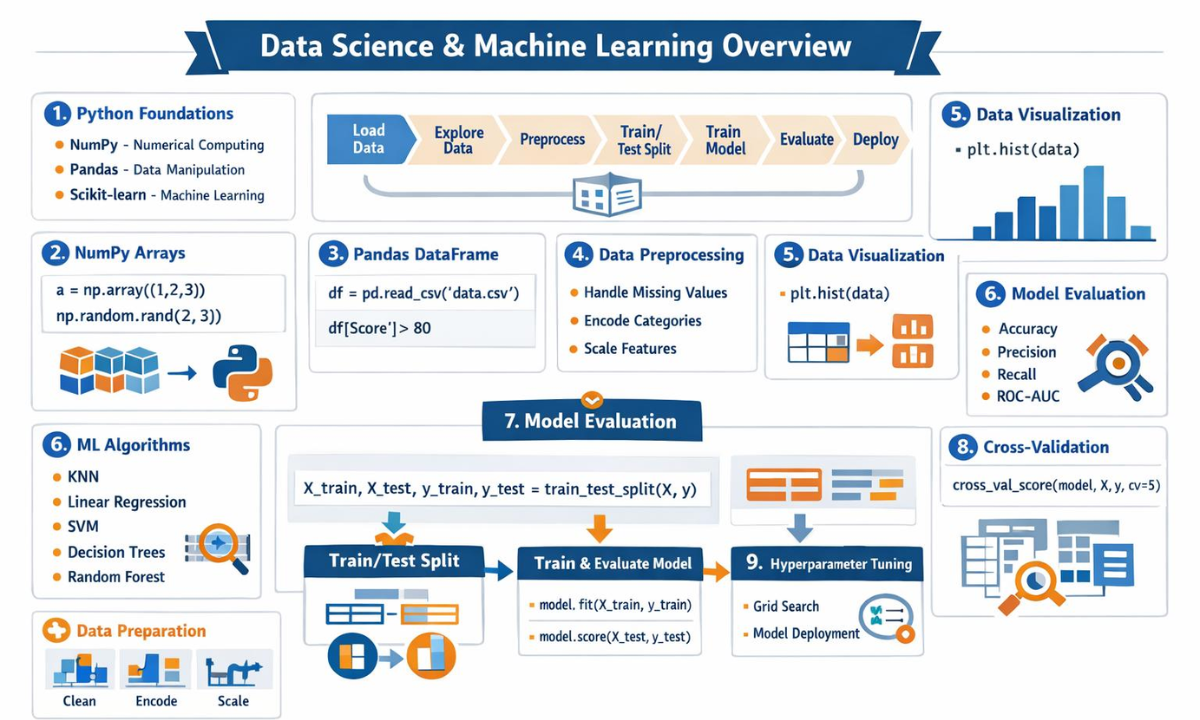
Does it include a statistics module, a Python module, a SQL module, a machine-learning module and one or more modules in deep-learning and/or generative-AI? Does the syllabus date back to the previous year, or is it definitely a rehash of the 2019 syllabus?
2. Who actually teaches it
Ask where the trainer currently works, not just where they used to. An instructor who left the industry a decade ago teaches very differently from a working data scientist at a Bangalore product company.
3. Hands-on project work
Seek out real world data and end-to-end projects, rather than simply going through a pre-built notebook. Request to view examples of previous capstone projects.
4. Mode and batch timing
Each is offered in the classroom, live online or recorded and can be completed on a different schedule. If employed full time, arrange batch evening or weekend classes before registration.
5. Data science course with placement, honestly verified
Don't be satisfied with a logo wall on a website and speak to a named business that your graduate has joined. Verify claims, where possible, on LinkedIn.
6. Batch size
Smaller batches usually equals more attention paid to the individuals and more code review. But, there is a limit to the feedback you will receive if you have to work with a group of 200 students and only one instructor.
7. Certification value
A co-branded certificate with a recognised university or institute (IIT, IIIT or a known global platform) will have greater value than a certificate in-house only.
8. Reviews across multiple platforms
Instead of looking at the institute's testimonials, which are curated by definition, look at Google Reviews and Glassdoor and AmbitionBox.
9. Refund, retake, and support policy
Check the policy for what will happen if you miss classes, have to repeat a module, and/or wish to get a refund early in the course; this is something that is often buried in the fine print.
How to choose the right training centre in Bangalore
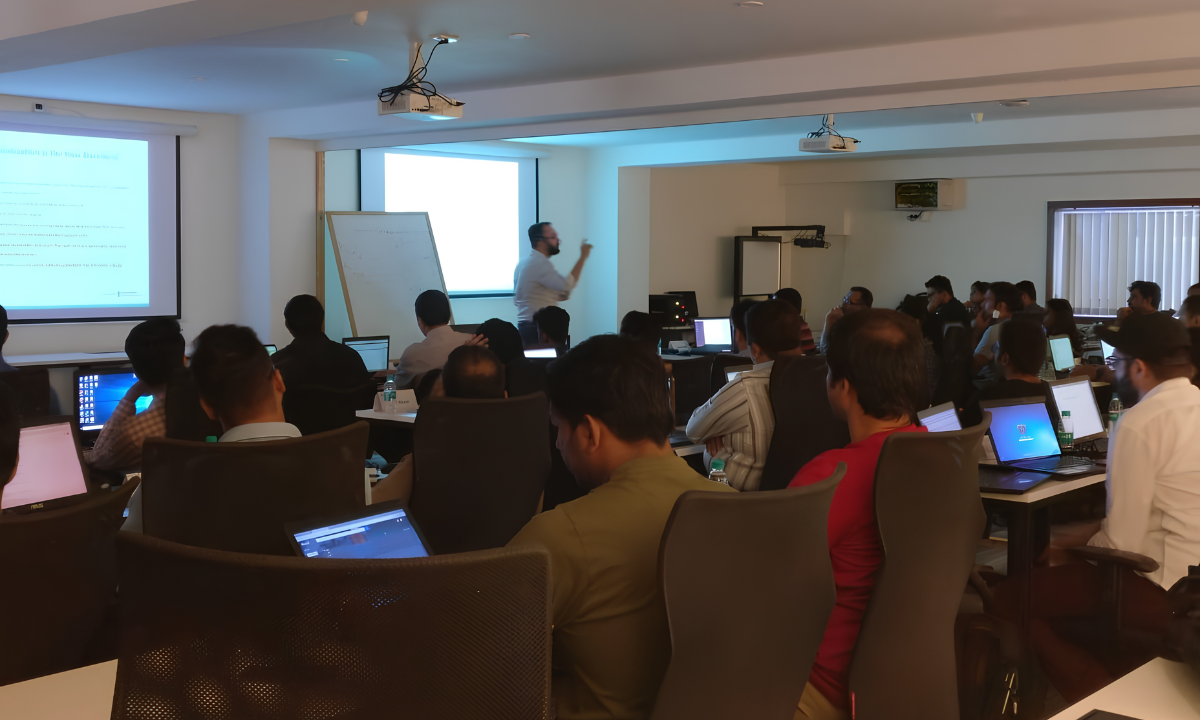
Some of the best things about Bangalore is that it has a high density of data science training institutes in India, and it also has a lot of noise. Here are some things to keep in mind while coming to Bangalore:
1. Run the commute test first
In most cases, a live online class from a well-reviewed school will prove to be a superior choice over a more convenient, but inconveniently located classroom branch, if the class branch is over 45 minutes away from home.
2. Check which neighbourhood fits your commute
Bangalore has a few pockets of classroom-based institutes, which would be prudent to consider first of all by proximity and then compare the curriculum:
-
-
Koramangala
-
Indiranagar
-
Marathahalli
-
BTM Layout
-
HSR Layout
-
Whitefield
-
Electronic City
-
Jayanagar
-
3. Sit in on an actual demo class
No brochure can do a better job of letting you understand teaching quality than a live demonstration. Observe if instructor provides reasoning or just reads slides and if there is an opportunity for questions
4. Look at where Bangalore's tech ecosystem actually hires from
If they are based in Bangalore, like Amazon, Microsoft, Flipkart, and the many startups, ask an institute outright which of these types of companies did their recent graduates from the institute work for and then ask to see some proof.
5. Always look at the overall cost, rather than the sticker price.
A less expensive course that doesn't offer mentorship or placement assistance may be more expensive in terms of lost time than a more expensive course that will get you ready for the job more quickly. Consider fees, course depth, and placement record as a package.
6. Prefer institutes that teach current tools
By 2026, a credible data science program should include generative AI and AutoML alongside classic machine learning — this is now a baseline expectation, not a bonus module.
Data science courses fees in Bangalore

Data science course fees vary hugely depending on format, university affiliation, and depth of placement support. As a general guide for 2026:
|
Course type |
Typical duration |
Approx. fee range |
|
Short-term / self-paced certificate |
3–6 months |
₹15,000 – ₹60,000 |
|
Instructor-led bootcamp / certification |
6–12 months |
₹80,000 – ₹1,50,000 |
|
University-affiliated PG certificate/diploma |
10–12 months |
₹85,000 – ₹1,10,000, premium tracks up to ₹4,50,000 |
|
Full-time degree (B.Tech/M.Tech/M.Sc.) |
2–4 years |
₹3,00,000 – ₹8,00,000+ |
These are city-wide averages of fees calculated from several course-fee guides released by Bangalore based institutes in 2026; please check the exact fees with the institutes you have shortlisted before registering for any course.
A general rule of thumb: If you're looking for placements, you'll end up paying from ₹80,000 to ₹1,50,000, which is much less than the amount that you'd spend on a program that doesn't cover the curriculum or provide any mentorship or placement assistance.
FAQs
1. What is the difference between data science and data analytics training?
Data analytics training focuses on tools like Excel, SQL, and BI dashboards to explain what already happened in the data. Data science training goes further, covering statistics, machine learning, and predictive modeling — which is why it's usually longer and more expensive.
2. How long does a data science course take to complete?
It depends on the format. Short certificate programs run 3–6 months, instructor-led bootcamps typically take 6–12 months, and full-time degree programs (B.Tech, M.Tech, M.Sc.) span 2–4 years.
3. Do I need a coding or math background to join a data science course?
Not necessarily, but you should be willing to learn both. Most job-focused programs teach Python, statistics, and SQL from the fundamentals, though prior exposure to programming makes the learning curve easier.
4. Is classroom training or online training better in Bangalore?
It depends on your commute and schedule. If a classroom branch is more than 45 minutes away, a well-reviewed live online program is usually a better choice than a nearby but inconvenient classroom option.
5. How do I verify an institute's placement claims?
Ask for named companies recent graduates joined, not just logos on the website, and cross-check those claims on LinkedIn. Independent reviews on Google, Glassdoor, and AmbitionBox are also more reliable than testimonials on the institute's own site.
6. What is the average fee for a data science course in Bangalore?
Most job-focused learners spend between ₹80,000 and ₹1,50,000 for an instructor-led program with placement support. Shorter self-paced certificates start around ₹15,000, while university-affiliated diplomas and full-time degrees can range from ₹85,000 up to ₹8,00,000 or more.
7. Does a data science certificate guarantee a job?
No certificate guarantees a job. What improves job prospects is a strong project portfolio, verified placement support, and a certificate backed by a recognised university or institute, combined with genuine skill demonstrated in interviews.
8. Which areas in Bangalore have the most data science training institutes?
Koramangala, Indiranagar, Marathahalli, BTM Layout, HSR Layout, Whitefield, Electronic City, and Jayanagar are the main hubs for classroom-based training centres in the city.
9. Should I choose a cheaper course or a more expensive one?
Neither price extreme is automatically better. A very cheap course may lack mentorship or placement support, while a very expensive one should justify its cost through a recognised university brand, deeper curriculum, or stronger career outcomes — compare total value, not just fee.
10. Is it necessary for a data science course to include AI and generative AI topics?
Yes, by 2026 this is considered a baseline expectation rather than a bonus. A credible program should cover generative AI and AutoML alongside traditional machine learning to keep pace with current industry tools.
Reference:
https://gtracademy.org/blog/choosing-the-best-data-science-courses-for-success/
https://bostoninstituteofanalytics.org/blog/data-science-courses-for-working-professionals-flexible-options-to-upskill/

Apponix Academy
Apponix Academy