POPULAR COURSES
Master Programs


Table of contents:
|
1. Why Do These Misconceptions Exist? |
|
2. Misconception 1: "You Need a PhD to Work in Data Science" |
|
3. Misconception 2: "Data Science Is Just Statistics" |
|
4. Misconception 3: "Data Science Only Works with Big Data" |
|
5. Misconception 4: "Data Scientists Are Just Glorified Excel Users" |
|
6. Misconception 5: "The Tools Do All the Work" |
|
7. Misconception 6: "Data Science Jobs Are Only in Tech Companies" |
|
8. The Fact That Changes Everything |
|
9. Frequently Asked Questions |
Be honest — when someone says "Data Scientist," does your mind immediately jump to an image of someone surrounded by complex equations, wearing thick glasses, staring at a screen full of incomprehensible code?
If so, you're not alone. But you might also be operating on some seriously outdated assumptions. Let's bust the biggest myths about Data Science — one by one.
Why Do These Misconceptions Exist?
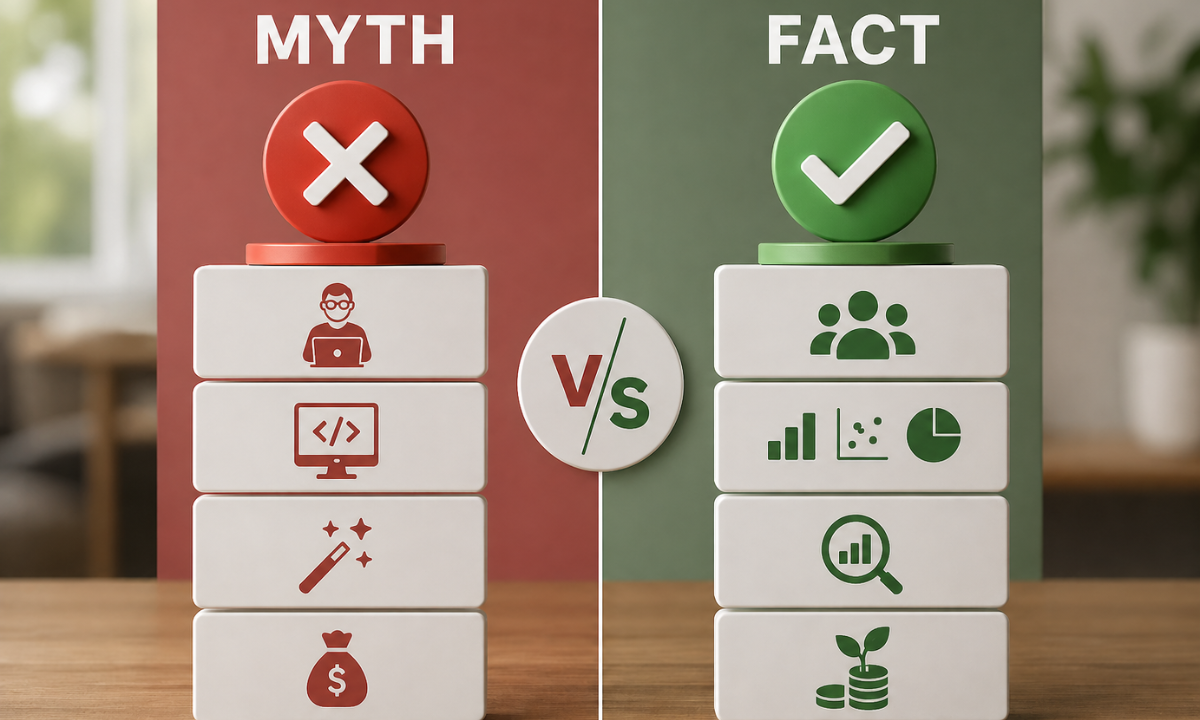
Data Science is a relatively young field, and like all young fields, it's surrounded by a cloud of mystique, jargon, and misinformation. The media portrayal doesn't help — Data Scientists are often depicted as rare geniuses rather than skilled professionals who learned their craft systematically.
The truth is far more accessible and far more exciting than the myths suggest.
Misconception 1: "You Need a PhD to Work in Data Science"
This is probably the most discouraging myth, and it stops a lot of talented people from even trying. The reality? The vast majority of working data scientists do not have PhDs.
What employers actually want is demonstrable skill — the ability to clean messy datasets, build accurate models, visualize insights, and communicate findings clearly. These are teachable skills. Our guide to building a career in data science shows you exactly what the path looks like for someone starting from scratch.
Misconception 2: "Data Science Is Just Statistics"
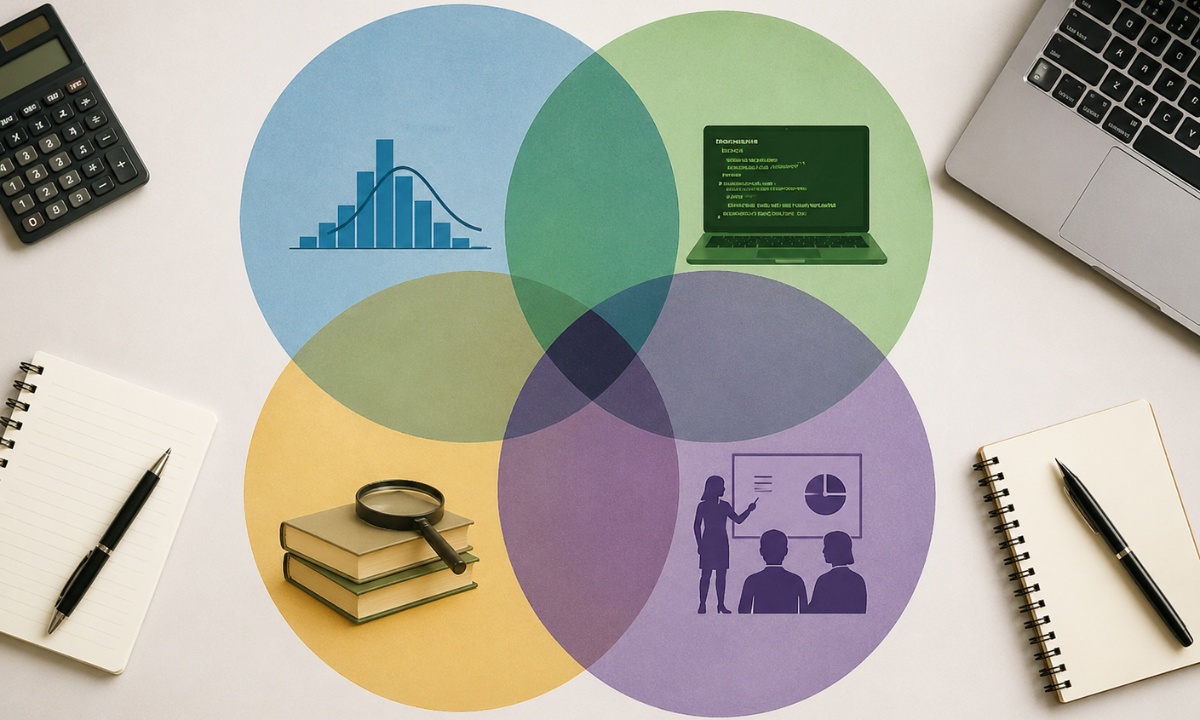
Statistics is absolutely a core pillar — but calling data science "just statistics" is like calling cooking "just chemistry." Yes, the chemistry matters. But there's also artistry, judgment, and context involved.
Data science encompasses programming, machine learning, data engineering, domain expertise, and storytelling. A data scientist who can't communicate findings to a non-technical audience isn't half as valuable as one who can.
Misconception 3: "Data Science Only Works with Big Data"
Somewhere along the way, "Big Data" and "Data Science" became conflated in public perception. But many powerful data science applications involve relatively small datasets.
A local hospital using data science to improve patient outcomes might work with a few thousand records. A startup optimizing its marketing funnel might analyze a few hundred thousand user interactions. The size of the data matters far less than the quality of your analysis.
Misconception 4: "Data Scientists Are Just Glorified Excel Users"
This one tends to come from people who haven't seen modern data science in action. Excel is a spreadsheet tool. Data science involves writing production-grade Python or R code, building machine learning pipelines, working with cloud infrastructure, and deploying models that power real-world products.
The gap between a spreadsheet analyst and a data scientist is substantial — in skill, in salary, and in impact.
Misconception 5: "The Tools Do All the Work"
Tools like Python, TensorFlow, Power BI, and Tableau are powerful enablers. But a hammer doesn't build a house — a skilled carpenter does. The same principle applies here.
Knowing how to use a library is very different from understanding why a model makes certain predictions, how to improve it, and what the business implications are. That depth of understanding comes from education, experience, and critical thinking — not from the tools themselves.
Misconception 6: "Data Science Jobs Are Only in Tech Companies"

Companies like Google and Meta get all the headlines, but data science is increasingly embedded across sectors. Healthcare systems hire data scientists to optimize patient flow. Banks hire them for credit risk modeling. Retail chains use them for inventory optimization. Government agencies use them for policy analysis.
In India specifically, the demand for data professionals in BFSI (Banking, Financial Services, Insurance) and healthcare is growing faster than the talent supply.
The Fact That Changes Everything
Data Science is one of the most learnable high-value skills available today. With the right roadmap, consistent practice, and mentorship, virtually anyone with curiosity and discipline can break into this field — regardless of their starting background.
Start your journey with the Data Science course in Bangalore at Apponix, a leading training institute in Bangalore known for its project-based, industry-aligned curriculum.
Frequently Asked Questions
Q1: Do I need to know how to code before starting a Data Science course?
No prior coding experience is required for most beginner-friendly courses. You'll start with Python fundamentals and progressively build your skills.
Q2: What's the difference between Data Science and Data Analytics?
Data Analytics focuses on interpreting historical data to answer specific business questions. Data Science is broader and includes building predictive models and developing AI-driven solutions.
Q3: How much math do I actually need for Data Science?
A solid grasp of statistics, probability, linear algebra, and calculus is valuable. But you don't need to be a mathematician — you need to understand enough to apply concepts correctly in a coding environment.
Q4: Is Data Science still in demand in 2026?
Yes — arguably more than ever. The proliferation of AI tools has increased demand for professionals who can build, validate, and interpret these systems responsibly.
Q5: Can I switch to Data Science from a non-technical background?
Absolutely. Many successful data scientists come from economics, psychology, biology, and even arts backgrounds. Domain expertise in non-tech fields is actually a competitive advantage.

Apponix Academy
Apponix Academy