POPULAR COURSES
Master Programs


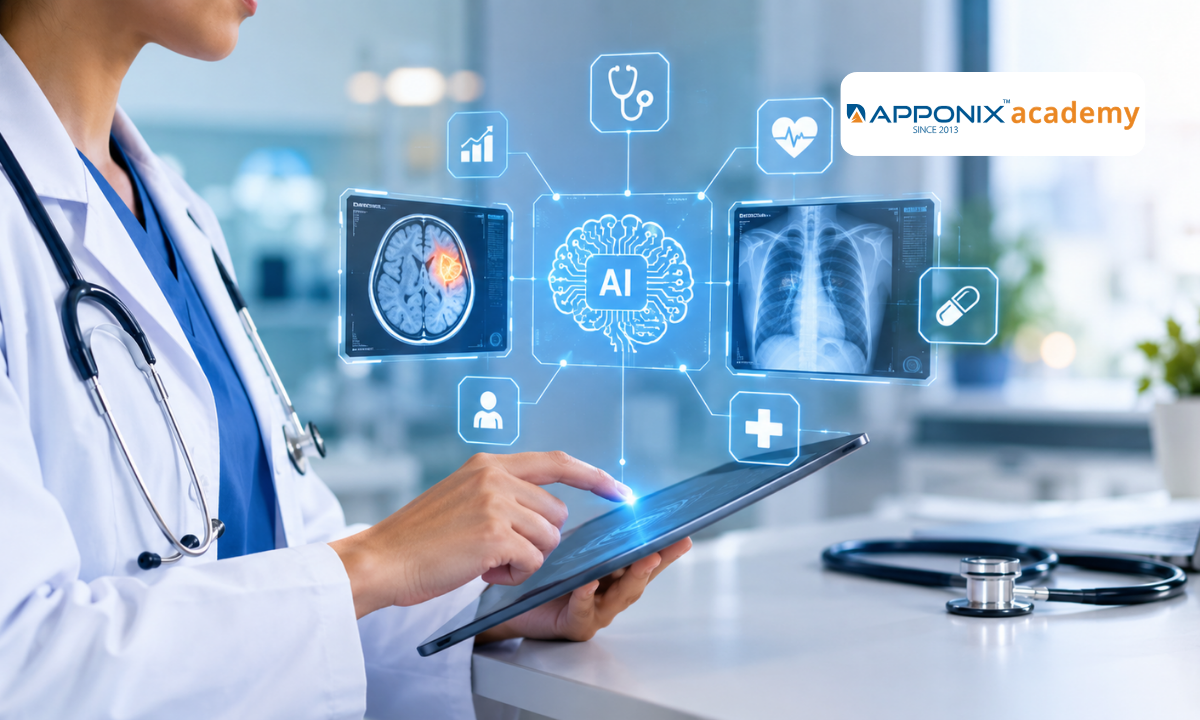
Table of content:
| 1. How Is AI Transforming Healthcare? |
|
2. What Are the Applications of AI in Healthcare?
|
| 3. How Is AI Used in Hospital Management? |
| 4. What Are the Benefits of AI in Healthcare? |
| 5. What Challenges Does AI Face in Healthcare? |
| 6. What Is the Future of AI in Healthcare? |
| 7. What Skills Are Needed for a Career in AI and Healthcare? |
| 8. FAQs About AI in Healthcare |
| 9. Conclusion |
Artificial intelligence in healthcare refers to the use of machine learning, data analytics, and intelligent automation to support clinical and administrative decision making across hospitals, diagnostic centres, and research institutions.
As patient records, imaging data, and monitoring devices generate increasingly large volumes of information, healthcare has become one of the most data intensive industries in the world.
AI is now helping clinicians interpret this data faster. It supports diagnosis, guides treatment decisions, enables continuous patient monitoring, and streamlines hospital operations.
As adoption grows, so does the demand for professionals who understand both healthcare workflows and the underlying AI and data skills needed to build these solutions.
How Is AI Transforming Healthcare?
AI in healthcare draws on several underlying technologies, each suited to a different kind of problem. Various technologies used here are:
-
Machine learning models learn patterns from historical patient data to support predictions and recommendations.
-
Deep learning, a more advanced subset, powers complex tasks like image recognition by processing data through layered neural networks.
-
Natural language processing NLP, allows systems to read and structure unstructured data such as physician notes, discharge summaries, and clinical literature.
-
Computer vision enables machines to interpret medical images, including X-rays, scans, and slides, with a level of consistency that complements human judgement.
-
Predictive analytics uses historical and real time data to forecast outcomes like disease risk or hospital readmission.
Together, these technologies feed into clinical decision support systems, which present clinicians with data backed recommendations at the point of care. The goal is not to replace medical judgement, but to inform it.
What Are the Applications of AI in Healthcare?
AI healthcare solutions are already embedded across multiple stages of the patient journey, from diagnosis to long term care.
AI in Medical Imaging and Diagnostics
One of the most mature applications of AI in healthcare is in medical imaging. Algorithms trained on large volumes of X-ray, CT, and MRI scans can perform image analysis to flag anomalies that might be easy to miss during manual review.
Pattern recognition models are particularly useful for early detection of conditions such as tumours, fractures, or vascular abnormalities, often identifying subtle markers before symptoms become clinically obvious.
Radiologists increasingly use these tools as a second layer of review, which improves both speed and consistency in reporting.
Predictive Analytics in Medicine
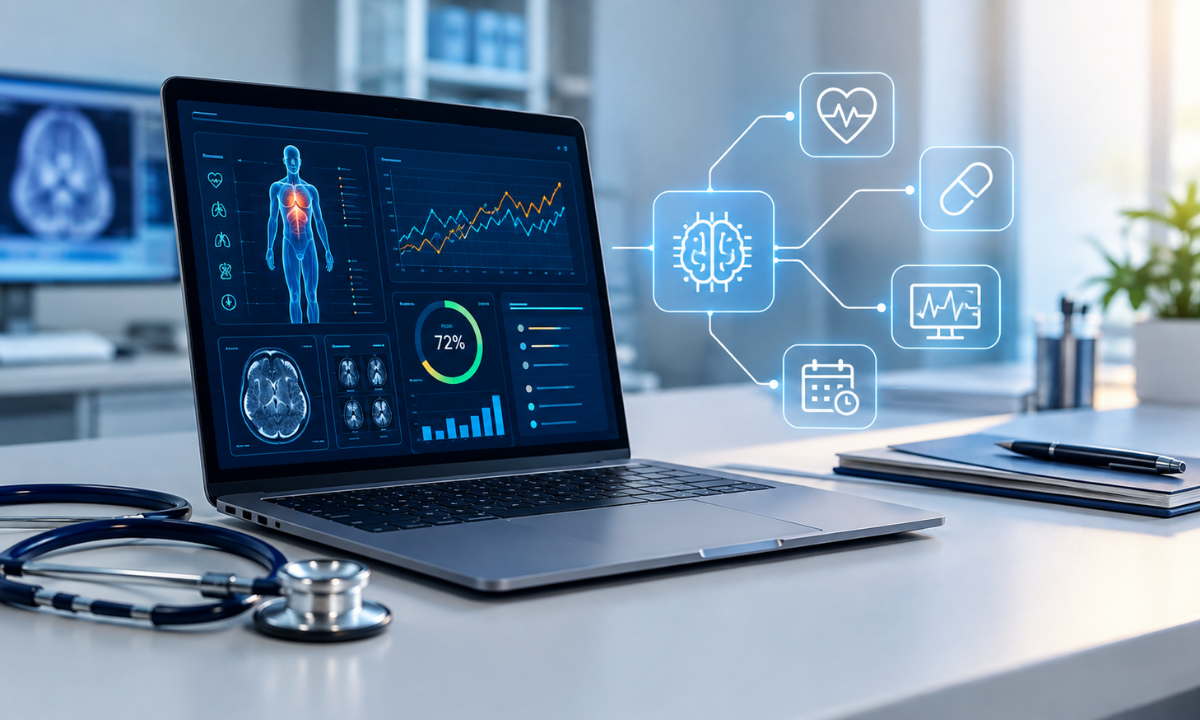
Predictive analytics in medicine uses patient history, vitals, and demographic data to estimate the likelihood of specific outcomes. This includes risk prediction for chronic conditions, modelling disease progression over time, and forecasting readmission probability after discharge.
By identifying high risk patients early, care teams can prioritise early intervention, adjusting treatment plans or scheduling follow ups before a condition worsens rather than reacting after the fact.
Personalised Patient Care

AI also enables more individualised care by analysing a patient's full data profile, including medical history, genetic markers, lifestyle factors, and real time readings, to generate tailored treatment recommendations.
This extends beyond the hospital. Remote monitoring tools and wearables now track metrics like heart rate, glucose levels, and activity patterns continuously, feeding data back to care teams and enabling timely adjustments to a patient's care plan without requiring an in person visit.
AI in Drug Discovery and Medical Research
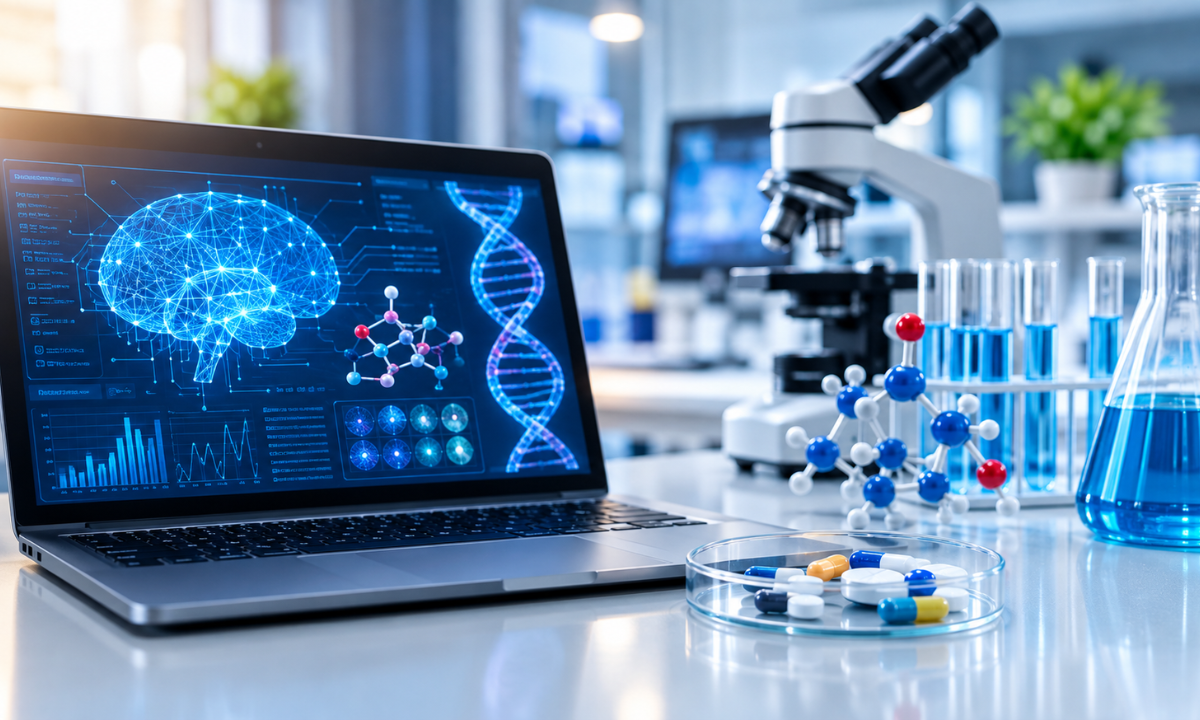
Beyond direct patient care, AI is reshaping drug development and clinical research.
Machine learning models can screen enormous biomedical datasets to identify promising drug compounds, predict molecular behaviour, and shortlist candidates for trials, a process that traditionally took years.
This significantly compresses timelines in early stage clinical research and helps teams move from hypothesis to testable candidate more efficiently.
How Is AI Used in Hospital Management?
AI's role in healthcare is not limited to clinical settings. It is increasingly central to how hospitals operate day to day.
AI in hospital management includes intelligent appointment scheduling systems that reduce no-shows and optimise clinician time, along with tools that track patient flow through departments to reduce bottlenecks and wait times.
Predictive models help with resource allocation, anticipating bed availability, equipment needs, and staff management requirements based on expected patient volume.
AI also supports inventory tracking for medical supplies and administrative automation for tasks like billing and insurance claims processing.
For anyone exploring AI careers in healthcare, this is a useful reminder that opportunities extend well beyond diagnostic algorithms into the operational systems that keep hospitals running.
What Are the Benefits of AI in Healthcare?
The appeal of AI in healthcare lies in the tangible improvements it brings across the care continuum.
-
It enables faster data analysis, turning large volumes of clinical information into actionable insights within minutes rather than hours.
-
It provides improved diagnostic support, helping clinicians catch things that might otherwise be missed.
-
It allows for more personalised care by tailoring recommendations to individual patient profiles.
-
Automation reduces the administrative burden on staff, freeing up time for direct patient interaction.
Predictive tools support better resource utilisation across hospitals, and connected devices make continuous patient monitoring possible outside traditional clinical settings, extending quality care beyond hospital walls.
What Challenges Does AI Face in Healthcare?
Despite its promise, AI in healthcare comes with real challenges that deserve equal attention.
-
Data privacy remains a central concern, given the sensitivity of patient health records and the regulatory scrutiny around how this data is stored and shared.
-
Bias in training data can lead to inequitable outcomes if models are not tested across diverse patient populations.
-
Data quality is another persistent issue, since incomplete or inconsistent records can undermine model reliability.
-
Explainability is critical in clinical settings, where a lack of transparency in how a model reaches its conclusion can limit clinician trust.
-
Regulatory requirements vary across regions and continue to evolve alongside the technology.
-
Regardless of how advanced these systems become, human oversight remains non-negotiable, since AI is designed to support clinical decisions, not replace them.
Finally, integration with existing systems, many of which are legacy infrastructure, remains a practical hurdle for widespread adoption.
What Is the Future of AI in Healthcare?
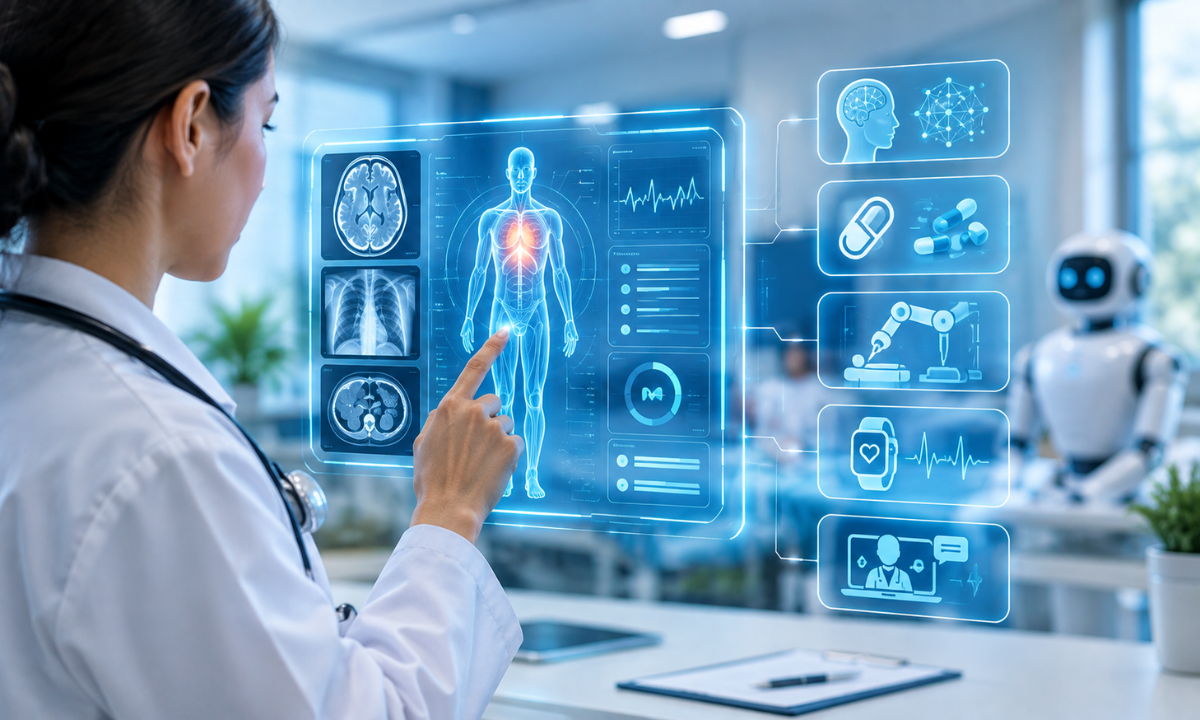
The next phase of AI in healthcare is likely to be shaped by generative AI and multimodal AI, systems capable of processing text, images, and structured data together to generate more holistic insights.
AI assisted diagnosis will continue to mature, moving from narrow, single task tools toward systems that support broader clinical reasoning. Predictive healthcare will shift the industry further from reactive treatment toward proactive, preventive models of care.
Remote monitoring will expand as wearable technology becomes more sophisticated, and precision medicine, or treatment tailored to an individual's genetic and biological profile, will become increasingly feasible at scale.
AI assisted clinical documentation is also gaining traction, reducing the time clinicians spend on note taking and administrative records. This growing ecosystem has fuelled a wave of healthcare AI startups building specialised solutions across imaging, diagnostics, and hospital operations, a sign of how much active innovation is happening in this space.
What Skills Are Needed for a Career in AI and Healthcare?
As AI becomes more embedded in healthcare delivery, the demand for professionals who can build, deploy, and manage these systems is rising steadily.
A strong foundation typically includes Python for building and testing models, SQL for working with structured healthcare data, and a solid grounding in statistics to interpret results reliably. From there, machine learning and deep learning form the technical core, alongside data analytics and predictive modelling skills used to translate raw data into clinical or operational insight.
Depending on specialisation, professionals may also work with computer vision for imaging applications, NLP for processing clinical text, and data visualisation to communicate findings to non technical stakeholders.
Professionals interested in applying AI across industries can build these skills through structured programmes that combine technical concepts with practical, industry relevant projects. For those based in tech hubs, an AI course in Bangalore can offer a practical route into this space, combining foundational data science training with healthcare specific case studies.
Apponix Academy, a training institute in Bangalore, offers mentorship and project based learning in this format, since applying these concepts to real datasets tends to build stronger, more transferable skills than theory alone.
FAQs About AI in Healthcare
What is AI in healthcare?
AI in healthcare refers to the application of machine learning, deep learning, and data analytics to support clinical diagnosis, treatment planning, patient monitoring, and hospital operations.
How is AI used in medical diagnosis?
AI supports diagnosis primarily through medical imaging analysis, using pattern recognition to detect anomalies in X-rays, CT scans, and MRIs, often enabling earlier detection than manual review alone.
How does predictive analytics help healthcare?
Predictive analytics uses patient data to forecast risks such as disease progression or hospital readmission, allowing care teams to intervene earlier and adjust treatment plans proactively.
What are the benefits of AI in healthcare?
Key benefits include faster data analysis, improved diagnostic accuracy, personalised treatment recommendations, administrative automation, and continuous patient monitoring through connected devices.
What skills are needed to work with AI in healthcare?
Core skills include Python, SQL, statistics, machine learning, deep learning, and predictive modelling, often built through structured, project based training programmes.
Conclusion
AI in healthcare is no longer a distant possibility. It is already shaping how diseases are diagnosed, how treatment plans are personalised, and how hospitals manage day to day operations. From medical imaging and predictive analytics to hospital administration and drug discovery, the applications are wide ranging and continue to expand as the technology matures. At the same time, challenges around data privacy, bias, and regulatory oversight remain real, and they will need careful attention as adoption grows.
For learners and professionals looking to enter this space, the opportunity extends well beyond clinical roles. Careers in AI and healthcare span data science, machine learning engineering, healthcare analytics, and hospital technology management.
Building the right foundation in Python, SQL, statistics, and machine learning is the first step, and structured training can make that transition considerably smoother. Apponix Academy's AI course in Bangalore is designed to help learners build exactly this foundation, combining core technical skills with practical, healthcare relevant projects so they graduate ready to apply AI where it matters most.
As AI continues to mature, the healthcare professionals and technologists who understand both the clinical context and the underlying technology will be best positioned to shape what comes next.
Reference:
https://pmc.ncbi.nlm.nih.gov/articles/PMC8285156/

Apponix Academy
Apponix Academy