POPULAR COURSES
Master Programs



Table of contents:
|
1. Key Takeaways |
|
2. What is Artificial Intelligence (AI)? |
|
3. What is Machine Learning (ML)? |
|
4. Popular Machine Learning Algorithms |
|
5. What is Deep Learning (DL)? |
|
6. Popular Deep Learning Algorithms |
|
7. AI vs Machine Learning vs Deep Learning: Key Differences |
|
8. Real-World Applications
|
|
9. Machine Learning Roadmap: Where to Start? |
|
10. Why Learn AI, ML, and Deep Learning Today? |
|
11. Tips to Master AI, ML, and DL Faster |
|
12. Common Misconceptions |
|
13. Final Thoughts |
|
14. FAQs |
Ever wondered why your Netflix recommendations feel eerily accurate or how voice assistants understand you so naturally? That’s the power of modern technology at work, but here’s where most people get confused. The terms 'AI vs Machine Learning vs Deep Learning' are often used interchangeably, yet they are not the same.
If you have been exploring an AI course in Bangalore, understanding this difference is the first step toward building a strong foundation in this high-demand field. And here’s the interesting part: once you grasp how these three connect, you will start seeing technology in a completely new light, so let’s break it down in a way that actually makes sense.
Key Takeaways
-
Artificial Intelligence (AI) is the broader concept of machines mimicking human intelligence.
-
Machine Learning (ML) is a subset of AI that enables systems to learn from data.
-
Deep Learning (DL) is a specialised subset of ML that uses neural networks.
-
AI → ML → DL forms a hierarchical relationship.
-
Understanding machine learning algorithms and deep learning models is crucial for real-world applications.
-
A structured machine learning roadmap can fast-track your career.
What is Artificial Intelligence (AI)?

Artificial Intelligence refers to the ability of machines to perform tasks that typically require human intelligence. This includes reasoning, problem-solving, perception, and decision-making.
AI is everywhere today, from chatbots and recommendation systems to autonomous vehicles. In fact, a recent report suggests that AI could contribute up to $15.7 trillion to the global economy by 2030.
Examples of AI:
-
Virtual assistants like Siri or Alexa
-
Fraud detection systems in banking
-
Self-driving cars
-
Smart healthcare diagnostics
Artificial Intelligence doesn’t always “learn” on its own. Some systems are rule-based, meaning they follow predefined instructions.
What is Machine Learning (ML)?

Machine Learning is a subset of AI that allows systems to learn from data instead of being explicitly programmed. The more data these systems process, the better they become at predictions.
Key Concept:
Instead of writing rules, you provide data, and the system figures out patterns.
Types of Machine Learning:
-
Supervised Learning – Learns from labelled data
-
Unsupervised Learning – Finds hidden patterns in data
-
Reinforcement Learning – Learns through rewards and penalties
These are commonly referred to as machine learning types, and each has its own use cases.
Popular Machine Learning Algorithms
Understanding machine learning algorithms is essential for building intelligent systems. Some widely used ones include:
-
Linear Regression
-
Logistic Regression
-
Support Vector Machines
-
K-Nearest Neighbours
-
Decision Trees
What is a Machine Learning Decision Tree?
A machine learning decision tree is a simple yet powerful algorithm that uses a tree-like structure for decision-making.
-
Each node represents a feature
-
Each branch represents a decision rule
-
Each leaf node represents an outcome
Example:
A decision tree can predict whether a customer will buy a product based on age, income, and browsing history.
What is Deep Learning (DL)?
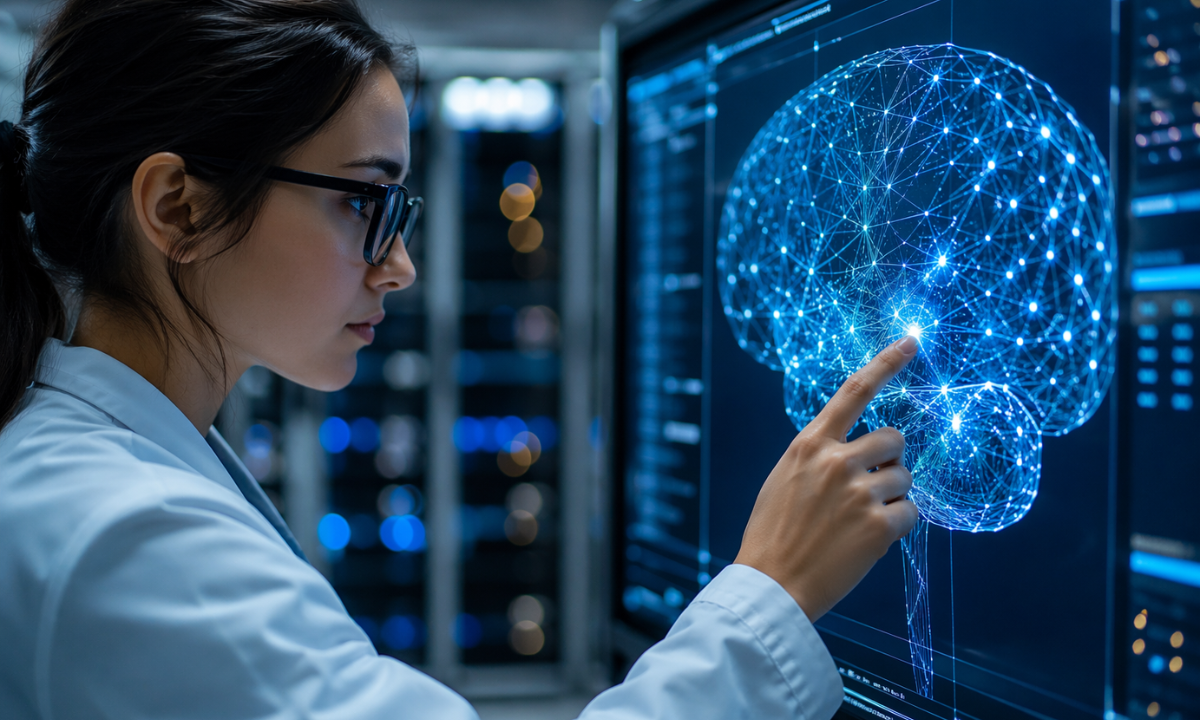
Deep Learning is a specialised subset of machine learning that uses artificial neural networks inspired by the human brain. It is designed to process large amounts of unstructured data like images, audio, and text.
Why Deep Learning Matters:
Deep learning powers some of the most advanced technologies today, including:
-
Image recognition
-
Natural language processing
-
Speech recognition
Popular Deep Learning Algorithms
Some widely used deep learning algorithms include:
-
Convolutional Neural Networks (CNNs)
-
Recurrent Neural Networks (RNNs)
-
Long Short-Term Memory (LSTM) networks
-
Generative Adversarial Networks (GANs)
These algorithms form the backbone of modern deep learning models.
AI vs Machine Learning vs Deep Learning: Key Differences
Here’s a simple comparison to make the differences crystal clear:
|
Feature |
Artificial Intelligence |
Machine Learning |
Deep Learning |
|
Definition |
Broad concept of intelligent machines |
A subset of AI that learns from data |
Subset of ML using neural networks |
|
Data Dependency |
Low to moderate |
High |
Very high |
|
Complexity |
Low to high |
Moderate |
Very high |
|
Examples |
Chatbots, robotics |
Recommendation systems |
Image & speech recognition |
|
Human Intervention |
High |
Moderate |
Low |
Real-World Applications
1. Healthcare
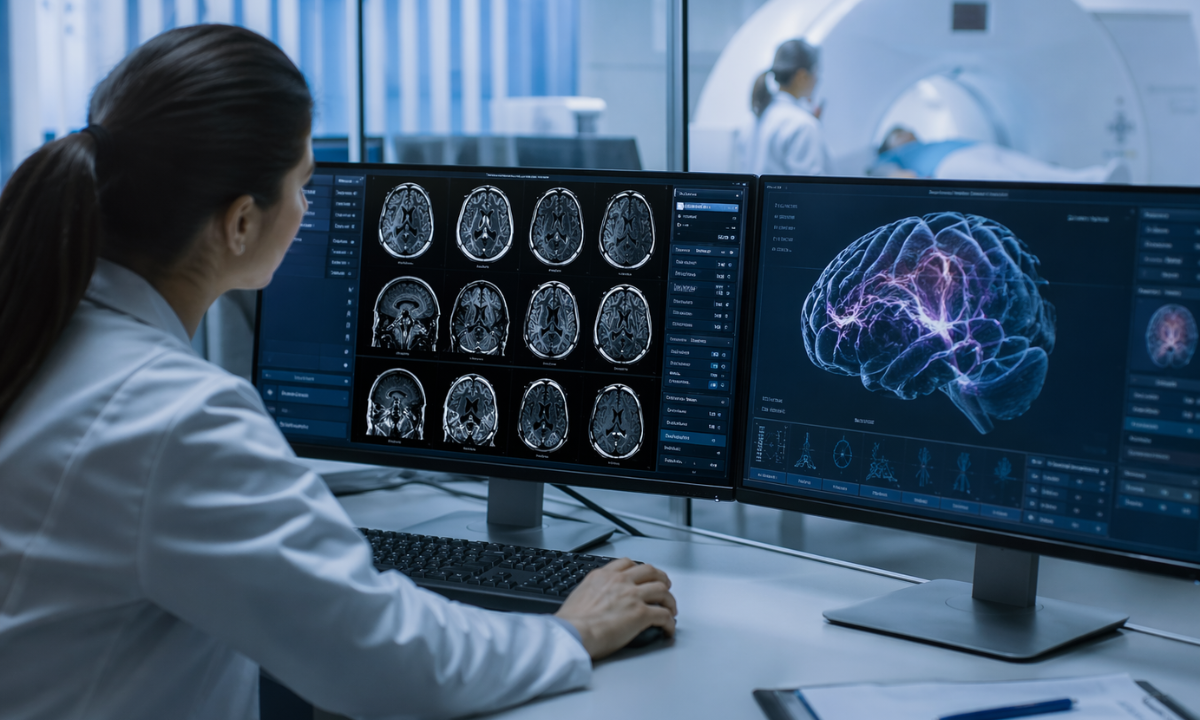
AI is transforming healthcare by enabling faster and more accurate diagnoses. For instance, AI-powered systems can analyse patient history and symptoms to suggest possible conditions, reducing the burden on doctors.
Machine Learning goes a step further by predicting patient outcomes, such as the likelihood of disease progression or hospital readmission, using historical data. Meanwhile, Deep Learning plays a critical role in analysing complex medical images like X-rays, MRIs, and CT scans, helping detect diseases such as cancer at early stages with remarkable precision.
2. E-commerce

In the e-commerce space, Machine Learning drives personalised product recommendations based on user behaviour, browsing history, and past purchases. This is why platforms can suggest exactly what you might want to buy next.
Deep Learning enhances this experience by enabling visual search and image recognition. For example, users can upload a photo of a product, and the system finds similar items instantly. Additionally, AI skills help optimise pricing strategies, manage inventory, and improve customer support through chatbots.
3. Finance

AI plays a crucial role in fraud detection by continuously monitoring transactions and flagging suspicious activities in real time. This helps banks and financial institutions prevent losses and protect customer data.
Machine Learning models are widely used for risk assessment, credit scoring, and investment predictions by analysing large datasets and identifying patterns. Deep Learning, on the other hand, can detect complex and hidden patterns in financial data, making it highly effective for algorithmic trading, market forecasting, and advanced fraud detection systems.
Machine Learning Roadmap: Where to Start?
If you’re planning a career in this field, following a structured machine learning roadmap is essential.
Step-by-Step Guide:
-
Learn Python and basic programming
-
Understand statistics and probability
-
Study core machine learning algorithms
-
Work on real-world projects
-
Explore deep learning and neural networks
-
Build a portfolio
Why Learn AI, ML, and Deep Learning Today?
The demand for AI professionals is skyrocketing. According to industry reports, AI-related jobs have grown by over 70% in the last few years.
Benefits:
-
High-paying career opportunities
-
Global demand
-
Versatile applications across industries
-
Future-proof skillset
Enrolling in an artificial intelligence and machine learning course can help you gain practical skills and industry exposure.
Tips to Master AI, ML, and DL Faster
-
Start with fundamentals before jumping into deep learning
-
Practice consistently with datasets
-
Work on real-world projects
-
Join communities and forums
-
Stay updated with industry trends
Common Misconceptions
-
AI = ML = DL: Not true; they are different layers
-
Deep learning replaces ML. It complements it
-
You need advanced math to start. Basic concepts are enough initially
Final Thoughts
Understanding the difference between AI, ML, and DL is not just academic; it’s a career-defining insight. Whether you are a student, a working professional, or a tech enthusiast, building expertise in these areas can open doors to limitless opportunities.
If you are serious about upgrading your skills, enrolling in an AI course in Bangalore can give you hands-on experience and industry-relevant knowledge. With expert guidance from Apponix, a training institute in Bangalore, you can confidently step into the world of intelligent technologies and stay ahead of the curve.
FAQs
1. Is deep learning better than machine learning?
Not necessarily. Deep learning performs exceptionally well with large datasets and complex tasks like image or speech recognition. However, for smaller datasets or simpler problems, traditional machine learning algorithms can be more efficient, faster to train, and easier to interpret. The right choice depends on your specific use case, data availability, and computational resources.
2. Can I learn AI without coding?
While it’s possible to understand basic AI concepts without coding, practical implementation requires programming knowledge. Languages like Python are widely used for building models and working with data. Even beginner-level coding skills can help you experiment, build projects, and truly understand how AI systems function in real-world scenarios.
3. Which is easier to learn?
Machine learning is generally easier to start with compared to deep learning. It involves simpler concepts, fewer layers of abstraction, and requires less computational power. Deep learning, on the other hand, involves neural networks and complex architectures, making it more challenging. Beginners are usually advised to build a strong foundation in machine learning first.
4. How long does it take to learn?
The learning timeline depends on your background, consistency, and goals. With regular practice, you can grasp the basics of AI and machine learning within 6–12 months. However, mastering advanced topics like deep learning and building real-world projects may take additional time, especially if you aim for professional-level expertise.

Apponix Academy
Apponix Academy