POPULAR COURSES
Master Programs


Table of contents:
|
1. What Is The Java Language? |
|
2. What Is Java In Programming Lang Context? |
|
3. Why Is Java Important In Modern Computing? |
|
4. What Is Use Of Java Across Industries? |
|
5. What Can Java Programming Do? |
|
6. What Is Java Application Programming Interface (API)? |
|
7. What Is Java Scripting Language? Is It One? |
|
8. Why Do We Need Java Technology in 2026? |
|
9. Role of Java in Enterprise Architecture |
|
10. How Java Technology Works |
|
11. Career Scope in Java Development |
|
12. Advantages of Learning Java |
|
13. Final Thoughts |
|
14. Frequently Asked Questions |
When people begin exploring programming, one of the first questions they ask is: What is Java Language and why does it continue to dominate the global software ecosystem?
Despite the rise of newer programming frameworks, Java remains one of the most stable, scalable and enterprise-ready technologies in the world. From banking systems to Android apps, from enterprise automation to cloud platforms, Java quietly powers much of the digital infrastructure we rely on every day.
If you are considering a career in software development or exploring a structured Java Course In Bangalore, understanding the foundations of Java technology is essential. This guide explains what Java is, how it works, why it matters in 2026, and what makes it one of the most important programming technologies in modern computing.
What Is The Java Language?
What Is Java Language can be defined as a high-level, object-oriented programming language designed to be platform-independent, secure, and scalable for building applications across desktop, web, mobile and enterprise systems.
Java was introduced by Sun Microsystems in 1995 and is now maintained by Oracle Corporation. Its core philosophy is simple but powerful:
Write Once, Run Anywhere (WORA)
This means Java programs compiled into bytecode can run on any system equipped with a Java Virtual Machine (JVM).
Java what Is It Fundamentally?
At its core, Java is:
-
Object-oriented
-
Class-based
-
Strongly typed
-
Secure
-
Distributed
Unlike low-level languages, Java abstracts memory management and system complexities, allowing Java developers to focus on application logic rather than hardware interaction.
What Is Java In Programming Lang Context?
When people ask what Java In Programming Lang, they are usually comparing it with other programming languages like Python, C++, or JavaScript.
Java differs because:
-
It uses a virtual machine architecture.
-
It supports automatic garbage collection.
-
It enforces strict object-oriented design.
-
It is heavily used in enterprise-scale systems.
Java sits comfortably between performance-focused languages like C++ and flexibility-driven languages like Python. It offers stability without sacrificing scalability.
Why Is Java Important In Modern Computing?
The question Why Java Is Important becomes clearer when we examine its real-world impact.
Java is deeply embedded in:
-
Banking systems
-
Government platforms
-
Android mobile applications
-
Large-scale enterprise software
-
Cloud-native backend services
Computers, Java Relationship Explained
When we discuss Java, we refer to how Java applications operate across different hardware systems without modification. Because of the JVM, Java programs do not depend directly on operating system architecture.
Similarly, the phrase Computer Java often reflects the relationship between Java applications and cross-platform execution. Whether on Windows, macOS, Linux or enterprise servers, Java maintains consistent behaviour.
What Is Use Of Java Across Industries?
Understanding What Is Use Of Java is requires looking beyond simple coding examples.
Java is widely used for:
1. Enterprise Applications
Large organisations use Java frameworks such as Spring and Hibernate to build scalable backend systems.
2. Android Development
Most Android applications are built using Java or Kotlin (which interoperates with Java).
3. Web Applications
Java powers countless web applications through frameworks like Spring Boot.
4. Financial Systems
Banking institutions rely heavily on Java due to its security and reliability.
5. Big Data Technologies
Apache Hadoop is built in Java, making it central to data processing ecosystems.
6. Cloud Infrastructure
Many cloud-native applications are developed using Java microservices.
What Can Java Programming Do?

The scope of What Can Java Programming Do extends across multiple domains:
-
Build desktop GUI applications
-
Develop REST APIs
-
Create microservices
-
Design gaming engines
-
Power IoT systems
-
Support blockchain platforms
Java’s flexibility comes from its extensive ecosystem of libraries and frameworks.
What Is Java Application Programming Interface (API)?
Many learners encounter the term API early in their journey.
The Java Application Programming Interface refers to the collection of pre-written classes, packages, and libraries provided by Java that allow developers to perform complex tasks without writing code from scratch.
For example:
-
java.util handles data structures,
-
java.io manages input and output
-
java.net supports networking
APIs accelerate development by providing reusable components.
What Is Java Scripting Language? Is It One?
Some beginners ask: What Is Java Scripting Language?
Technically, Java itself is not a scripting language. It is a compiled programming language.
However, Java can execute scripting languages through the JVM, such as:
-
Groovy
-
JRuby
-
Jython
This ability enhances flexibility in hybrid development environments.
Why Do We Need Java Technology in 2026?
The answer to Why is Java still relevant today lies in its:
1. Stability
Java is backwards compatible. Enterprises trust technologies that do not break legacy systems.
2. Security
Java’s architecture includes built-in security mechanisms like bytecode verification.
3. Scalability
It supports high-load enterprise systems.
4. Community Support
Millions of developers worldwide contribute to its ecosystem.
5. Performance Improvements
Recent Java versions have introduced performance optimisation enhancements.
Java is not merely surviving. It is evolving.
Role of Java in Enterprise Architecture
Java is deeply integrated into enterprise ecosystems through:
-
Spring Framework
-
Jakarta EE
-
Microservices architecture
-
Cloud-native deployments
Companies prefer Java for mission-critical applications because of its reliability and maintainability.
For those looking to enter this field professionally, enrolling in a structured Java Course In Bangalore can provide practical exposure to enterprise-grade frameworks.
How Java Technology Works
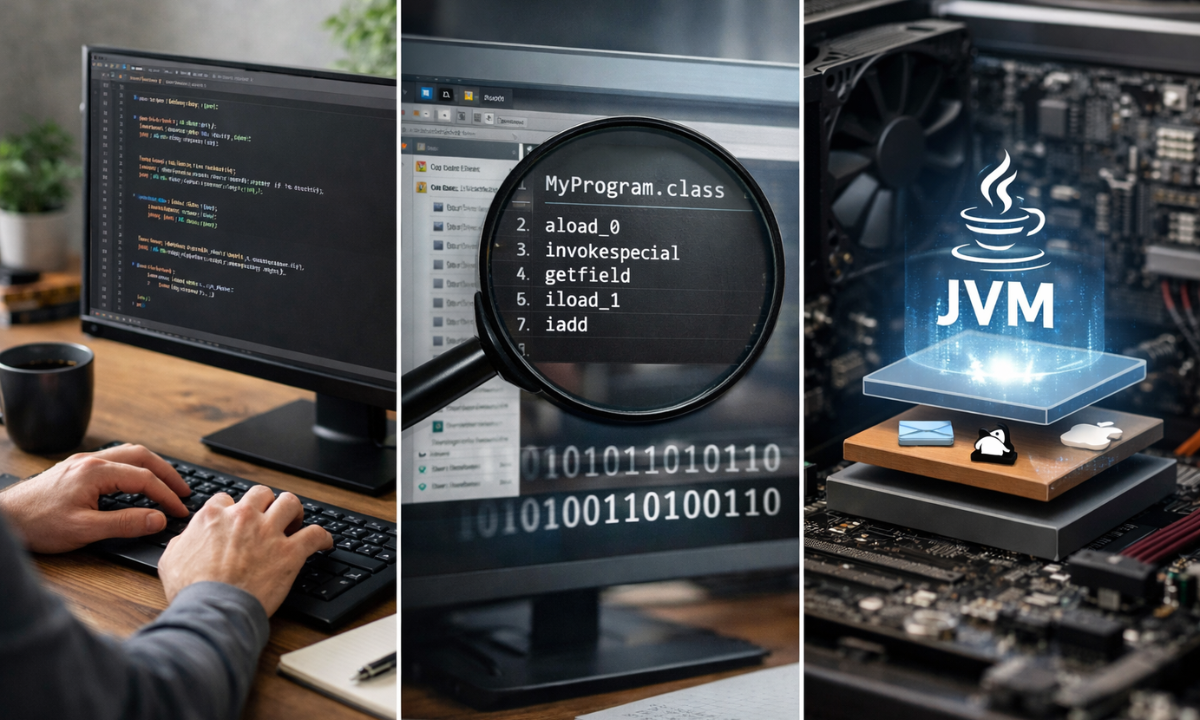
Step 1: Writing Code
Developers write Java source code.
Step 2: Compilation
The code is compiled into bytecode.
Step 3: Execution
The JVM executes bytecode on the target system.
This layered architecture ensures platform independence.
Career Scope in Java Development
Java developers are in demand across:
-
IT services
-
Product companies
-
Fintech firms
-
E-commerce platforms
-
Government tech divisions
Typical roles include:
-
Java Developer
-
Backend Developer
-
Full Stack Developer
-
Software Engineer
-
Technical Architect
According to industry salary reports (refer to Naukri, Glassdoor, and Stack Overflow Developer Surveys), Java remains among the top-paying programming skills in India and globally.
For structured career guidance, Apponix offers detailed training programmes aligned with industry requirements.
Advantages of Learning Java
If you are planning a career in software development, learning Java can be one of the smartest decisions you make. Java has consistently remained one of the most in-demand programming languages across industries, making it a reliable and future-proof skill.
-
High employability
-
Enterprise relevance
-
Strong salary growth
-
Large community support
-
Cross-platform compatibility
Java knowledge opens doors to multiple specialisations, including cloud computing and big data.
Final Thoughts
Understanding What Is The Java Language is not just about syntax. It is about recognising its architectural design, industry acceptance, and long-term relevance.
Java remains a foundational technology in 2026 because it balances performance, scalability, and security.
For learners and professionals aiming to build strong technical careers, structured training is essential. A practical, industry-aligned Java Course In Bangalore can bridge the gap between theoretical understanding and enterprise-ready implementation.
At Apponix, the focus is not merely on teaching code but on building professional competence aligned with real-world industry needs.
Frequently Asked Questions
1. What is Java Language in simple terms?
In simple terms, Java is a high-level, object-oriented programming language designed to help developers build applications that can run on different operating systems without modification.
What makes Java unique is its platform independence. When you write a Java program, it is compiled into bytecode, which runs on the Java Virtual Machine (JVM). This means the same application can operate on Windows, macOS, Linux or enterprise servers without rewriting the code.
Java is widely used for:
-
Enterprise software systems
-
Android mobile applications
-
Banking and financial platforms
-
Web-based backend services
-
Cloud-native applications
Because of its structured syntax and object-oriented design, Java also helps developers understand fundamental programming principles such as classes, objects, inheritance and abstraction. These concepts form the backbone of modern software development.
2. Why Java Is Important for beginners?
Java is particularly important for beginners because it teaches strong programming foundations rather than shortcuts.
Unlike loosely structured languages, Java enforces disciplined coding practices. It requires developers to understand:
-
Data types
-
Object-oriented programming
-
Error handling
-
Memory management (through automatic garbage collection)
-
Modular code design
This structured learning approach helps beginners develop problem-solving skills that are transferable to other languages, such as Python, C#, or Kotlin.
Additionally, Java’s extensive documentation and global community support make it easier for learners to find guidance. Millions of tutorials, forums and industry resources are available, reducing the learning barrier.
For students aiming for professional roles in software development, starting with Java builds a strong technical base suitable for enterprise environments.
3. What Is Use Of Java in the real world?
The real-world use of Java extends far beyond academic exercises.
In enterprise environments, Java is used to build mission-critical applications such as:
-
Core banking systems
-
Insurance management platforms
-
E-commerce backend systems
-
Government digital services
-
Airline reservation systems
In mobile development, Java forms the foundation of many Android applications.
In big data ecosystems, technologies such as Apache Hadoop are written in Java, making it central to data processing frameworks.
In cloud computing, Java supports microservices architecture using frameworks like Spring Boot, enabling scalable backend solutions.
Its security features and stability make it a preferred choice in industries where system reliability is non-negotiable.
4. What can Java Programming Do beyond web development?
Java programming extends into several advanced and specialised domains beyond traditional web development.
It can be used to:
-
Develop desktop applications with graphical user interfaces
-
Build microservices for distributed systems
-
Create data processing pipelines in big data environments
-
Support Internet of Things (IoT) device integration
-
Develop blockchain-based systems
-
Build AI and machine learning applications through compatible frameworks
-
Power enterprise-grade cloud infrastructure
Java’s adaptability is largely due to its robust ecosystem of libraries and frameworks. Developers can integrate it with databases, cloud platforms, APIs and third-party services seamlessly.
This versatility makes Java one of the most future-proof programming languages available today.
References
-
Oracle Official Java Documentation – https://docs.oracle.com/javase/
-
Stack Overflow Developer Survey 2024
-
Naukri Job Trends Report – IT Skills Demand
-
Gartner Technology Forecast Reports
-
Oracle Java Platform Overview

Apponix Academy
Apponix Academy