POPULAR COURSES
Master Programs
Table of contents:
|
1. Key Points |
|
2. Why Choose Python as a Career in 2026? |
|
3. Python Programming Career: What Makes It So Strong? |
|
4. Types of Courses for Python Programming
|
|
5. Best Courses for Python Programming Career in 2026
|
|
6. Career Opportunities After Python Course
|
|
7. How to Choose the Right Python Course |
|
8. What Makes a Python Course Career-Oriented? |
|
9. Final Thoughts |
|
10. FAQs |
A course for Python programming is one of the smartest investments you can make in 2026 if you are planning a long-term and flexible tech career. I often meet learners who are confused about which Python course to choose because the options feel endless.
The good news is that Python remains beginner-friendly, powerful, and highly demanded across industries like data science, AI, web development, and automation.
Whether you are exploring online learning or planning to join a Python course in Bangalore, this guide will help you choose the best course path, so keep reading till the end to make the right career move.
Key Points
-
Why Python is a top career choice in 2026
-
Best courses for Python based on career goals
-
Comparison tables for easy decision-making
-
Career opportunities after learning Python
-
Tips to choose the right Python certification course
Why Choose Python as a Career in 2026?
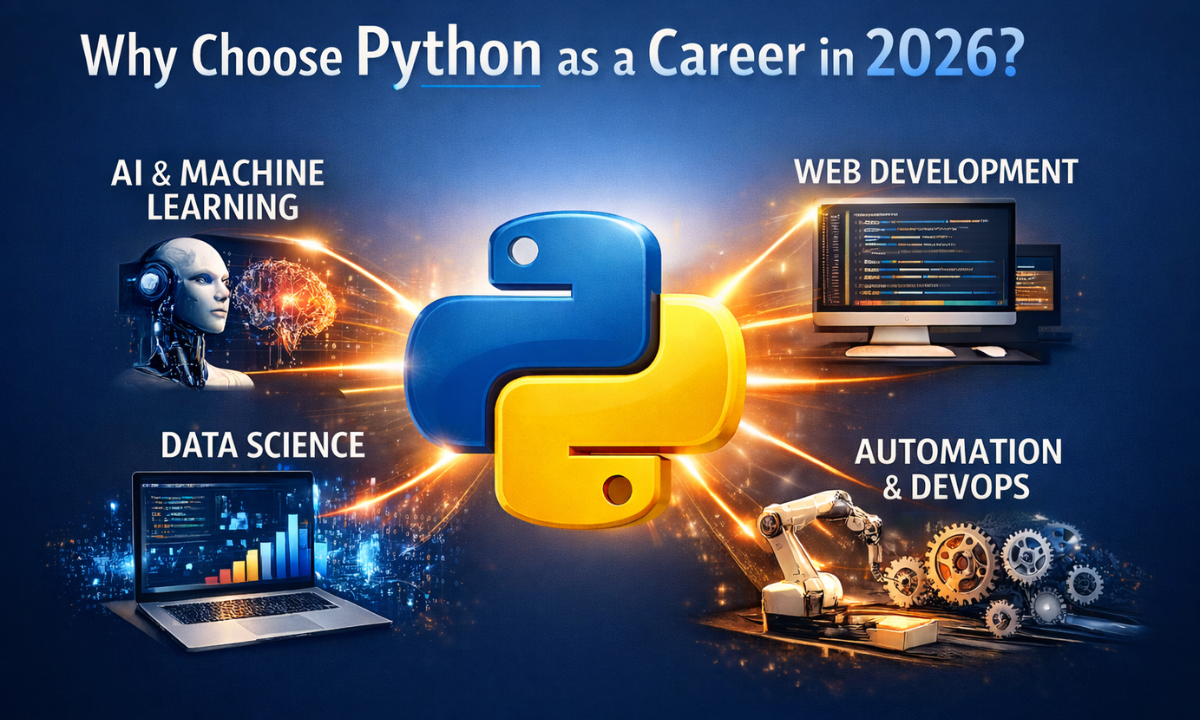
When people ask me why choose Python as a career, my answer is simple: versatility and demand. Python is used in web development, data science, machine learning, automation, DevOps, and even game development. This wide usage makes Python one of the most future-proof programming languages.
Python is also easy to learn compared to other languages. Its simple syntax allows beginners to focus more on logic than complex code structures, making it ideal for career starters.
Python Programming Career: What Makes It So Strong?

A Python programming career offers flexibility across multiple domains. You can start as a beginner and gradually move into advanced roles without switching languages. Python skills grow with you as your career evolves.
Companies prefer Python because it reduces development time and improves productivity. This is why Python developers are consistently in demand across startups and large enterprises.
Types of Courses for Python Programming
Not all learners have the same goals, so choosing the right course in Python programming depends on what you want to achieve. Some courses focus on fundamentals, while others are career-oriented. Understanding these categories helps you avoid confusion.
Python Course Types Table
|
Course Type |
Best For |
|
Beginner Python Course |
Freshers & non-programmers |
|
Advanced Python Course |
Experienced developers |
|
Python Certification Course |
Career switchers |
|
Domain-Specific Python |
Data science, AI, web |
This table gives a clear picture of available courses for Python learners.
Best Courses for Python Programming Career in 2026
Let me walk you through the most popular and effective Python courses based on career outcomes.
1. Python for Beginners (Foundation Course)
This is the best course for Python programming if you are starting from scratch. It covers variables, loops, functions, data types, and basic problem-solving. I always recommend beginners start here before jumping into advanced topics.
This course builds confidence and logical thinking. It forms the base for every advanced Python role.
2. Python Certification Course
A Python certification course is ideal if you want structured learning with proof of skills. These courses include assessments, projects, and certificates. Certification helps your resume stand out, especially for entry-level roles.
Many employers value certified candidates because it shows commitment and verified knowledge. A Python course with a certificate is especially useful for freshers and career changers.
3. Python for Data Science and AI
This course focuses on data analysis, visualisation, machine learning, and AI concepts. It is perfect if your goal is analytics-driven roles. Libraries like NumPy, Pandas, Matplotlib, and Scikit-learn are core to this path.
Data-related roles offer strong salaries and growth. This makes it one of the most popular career opportunities in Python.
Data Science Course Skills Table
|
Skill Area |
Tools |
|
Data Analysis |
Pandas, NumPy |
|
Visualization |
Matplotlib, Seaborn |
|
Machine Learning |
Scikit-learn |
|
AI Basics |
TensorFlow |
4. Python for Web Development
If you enjoy building websites and applications, this course in Python programming is a great choice. It focuses on frameworks like Django and Flask. You’ll learn backend development, APIs, and database integration.
Web development roles are widely available and suitable for freelancers, too. This path supports a strong career after the Python course.
5. Python for Automation and DevOps
Automation-focused Python courses teach scripting for system tasks, testing, and deployment. These skills are highly valued in DevOps and QA roles. I’ve seen many learners transition into automation roles through Python.
This option is perfect for IT professionals looking to upskill. It adds practical value to your existing experience.
Career Opportunities After Python Course
One of the biggest advantages of Python is the wide range of roles available. Your career after the Python course depends on specialisation and practice. Python allows you to switch domains without relearning the language.
Career Opportunities Table
|
Job Role |
Industry |
|
Python Developer |
Software Development |
|
Data Analyst |
Analytics |
|
Machine Learning Engineer |
AI & ML |
|
Automation Engineer |
Testing & DevOps |
|
Web Developer |
IT & Startups |
These roles highlight strong career opportunities in Python.
How to Choose the Right Python Course
Choosing the right course for Python programming can save you time and effort. I always suggest evaluating courses based on curriculum, projects, and trainer expertise. Hands-on practice matters more than theory.
Here are a few tips I personally follow:
-
Choose courses with real-world projects
-
Prefer courses offering certificates
-
Check if the syllabus matches your career goal
-
Avoid courses that rush through basics
These steps help you make smarter learning decisions.
What Makes a Python Course Career-Oriented?
A career-oriented Python course with a certificate focuses on job-ready skills. It includes projects, case studies, and interview preparation. This type of learning builds confidence and practical exposure.
Courses that combine theory with hands-on labs are always more effective. They prepare you for real-world challenges.
Final Thoughts
To conclude, choosing the right course for Python programming in 2026 can open doors to multiple high-growth career paths. Whether you are a student, working professional, or career switcher, a structured learning approach makes a big difference.
Enrolling in a Python course in Bangalore can provide hands-on exposure, mentorship, and career guidance. At Apponix Training Institute in Bangalore, we help learners gain industry-relevant Python skills and confidently step into a successful Python programming career.
FAQs
1. Is Python a good career choice in 2026?
Yes, Python continues to be one of the most in-demand programming languages. Its use in AI, data science, automation, and web development makes it a strong long-term career choice.
2. Do I need a degree to start a Python career?
No, a degree is not mandatory. Skills, projects, and certifications matter more than formal education in most Python-related roles.
3. How long does it take to learn Python?
You can learn Python basics in 2–3 months. Becoming job-ready usually takes 6–9 months with consistent practice and projects.
Apponix Academy
Apponix Academy