POPULAR COURSES
Master Programs

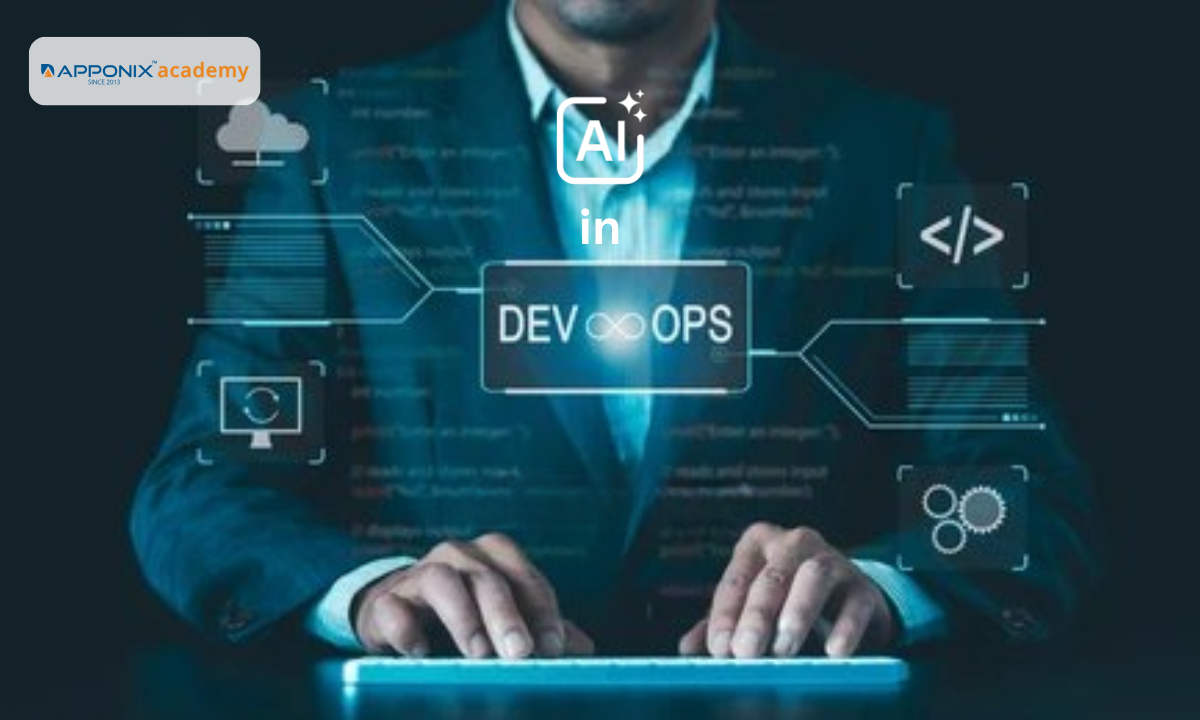
Table of contents:
|
1. What is AI in DevOps? |
|
2. Why AI-Driven Infrastructure Automation Matters
|
|
3. Key Infrastructure Tasks That AI Automates |
|
4. Top AI Tools for DevOps (Infrastructure Focus) |
|
5. Skills & Training for an AI DevOps Engineer |
|
6. Why Bangalore is a Strong Location for Training |
|
7. Challenges & Best Practices |
|
8. Wrapping Up |
|
9. FAQs |
As a trainer working with aspiring DevOps engineers at our institute, I have witnessed firsthand how embracing AI in DevOps transforms infrastructure and operations workflows. Whether you are a student looking to become an AI DevOps engineer or a professional exploring AI-driven DevOps, the convergence of automation and intelligence is unlocking major efficiencies.
In this blog, I will share key insights on how AI for DevOps streamlines infrastructure tasks, point out top tools and skills, and even touch on how to build your career through Gen AI for DevOps, AI courses for DevOps engineers, and finding the right training institute in Bangalore for an artificial intelligence course in Bangalore.
What is AI in DevOps?
AI in DevOps refers to the integration of artificial intelligence (AI) and machine learning into the software development and operations pipeline, especially the infrastructure, testing, deployment and monitoring loops. According to recent resources, this kind of integration helps teams automate everything from testing and anomaly detection to resource optimisation and security.
When you consider the infrastructure layer, such as servers, containers, cloud resources, networking, and configurations, the possibility of using intelligence to reduce manual toil becomes transformative. As an instructor, I often stress that combining automation with intelligence allows DevOps teams to move from “just automating” to “automating plus smart decision-making”.
Why AI-Driven Infrastructure Automation Matters
1. Faster Time to Deployment
Automation in infrastructure, such as provisioning via code, container orchestration, and configuration management, already speeds things up. When you layer in AI-driven DevOps capabilities, you get predictive resource allocation, automated anomaly detection and intelligent workflows that reduce delays. For example, AI can analyse historical pipeline data and predict which builds or deployments are likely to fail, thereby enabling proactive actions.
2. Improved Reliability & Reduced Risk
In infrastructure, manual misconfiguration is a big source of failure. When you bring AI for DevOps, you enable systems that detect patterns of failure, whether in resource usage, network behaviour or logs, and intervene. This reduces mean time to resolution (MTTR) and improves service reliability.
3. Optimised Resource Utilisation
With cloud resources, containers, and scaling, the question often becomes, “Are we over- or under-provisioning?” AI models can monitor usage and trends, then recommend or automatically enforce scaling policies, thus aligning infrastructure spend with demand. This is a core benefit of using Gen AI for DevOps in infrastructure management.
4. Enhanced Security and Compliance
Infrastructure automation is incomplete without robust security controls. When you incorporate AI in DevOps, you get anomaly detection, vulnerability summarisation, automated patch recommendation, and adaptive policy enforcement. This is especially important in the infrastructure layer, where misconfigurations can lead to major exposure.
Key Infrastructure Tasks That AI Automates
Here are some typical infrastructure tasks where AI in DevOps plays a critical role:
-
Automated provisioning & configuration: Instead of manually scripting each server or container, you can have intelligence trigger provisioning based on predicted workload and configuration drift.
-
Resource and cost optimisation: AI models analyse usage patterns to scale up/down resources automatically or recommend rightsizing.
-
Monitoring, alerting & anomaly detection: AI continuously monitors logs, metrics, and traces and identifies unusual behaviour and predicts failure before it happens.
-
Root cause analysis (RCA): Rather than triage manually, the AI can correlate across data sources and help pinpoint root causes in infrastructure events.
-
Continuous Integration/Continuous Deployment (CI/CD) for infrastructure: Use intelligence in pipelines for infrastructure changes (Infrastructure as Code) to test, validate, and deploy with minimal human intervention.
-
Security automation in infrastructure: vulnerability scanning of infrastructure components, misconfiguration detection, and adaptive controls.
Top AI Tools for DevOps (Infrastructure Focus)
When I train students on the best AI tools for DevOps, especially for infrastructure, I emphasise the following:
-
Platforms that integrate AI into DevOps pipelines (for example, platforms with embedded AI agents).
-
Monitoring and observability tools enhanced with AI-driven anomaly detection and predictive analytics.
-
Infrastructure as Code (IaC) frameworks augmented with intelligent validation and drift detection.
-
Security-oriented tools that use AI to scan infrastructure and cloud configurations for vulnerabilities.
While I won’t list specific commercial names here (because tools evolve rapidly), in your curriculum modules, I highlight how to evaluate tools based on AI capability, integration, and infrastructure focus.
Skills & Training for an AI DevOps Engineer
If you’re aiming to be an AI DevOps engineer, here are the key areas you’ll want to build (and we cover these in our training sessions):
-
Foundation of DevOps: CI/CD, IaC, containers, orchestration, cloud infrastructure.
-
Machine Learning & AI basics: Understanding how ML works, what AI agents are, and how they can apply to operations.
-
Data-driven operations: How to use logs, metrics, traces, and telemetry effectively for predictions and anomaly detection.
-
Automating infrastructure workflows: using scripting, IaC, pipelines, and bots, and integrating AI models into those flows.
-
Security & compliance in infrastructure: Understanding how AI can automate security controls, monitoring, and remediation.
-
Tools & platforms: Hands-on practice with tools that support AI in the DevOps context (infrastructure, monitoring, pipeline, AI-agents).
-
Soft skills: Collaboration between Dev, Ops, and Data teams; understanding business context; change management.
Why Bangalore is a Strong Location for Training
If you’re located in or willing to travel to Bangalore, there’s a real advantage in choosing local solutions like a training institute in Bangalore offering an artificial intelligence (AI course in Bangalore specifically for DevOps. Here’s why:
-
Bangalore has a rich ecosystem of IT and DevOps activity, meaning more practical exposure.
-
You’ll find training institutes that focus on real-world infrastructure and production-grade workflows—especially useful for AI for DevOps and Gen AI for DevOps topics.
-
Networking opportunities: peer groups, meetups, and real projects in Bangalore allow you to see how infrastructure automation with AI is being implemented in real enterprises.
When you select a course, make sure it covers “AI in DevOps” from an infrastructure perspective (not just code generation). Ensure it covers infrastructure provisioning, monitoring, anomaly detection, pipelines and security.
Challenges & Best Practices
In training future DevOps engineers in AI-driven DevOps, we emphasise both opportunities and pitfalls:
Challenges
-
Data quality: AI models need clean, reliable telemetry data from infrastructure to be effective. Without it, predictions will be flawed.
-
Integration complexity: Incorporating AI into existing infrastructure pipelines and workflows can be non-trivial.
-
Oversight & governance: Even AI-led automation needs human oversight, especially for critical infrastructure changes.
-
Skill gap: Many DevOps practitioners may not yet have the AI/machine-learning background needed to leverage full potential.
Best Practices
-
Start small: Identify a specific infrastructure task (e.g., anomaly detection in logs, automated provisioning of new environments) to pilot AI in DevOps. Then scale.
-
Maintain transparency: Let stakeholders understand how the AI model is operating, what decisions it’s making.
-
Continuous improvement: Monitor and refine AI workflows, evaluate results, and retrain models as infrastructure evolves.
-
Combine human & machine: Use AI for routine tasks, but keep human engineers in the loop for strategic decisions and oversight.
Wrapping Up
In summary, AI in DevOps is rapidly changing how we approach infrastructure, operations and delivery. As a trainer guiding aspiring engineers, I have seen how the application of AI for DevOps tasks, especially infrastructure automation, can deliver speed, reliability and cost-efficiency.
For anyone targeting the role of AI DevOps engineer, mastering the synergy between DevOps fundamentals and intelligence-driven automation is key.
If you are exploring Gen AI for DevOps and looking for AI courses for a DevOps engineer, choosing the right curriculum, especially a solid artificial intelligence course in Bangalore through a reputable training institute in Bangalore, can give you the jump-start you need. The era of AI-driven DevOps is here; now is the time to build the skills and mindset to lead it.
FAQs
Q1: What Is The Difference Between DevOps automation and AI in DevOps?
DevOps automation typically refers to using scripts, tools and pipelines to reduce manual work in software delivery and infrastructure. AI in DevOps takes it further by applying machine learning, natural language processing or autonomous agents to make decisions, predict issues, automate more complex tasks, and continuously improve workflows.
Q2: What Kinds Of Infrastructure Tasks Can AI automate in DevOps?
Key tasks include provisioning and scaling infrastructure, detecting anomalies and predicting failures, optimising resource utilisation, automating root-cause analysis, securing infrastructure via automated policies and vulnerability detection, and embedding intelligent workflows in CI/CD pipelines for infrastructure changes.
Q3: Which Tools Should I Focus On To Learn The “Best AI Tools For DevOps”?
While the landscape evolves rapidly, focus on tools that integrate AI/ML into your DevOps pipeline, especially ones with strong support for infrastructure monitoring, anomaly detection, IaC automation, and autonomous agents. Hands-on practice and evaluating tool capabilities in real-world scenarios matter more than chasing every brand.
Q4: Do I Need To Be A Data Scientist To Become An AI DevOps Engineer?
Not exactly. While foundational understanding of machine learning concepts, data analytics and AI models is helpful, the primary role of an AI DevOps engineer is to integrate these capabilities into the DevOps and infrastructure workflows. So you need a hybrid skill set: strong DevOps and infrastructure skills augmented by AI/ML literacy.
Q5: How Do I Choose A Good “Artificial Intelligence Course In Bangalore” For DevOps?
Look for a course that covers both DevOps fundamentals (CI/CD, IaC, containers, cloud) and AI-enablement layers (monitoring, anomaly detection, predictive analytics, autonomous agents). Verify whether the institute offers hands-on infrastructure labs, integration with DevOps pipelines, and modules on AI for DevOps and Gen AI for DevOps. Practical projects are key.

Apponix Academy
Apponix Academy